The earthquake that shook Panama Last October 9 not only put the seismic threat back into the public conversation, but also left researchers with a quantity of information that will allow them to study how the territory and its buildings responded to a large-magnitude event and, above all, what the country should do to reduce the consequences of future earthquakes.
For Dr. Luis Pinzón, specialist in seismic engineering and structural dynamics and former scholarship recipient of the National Secretariat of Science, Technology and Innovation (Senacyt)the event represents a turning point.
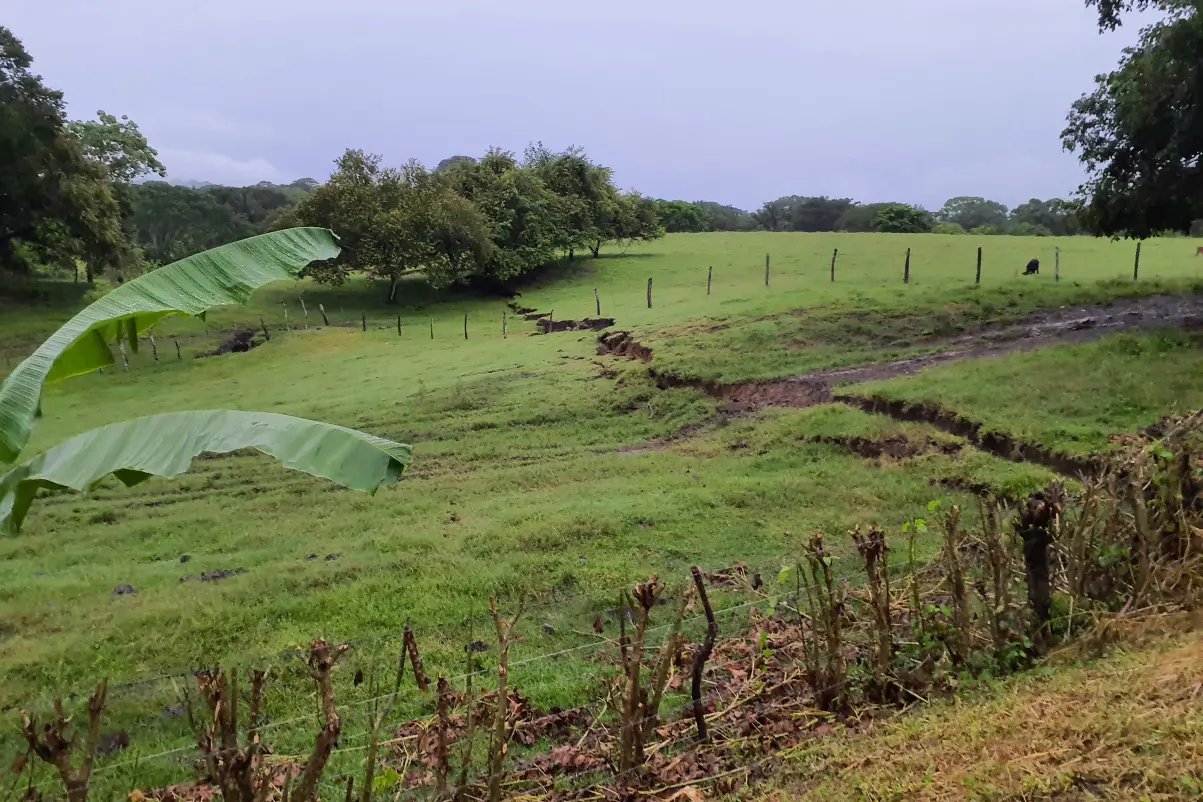
“Panama, at this moment, is a laboratory,” says the researcher, explaining that the damage observed near the epicenter, the ground deformations and the records obtained through sensors will allow the earthquake to be analyzed from geotechnics, geology, structural engineering and seismological engineering.
According to Pinzón, the earthquake originated on the Azuero-Soná fault, a system of crustal faults, and was a superficial event, about 12 kilometers deep and of magnitude 7.5. The specialist points out that earthquakes that occurred in 1913 and 1883 are also attributed to this fault, the previous two with approximate magnitudes of 7.
The seismic history of Panama contradicts, in his opinion, the perception that the country is a territory alien to this type of threats.
“We are not necessarily a country that has the perception that we are a seismic country. Generally we are calm, that Panama never trembles, but historically we know that this is not the case,” explains Pinzón, director of the Scientific and Technological Research Center of the Santa María La Antigua University (USMA). This historical information, he adds, is part of the studies that allow estimating the seismic threat and establishing criteria for the earthquake-resistant design of buildings.
The same earthquake, different effects
In interview with The Star of Panamaone of the aspects that Pinzón considers important to understand is the difference between magnitude and intensity.
The magnitude of the earthquake was 7.5, it points out, but the intensity experienced in each area varied depending on factors such as distance from the focus of the event. Therefore, the effects and perceived movement in the areas near the epicenter were different from those experienced in Panama City.
According to the researcher, the acceleration records obtained in the capital indicated levels that would not cause structural damage, while the areas close to the epicenter received higher intensities and presented greater damage.
“The magnitude of the event will continue to be 7.5, but the intensity does evolve depending on the distance from the focus of the event,” he clarifies.
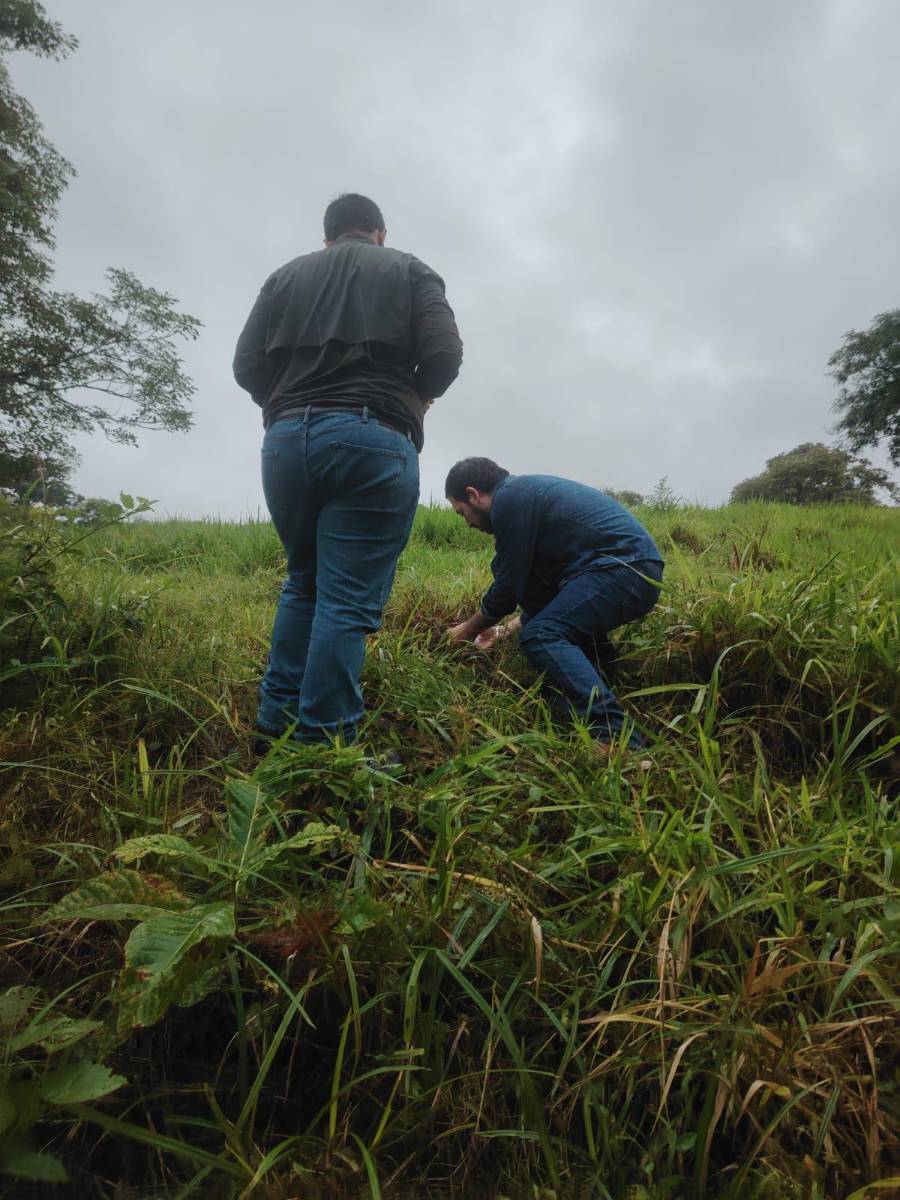
Dr. Luis Pinzón, accompanied by student Lisando Franceschi, of Civil Engineering, measures the opening of the terrain (depth, width and slope) in Búcaro, Tonosí, and obtains a sample to identify its granulometry.
Sensors: an opportunity that Panama did not have five years ago
If something differentiates this earthquake from other seismic episodes that have occurred in the country, it is the possibility of studying it with instrumental information that was not available before, he emphasizes.
“Fortunately there were sensors installed around the country. I think that is fundamental, because it allowed us to have data that, if this earthquake had occurred five years earlier, we probably would not have been able to have,” says Pinzón.
Accelerographs record the acceleration produced during an earthquake and provide useful information for engineering. By relating these records to damage observed in the field, researchers can evaluate parameters used in earthquake-resistant design and contrast existing studies with the actual behavior observed during an earthquake.
Pinzón highlights the joint effort of the Technological University of Panama, the Institute of Geosciences and the USMA to have information that can contribute to mitigating the effects of future events.
However, he warns that the available instrumentation is still limited. The USMA has five sensors and the UTP has ten, in addition to other equipment belonging to different entities and companies. In contrast, he mentions that Costa Rica has a network of 160 accelerographs.
“We have an opportunity as a country to plan so that in future events we can have much more information,” he says.
Hospitals and schools, among the priorities
The earthquake also left, according to the specialist, a task that goes beyond increasing the number of sensors: reviewing the conditions of essential buildings.
Pinzón specifically mentions health centers, hospitals, schools and fire stations, facilities that must continue operating after an emergency because they fulfill essential functions to care for and protect the population.
The researcher considers it advisable to establish a national strategy for the inspection and evaluation of these buildings, giving special priority to structures prior to the earthquake-resistant regulations for legal use that, as he explains, have existed in Panama since 1984.
“We cannot allow ourselves as a country” for this type of structures to be compromised, he maintains, because they are precisely the facilities that must house people, care for the injured and remain operational after an earthquake.
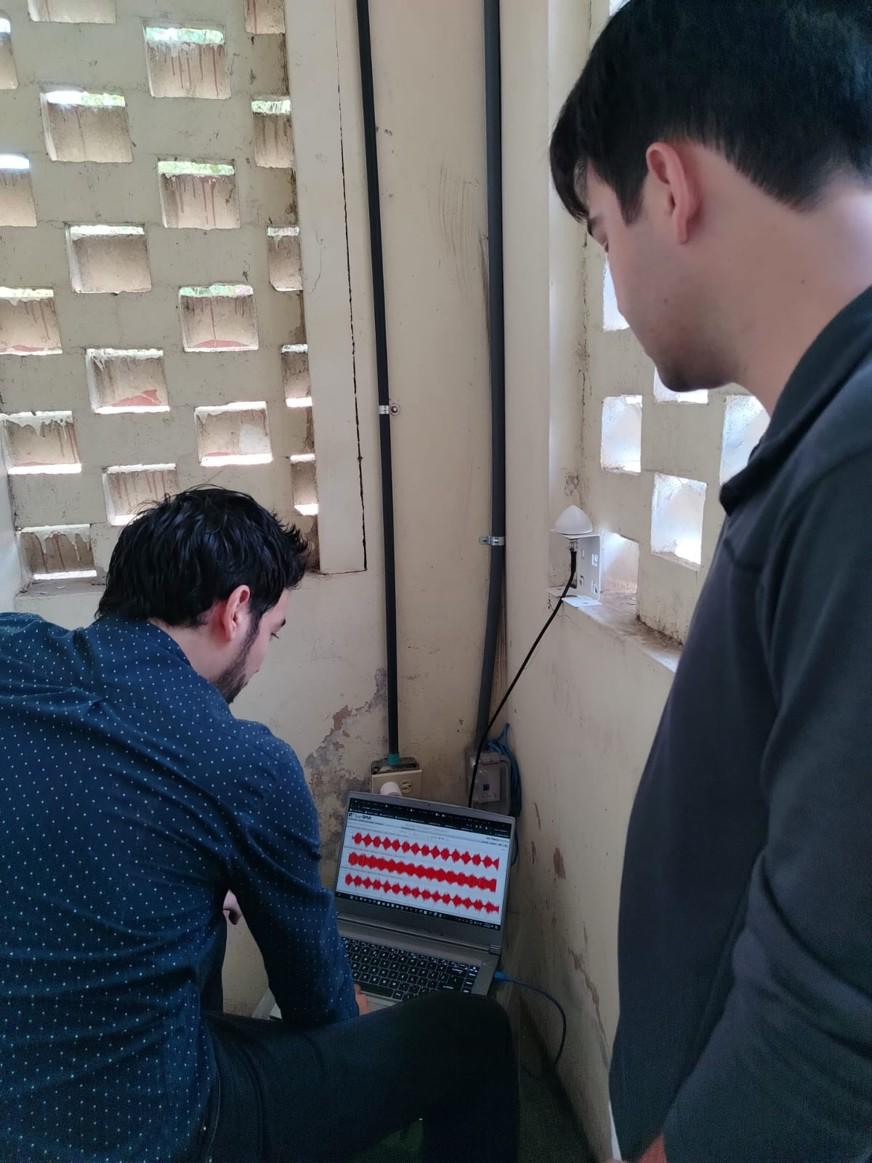
Accelerographs record the acceleration produced during an earthquake and provide useful information for engineering. In the photo you can see an accelerographic station located on the USMA central campus in Panama City.
Build to protect lives
For Pinzón, talking about an earthquake-resistant building does not mean thinking about a structure that is absolutely immune to damage. The fundamental objective of structural design against an earthquake is to prevent collapse and protect the lives of its occupants.
“Just because your structure is damaged does not necessarily mean that the structure was poorly designed, but rather that it fulfilled its objective of saving the lives that make up that specific structure.””, he specifies.
This behavior involves factors such as the height and materials of the building, the type of soil on which it is founded, the distance from the earthquake and the intensity that the site finally reaches. A construction on rock, for example, will not respond dynamically in the same way as one founded on soft soil.
The earthquake of October 9 thus leaves a scientific opportunity, but also a warning. For Pinzón, researching and preparing before the next event is much less expensive than simply reacting afterwards.
“If we do not invest in this, the consequences will always be greater in economic losses, deaths, and injuries”he warns. “We have to make efforts, country efforts, to ensure that in the future we manage to mitigate these events beforehand and not wait for the event to occur to react and evaluate the consequences”he reflects.