
BEL is burning far more diesel to keep the lights on, and consumers may soon feel that cost in their monthly bills. Belize Electricity Limited wants the Public Utilities Commission to double its Cost of Power Adjustment limit from one-and-a-half cents to three cents per kilowatt-hour. BEL says diesel prices have nearly doubled, electricity from Mexico is costing more and weak rainfall has reduced hydroelectric generation. Combined, those pressures have forced the company to rely heavily on expensive emergency power. The PUC must now decide whether BEL’s rising costs justify a bigger adjustment or whether the increase would place too much pressure on households already struggling with the cost of living. News Five’s Paul Lopez reports.
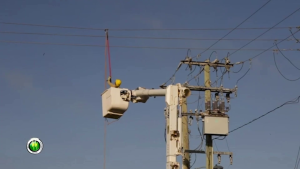 Paul Lopez, Reporting
BEL began the year expecting fuel prices to rise. What it did not expect was for diesel costs to nearly double while its use of emergency generation climbed dramatically. The company now wants permission to pass more of those costs on to consumers. BEL has applied to the Public Utilities Commission to double the Cost of Power Adjustment limit from one-and-a-half cents to three cents per kilowatt-hour. The adjustment mechanism, introduced in August 2026, allows BEL to recover increases in the cost of the electricity it purchases and generates. But BEL says the current limit is no longer enough to cover what has become a persistent increase.

Lynn Young
Lynn Young, Executive Chairman, BEL
“We, at the beginning of the year, when everybody saw this war was imminent, we figured that there was going to be an increase in the price of oil. BEL itself is responsible for the emergency generation, and we have two gas turbines that we operate for emergency generation. They run on diesel. At the start of the year, diesel price was six dollars a gallon, and that is duty-free. Now it is close to twelve dollars a gallon. We thought we would see a twenty, twenty-five, maybe fifty percent increase in oil prices. It has almost doubled. That was something that nobody could have planned for. And the second thing that happened is that CFE, their price, they are experiencing similar challenges. They generate a lot with natural gas, and natural gas prices have been climbing, and they pass on that cost to us. So, the price from CFE has gone up.”
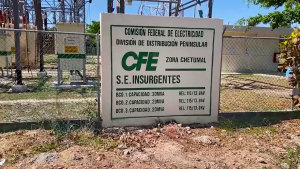 But higher prices are only part of BEL’s problem. The company says Mexico’s CFE has faced generation shortages and recently curtailed the amount of electricity supplied to Belize at historic levels. That forced BEL to depend more heavily on its diesel-powered turbines. According to Executive Chairman Dr. Lynn Young, diesel generation jumped from roughly two percent of BEL’s energy mix to eighteen percent.
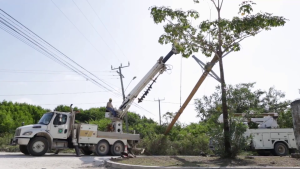
Government Throws BEL a $73 Million Lifeline
Dr. Lynn Young
“And, of course, if we are running diesel at eighteen percent, at double the price we normally pay for diesel, then you can imagine the impact that has had on the cost of power. But then, to even make that worse, which we kind of planned for, nobody knew what the effect of El Niño would be on our hydro generation. The first part of the year, it looked okay, but we have not really had a rainy season at all.”
With less hydroelectric power available, reduced supply from Mexico and more diesel generation filling the gap, BEL says the cost of keeping the national grid powered has climbed sharply. The company now argues that the existing adjustment cap leaves it unable to recover those expenses quickly enough. But raising the limit could also mean larger charges for customers when BEL’s power-purchasing costs increase. That leaves the Public Utilities Commission balancing two competing concerns: protecting BEL’s financial stability and keeping electricity affordable for consumers.

Leon Westby
Leon Westby, Director of Operations, PUC
“There are two key considerations with any rate increase or rate change. The PUC has to look at the financial sustainability of the utility itself, whether the cost is justified and necessary, and also it has to consider the consumer interest, in particular, the affordability of electricity. So, those are the two major considerations that would be balanced in deciding whether or not to increase the COPA limit.”
 BEL submits monthly reports detailing its power and operating costs. The PUC says those reports show that the company’s expenses are changing from month to month.
Leon Westby
“What BEL is doing now is to increase that limit because they are saying it is not sufficient to recover what they see as a persistent increase to their average price of electricity. A part of the regulations require that BEL makes monthly submissions on their cost and operating expenses, and so we are seeing, on a month-to-month basis, the cost of power.”
Government officials also support the principle behind the adjustment. Dr. Leroy Almendarez, CEO in the Ministry of Public Utilities, says BEL should not profit from purchased power, but it should also not be expected to absorb the actual cost of buying it. He says the challenge is that Belize has little control over the prices charged by external suppliers such as CFE.
 Dr. Leroy Almendarez
“Cost of power, whatever you pay for power, in this case we import, whether you import, if you are buying it, cost of power should be a direct pass-through. In essence, if you pay ten cents per kilowatt-hour, that is what the consumer is supposed to pay. You should not be making any profits from the cost of power, selling power for me to consume power. But it so happens that when you look at the sources from which BEL buys power as a single buyer, Mexico, we have no control of the cost of power from Mexico. With the war in the Middle East and the fact that the cost of power is indexed to oil, it allows for or triggers volatility.”
The final call rests with the PUC. The public has until four p.m. on November seventeenth to comment on BEL’s request to double the adjustment limit. Regulators must then decide: should BEL absorb rising costs, or should consumers pay more to keep the lights on? Paul Lopez for News Five.
Attention readers: This online newscast is a direct transcript of our evening television broadcast. When speakers use Kriol, we have carefully rendered their words using a standard spelling system.
Watch the full newscast here: