Monday, May 4, 2026
    The GeoStrategic Consensus
    No Result
    View All Result
    • Login
    • HOME
    • AMERICAS
      • Argentina
      • Brazil
      • Canada
      • Chile
      • Colombia
      • Costa Rica
      • Cuba
      • Dominican Republic
      • Ecuador
      • El Salvador
      • Greenland
      • Guatemala
      • Honduras
      • Mexico
      • Nicaragua
      • Panama
      • Paraguay
      • Peru
      • United States
      • Uruguay
      • Venezuela
    • ASIA-PACIFIC
      • Australia
      • Brunei Darussalam
      • Cambodia
      • China
      • Federated States of Micronesia
      • Fiji
      • Indonesia
      • Japan
      • Kiribati
      • Laos
      • Malaysia
      • Marshall Islands
      • Mongolia
      • Myanmar
      • Nauru
      • New Zealand
      • North Korea
      • Palau
      • Papua New Guinea
      • Philippines
      • Samoa
      • Singapore
      • Solomon Islands
      • South Korea
      • Taiwan
      • Thailand
      • Timor-Leste
      • Tonga
      • Tuvalu
      • Vanuatu
      • Vietnam
    • CARICOM
      • CARICOM – Non-English
        • Haiti
        • Suriname
      • CARICOM Associates
        • Anguilla
        • Bermuda
        • British-Virgin-Islands
        • Cayman-Islands
        • Curacao
        • Turks-and-Caicos
      • CARICOM English
        • Antigua and Barbuda
        • Barbados
        • Belize
        • Dominica
        • Grenada
        • Guyana
        • Jamaica
        • Montserrat
        • Saint Kitts and Nevis
        • Saint Lucia
        • Saint Vincent and the Grenadines
        • The Bahamas
        • Trinidad and Tobago
    • EURASIA
      • Armenia
      • Azerbaijan
      • Balarus
      • Georgia
      • Kazakhstan
      • Kyrgyzstan
      • Moldova
      • Russia
      • Tajikistan
      • Turkmenistan
      • Ukraine
      • Uzbekistan
    • EUROPE
      • Albania
      • Andorra
      • Austria
      • Bosnia and Herzegovina
      • Bulgaria
      • Croatia
      • Cyprus
      • Czech Republic
      • Denmark
      • Estonia
      • Finland
      • France
      • Germany
      • Greece
      • Holy See
      • Hungary
      • Iceland
      • Ireland
      • Italy
      • Kosovo
      • Latvia
      • Liechtenstein
      • Lithuania
      • Luxembourg
      • Malta
      • Monaco
      • Montenegro
      • Netherlands
      • North Macedonia
      • Norway
      • Poland
      • Portugal
      • Romania
      • San Marino
      • Serbia
      • Slovakia
      • Slovenia
      • Spain
      • Sweden
      • Switzerland
      • United Kingdom
    • MIDDLE EAST AND NORTH AFRICA
      • Algeria
      • Bahrain
      • Egypt
      • Iran
      • Iraq
      • Israel
      • Jordan
      • Kuwait
      • Lebanon
      • Lybia
      • Morocco
      • Oman
      • Palestinian Territories
      • Qatar
      • Saudi Arabia
      • Syria
      • Tunisia
      • Turkey
      • United Arab Emirates
      • Western Sahara
      • Yemen
    • SOUTH ASIA
      • Afghanistan
      • Bangladesh
      • Bhutan
      • India
      • Maldives
      • Nepal
      • Pakistan
      • Sri Lanka
    • SUB-SAHARAN AFRICA
      • Angola
      • Benin
      • Botswana
      • Burkina Faso
      • Burundi
      • Cabo Verde
      • Cameroon
      • Central African Republic
      • Chad
      • Comoros
      • Cote d’Ivoire
      • Democratic Republic of the Congo
      • Djibouti
      • Equatorial Guinea
      • Eritrea
      • Eswatini
      • Ethiopia
      • Gabon
      • Gambia
      • Ghana
      • Guinea
      • Guinea Bissau
      • Kenya
      • Lesotho
      • Liberia
      • Madagascar
      • Malawi
      • Mali
      • Mauritania
      • Mauritius
      • Mozambique
      • Namibia
      • Niger
      • Nigeria
      • Republic of the Congo
      • Rwanda
      • Sao Tome and Principe
      • Senegal
      • Seychelles
      • Sierra Leone
      • Somalia
      • South Africa
      • South Sudan
      • Sudan
      • Tanzania
      • Togo
      • Uganda
      • Zambia
      • Zimbabwe
    • HOME
    • AMERICAS
      • Argentina
      • Brazil
      • Canada
      • Chile
      • Colombia
      • Costa Rica
      • Cuba
      • Dominican Republic
      • Ecuador
      • El Salvador
      • Greenland
      • Guatemala
      • Honduras
      • Mexico
      • Nicaragua
      • Panama
      • Paraguay
      • Peru
      • United States
      • Uruguay
      • Venezuela
    • ASIA-PACIFIC
      • Australia
      • Brunei Darussalam
      • Cambodia
      • China
      • Federated States of Micronesia
      • Fiji
      • Indonesia
      • Japan
      • Kiribati
      • Laos
      • Malaysia
      • Marshall Islands
      • Mongolia
      • Myanmar
      • Nauru
      • New Zealand
      • North Korea
      • Palau
      • Papua New Guinea
      • Philippines
      • Samoa
      • Singapore
      • Solomon Islands
      • South Korea
      • Taiwan
      • Thailand
      • Timor-Leste
      • Tonga
      • Tuvalu
      • Vanuatu
      • Vietnam
    • CARICOM
      • CARICOM – Non-English
        • Haiti
        • Suriname
      • CARICOM Associates
        • Anguilla
        • Bermuda
        • British-Virgin-Islands
        • Cayman-Islands
        • Curacao
        • Turks-and-Caicos
      • CARICOM English
        • Antigua and Barbuda
        • Barbados
        • Belize
        • Dominica
        • Grenada
        • Guyana
        • Jamaica
        • Montserrat
        • Saint Kitts and Nevis
        • Saint Lucia
        • Saint Vincent and the Grenadines
        • The Bahamas
        • Trinidad and Tobago
    • EURASIA
      • Armenia
      • Azerbaijan
      • Balarus
      • Georgia
      • Kazakhstan
      • Kyrgyzstan
      • Moldova
      • Russia
      • Tajikistan
      • Turkmenistan
      • Ukraine
      • Uzbekistan
    • EUROPE
      • Albania
      • Andorra
      • Austria
      • Bosnia and Herzegovina
      • Bulgaria
      • Croatia
      • Cyprus
      • Czech Republic
      • Denmark
      • Estonia
      • Finland
      • France
      • Germany
      • Greece
      • Holy See
      • Hungary
      • Iceland
      • Ireland
      • Italy
      • Kosovo
      • Latvia
      • Liechtenstein
      • Lithuania
      • Luxembourg
      • Malta
      • Monaco
      • Montenegro
      • Netherlands
      • North Macedonia
      • Norway
      • Poland
      • Portugal
      • Romania
      • San Marino
      • Serbia
      • Slovakia
      • Slovenia
      • Spain
      • Sweden
      • Switzerland
      • United Kingdom
    • MIDDLE EAST AND NORTH AFRICA
      • Algeria
      • Bahrain
      • Egypt
      • Iran
      • Iraq
      • Israel
      • Jordan
      • Kuwait
      • Lebanon
      • Lybia
      • Morocco
      • Oman
      • Palestinian Territories
      • Qatar
      • Saudi Arabia
      • Syria
      • Tunisia
      • Turkey
      • United Arab Emirates
      • Western Sahara
      • Yemen
    • SOUTH ASIA
      • Afghanistan
      • Bangladesh
      • Bhutan
      • India
      • Maldives
      • Nepal
      • Pakistan
      • Sri Lanka
    • SUB-SAHARAN AFRICA
      • Angola
      • Benin
      • Botswana
      • Burkina Faso
      • Burundi
      • Cabo Verde
      • Cameroon
      • Central African Republic
      • Chad
      • Comoros
      • Cote d’Ivoire
      • Democratic Republic of the Congo
      • Djibouti
      • Equatorial Guinea
      • Eritrea
      • Eswatini
      • Ethiopia
      • Gabon
      • Gambia
      • Ghana
      • Guinea
      • Guinea Bissau
      • Kenya
      • Lesotho
      • Liberia
      • Madagascar
      • Malawi
      • Mali
      • Mauritania
      • Mauritius
      • Mozambique
      • Namibia
      • Niger
      • Nigeria
      • Republic of the Congo
      • Rwanda
      • Sao Tome and Principe
      • Senegal
      • Seychelles
      • Sierra Leone
      • Somalia
      • South Africa
      • South Sudan
      • Sudan
      • Tanzania
      • Togo
      • Uganda
      • Zambia
      • Zimbabwe
    No Result
    View All Result
    Agentially
    No Result
    View All Result
    Home EURASIA Georgia

    Who May Succeed Patriarch Ilia II, And How Could It (Re-)Define Georgian Orthodox Church – Civil Georgia

    The Analyst by The Analyst
    April 25, 2026
    in Georgia
    Who May Succeed Patriarch Ilia II, And How Could It (Re-)Define Georgian Orthodox Church – Civil Georgia


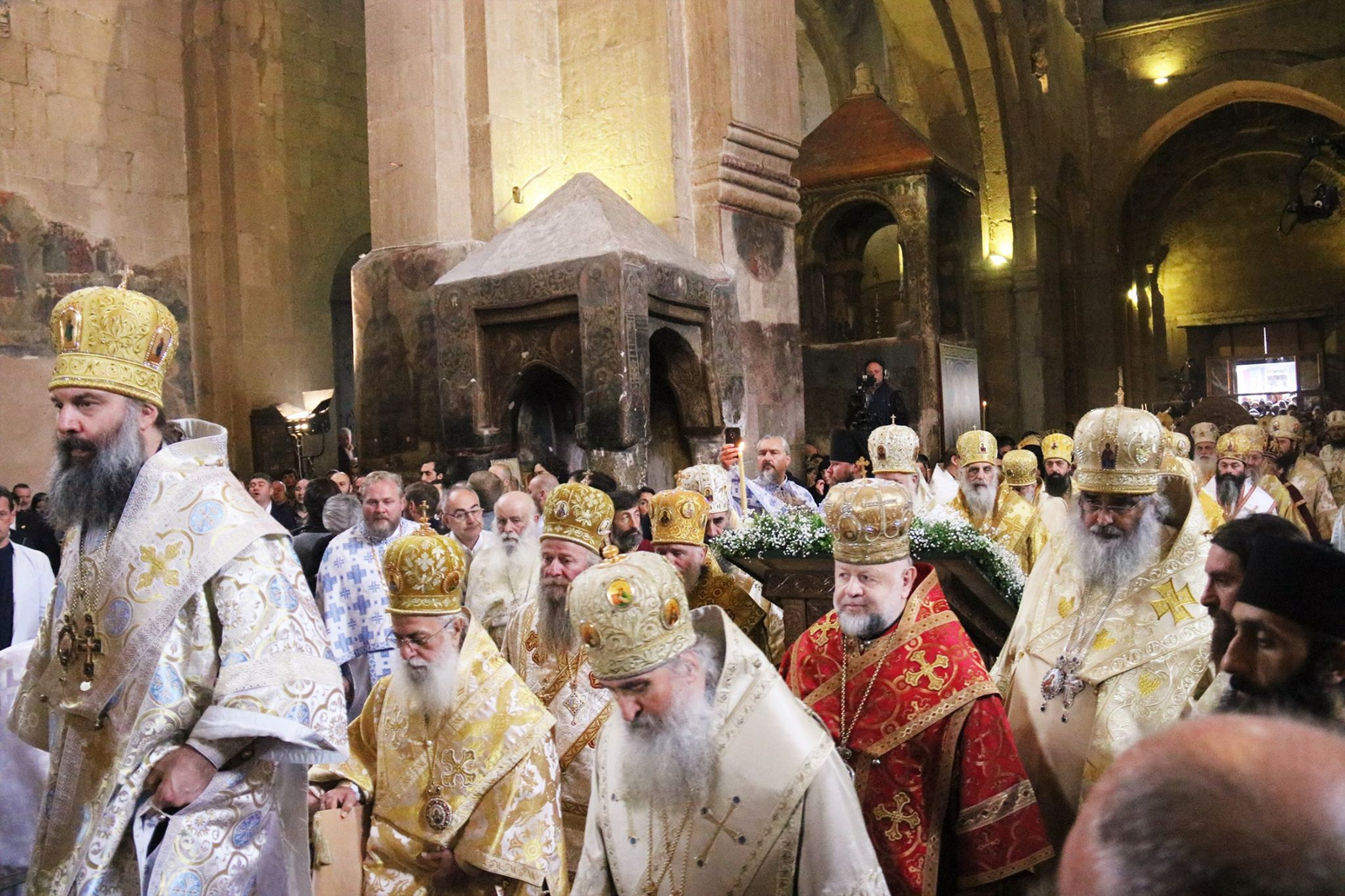
    Two weeks after the passing of Catholicos-Patriarch Ilia II, Georgia finds itself in a peculiar debate: while many caution against interfering in, or even publicly discussing, the succession process, few can resist expressing preferences or engaging in arguments about potential candidates.

    READ ALSO

    Georgia’s Annual Inflation at 5.9% in April 2026 – Civil Georgia

    Kobakhidze Attends European Political Community Summit in Yerevan – Civil Georgia

    That is hardly surprising in a country where more than 80 percent identify with Orthodox Christianity, and where both the Patriarch and the Church have long wielded significant influence, maintaining consistently high levels of public trust and authority across enduring political and social divides. That influence may extend well beyond the Orthodox parish. The Patriarch’s passing follows years of conservative drift within the ruling Georgian Dream party, which has repeatedly shown a willingness to weaponise faith in its crackdown on dissent, and even floated initiatives that could have resulted in tighter State–Church entanglement.

    It will take weeks before the Holy Synod elects a new Patriarch, but several names have already entered the public spotlight. Regardless of who is ultimately chosen to succeed Ilia II, however, experts expect the Church to undergo fundamental change. That may include decentralization and long-overdue shifts in the governance model, as the vacuum left by the passing of a widely revered leader could prompt a greater pluralism in decision-making.

    “Whoever comes next, the Church will no longer be what it was during the time of Catholicos-Patriarch Ilia II, whether in its outward features, nor in its substance, personnel, or positioning,” Shota Kintsurashvili, a theologian, tells Civil.ge.

    Patriarch’s Election

    Under the Church’s Statute of Administration adopted in 1995, a new Patriarch is elected during an extended church assembly from three candidates nominated by the Holy Synod, no sooner than 40 days and no later than two months after the Patriarch’s passing.

    While the extended assembly includes both clerical and lay delegates, only Holy Synod members can be candidates and can vote to elect the Catholicos-Patriarch. A candidate who receives more than 50 percent of the votes – meaning at least 20 votes from the current 39 members – is elected Patriarch. If none of the candidates secures the required majority, a runoff round is held.

    The new Patriarch must be “Georgian by nationality,” between 40 and 70 years of age, a hierarch of the Georgian Orthodox Church, possess a “theological education” and sufficient experience in church governance, and be ordained as a monk. Patriarchs are elected for life. Ilia II passed away on March 17, which means that Georgia must have a successor by May 17 at the latest.

    No official candidate exists yet. While many of the current 39 Synod members meet the age criteria, some clauses remain open to interpretations, including on what counts as sufficient “theological education.” The ongoing discussions have reduced the potential shortlist to a handful of potential candidates, ranging from the Patriarchal Locum Tenens to more reclusive yet increasingly popular hierarchs.

    Locum Tenens, Wartime Metropolitan, Other Potential Contenders

    The clearest potential candidate so far is Metropolitan Shio of Senaki and Chkhorotskhu Diocese (lay name Elizbar Mujiri), 57, whom Ilia II designated as Locum Tenens as early as 2017, amid the late Patriarch’s declining health. Since then, Metropolitan Shio has drawn increasing spotlight, with the Church’s more hardline and government-aligned positions in recent years often attributed to his leadership.

    Raised in downtown Tbilisi, in what would later become a prominent circle that includes Georgia’s fourth president Giorgi Margvelashvili and conservative, Moscow-friendly businessman Levan Vasadze, Mujiri initially pursued music, playing the cello before turning to a spiritual path. He received his theological education in Russia, studying at the Moscow Theological Academy and Saint Tikhon’s Orthodox University, where he also earned a Doctor of Divinity degree in 2015.

    While the position of Locum Tenens does not formally influence one’s chances, it has clearly boosted Mujiri’s public standing: his personal designation by the venerated Patriarch has reinforced the perception that Ilia II saw him as a potential successor. After Ilia II’s death, critics have pointed to what they saw as a coordinated media and social media campaign, tracing it to pro-ruling party groups, of endorsing Metropolitan Shio’s candidacy as the late Patriarch’s pick. Some observers, however, including Levan Sutidze, chief editor of Tabula outlet and a longtime observer of the Church’s inner workings, argue that this popularity is not necessarily reflected within the Holy Synod, where Shio is still far from securing the guaranteed 20 votes needed for election.

    Metropolitan Shio, Patriarchal Locum Tenens, walking alongside Disputed Parliament Speaker Shalva Papuashvili during a March 18 procession transferring Ilia II’s body to Holy Trinity Cathedral. Photo: Nini Gabritchidze/Civil.ge

    The doubts that Georgian Dream may be tacitly backing Metropolitan Shio were amplified after Gia Gachechiladze (“Utsnobi”) — a musician, TV personality, and pro–ruling party voice — suggested that another metropolitan, Isaiah, had withdrawn his candidacy in Shio’s favor. He also urged other hierarchs to follow suit.

    Isaiah, 65, the Metropolitan of the partly Russia-occupied Nikozi and Tskhinvali diocese in Shida Kartli, denied to the media that he had taken such a step, fueling expectations that the relatively private yet popular cleric may emerge as Mujiri’s main challenger. Speaking later during a Sunday sermon on March 29, he pointed out that the decision on who will succeed the patriarch should be left to “God’s will.”

    Having led a largely private life focused on his diocese, Metropolitan Isaiah has, in recent days, burst into public fame. Photos of him riding a horse across his diocese have made rounds on social media alongside the stories of his reported courage, humility, and socially oriented work. Originally from Tsalenjikha, western Georgia’s Samegrelo region, Isaiah, whose lay name is Zurab Chanturia, studied at art and theater schools, later drawing on those skills to launch parish-based artistic projects. He is also known for remaining with, and caring for, his parish during the 2008 Russian invasion, when parts of his diocese, including his convent, came under intensive bombardment. War had found him before, too, in the early 90s, while he served as a novice in presently Russia-occupied Abkhazia.

    There has, however, been debate over whether the Holy Synod might block his candidacy, citing the absence of any known formal theological degree. “Theological education”, without a clear definition of what it entails, is required both for becoming Patriarch and for serving as a church hierarch. This, according to some commentators, suggests that, upon his appointment as Metropolitan, his qualifications in this regard were already deemed sufficient.

    Metropolitan Isaiah presenting his parish-based artistic project. Video grab from Voice of America report.

    Should Metropolitan Isaiah’s candidacy be blocked or should he himself abstain from running, the names of other relatively strong candidates have been suggested by church observers.

    Those include Metropolitan Iobi of the Ruisi and Urbnisi diocese, also in the Shida Kartli region. Metropolitan Iobi, 65, with the lay name Elguja Akiashvili, hails from the same village of Sno in the Stepantsminda municipality as the late Patriarch Ilia II. While also not a liberal favorite, he is expected to rally strong support, including from the hierarchs who oppose Metropolitan Shio’s rule.

    Another such candidate is Metropolitan Daniel, born Davit Datuashvili, who leads the Chiatura and Sachkhere diocese in the western Georgian region of Imereti. The 70-year-old hierarch is set to turn 71 on May 29, days or weeks after a new patriarch is expected to be elected, raising questions about his eligibility, as the statute requires candidates to be between 40 and 70 years of age. Tabula suggested that the Holy Synod may review the vague eligibility clauses that could define the chances of Metropolitan Isaiah and Metropolitan Daniel as early as its scheduled meeting on April 3.

    Both Iobi and Daniel are perceived as relatively moderate by those who fear that Metropolitan Shio may steer the Church in a direction more aligned with the ruling party, or even Moscow. Moscow itself recently signaled interest in the succession process. In a statement released on March 31, Russia’s foreign intelligence (SVR) accused Ecumenical Patriarch Bartholomew of Constantinople – who performed Ilia II’s funeral service – of interfering in the Georgian Church’s elections by promoting preferred candidates — Metropolitan Abraam (Garmelia) of Western Europe and Metropolitan Grigol (Berbichashvili), an outspoken ruler of Poti and Khobi diocese.

    Neither of the two, however, has been widely discussed within Georgia as a serious contender. That is particularly true for Abraam, who, at 77, would fall outside the statutory age limit. However, the observers have not ruled out other potential candidates to emerge in the weeks to come.

    ‘End of Epoch’ and Inevitable Changes

    Worries persist among the public about how the election of a specific candidate could shape the Church’s policies for decades to come. The concerns have been reinforced by perceptions among the critics about discursive alignment between Church and state under Georgian Dream’s increasingly repressive rule.

    Shota Kintsurashvili, a theologian, suggests that, regardless of who assumes leadership, there is growing momentum for change within the Church, freed from the shadow of the late Catholicos-Patriarch who came to be seen as a “sacred figure,” in some sense standing above the Church itself.

    According to the theologian, during the half-century rule of Ilia II, and especially over the past 2-3 decades, the Church saw growing centralization, with the spiritual life in dioceses largely governed by the center and under a diminished role of individual hierarchs. That, he notes, has culminated in 8-10 years of “stagnation” amid the declining health of the Patriarch: six out of dioceses remain without bishops, while Holy Synod meetings were rare.

    “For 8 to 10 years, a whole range of challenges has accumulated within the Orthodox Church,” Kintsurashvili tells Civil.ge, pointing to a demand within the Church itself “for some change, a kind of revival, a breathing of life into spiritual life.” One challenge for the new leader, according to the theologian, will include maintaining stability within the church. The new ruler, he says, will also have to fill the void left by the Patriarch’s passing, and “preserve the sovereignty, a form of independence which the Church has more or less enjoyed from the state.”

    Kintsurashvili also recalls controversies that have, over the years, called the extent of that independence into question. Those included the Church’s weak response to what he calls the “greatest blow on the Georgian Orthodox Church over the past two decades from the state” – 2021 leaks suggesting that the State Security Service was spying on senior clergy.

    He also cites “fair disappointment” over the Church’s silence in response to the government’s crackdown on critics. The public discontent was also directed at what Kintsurashvili calls “culture of unspoken cooperation” and aligned messaging between the Church and the state, particularly since Metropolitan Shio became Locum Tenens.

    An important shift, however, could be a greater role for the Holy Synod, especially as some hierarchs have already become more outspoken in recent years.

    “I believe that members of the Holy Synod will become more active on a range of issues,” Kintsurashvili says. According to the theologian, the Church hierarchs “have been freed from decades of deference, restraint, and the shadow of centralization under the Catholicos-Patriarch.”

    Also Read:



    URL Copied


    Source link

    Related Posts

    Georgia’s Annual Inflation at 5.9% in April 2026 – Civil Georgia
    Georgia

    Georgia’s Annual Inflation at 5.9% in April 2026 – Civil Georgia

    May 4, 2026
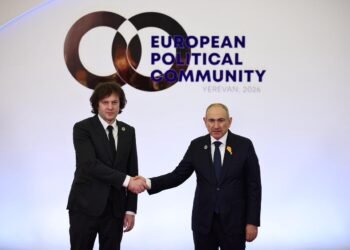
    Kobakhidze Attends European Political Community Summit in Yerevan – Civil Georgia
    Georgia

    Kobakhidze Attends European Political Community Summit in Yerevan – Civil Georgia

    May 4, 2026
    Nino Shubladze Appointed Director General of Rustavi 2 TV Channel – Civil Georgia
    Georgia

    Nino Shubladze Appointed Director General of Rustavi 2 TV Channel – Civil Georgia

    May 3, 2026
    Ekho Kavkaza, RFE/RL’s Russian-Language Unit Covering Georgia and Its Occupied Territories, Closes – Civil Georgia
    Georgia

    Ekho Kavkaza, RFE/RL’s Russian-Language Unit Covering Georgia and Its Occupied Territories, Closes – Civil Georgia

    May 2, 2026
    Roman Kartsivadze Moved from MIA Special Tasks Department to SSSG Role – Civil Georgia
    Georgia

    Roman Kartsivadze Moved from MIA Special Tasks Department to SSSG Role – Civil Georgia

    May 2, 2026
    Disputed Parliament’s ‘Price Commission’ Concludes Work – Civil Georgia
    Georgia

    Disputed Parliament’s ‘Price Commission’ Concludes Work – Civil Georgia

    May 2, 2026
    Next Post
    Minister calls for media innovation, digital shift

    Minister calls for media innovation, digital shift

    POPULAR NEWS

    Justin Bieber fans flood Coachella festival for headlining show – Entertainment

    Justin Bieber fans flood Coachella festival for headlining show – Entertainment

    April 20, 2026

    Over 600 flee homes as Army, NPA clash in Negros Occidental

    April 21, 2026

    Ex-DPWH exec recalls P800-M ‘delivery’ to Zaldy Co 

    April 20, 2026

    Former PM Paluckas suspends party membership, to waive immunity over criminal probe

    April 24, 2026
    Pres. Ali challenges CARICOM to transform into health research powerhouse

    Pres. Ali challenges CARICOM to transform into health research powerhouse

    April 23, 2026

    EDITOR'S PICK

    What is a pre-existing medical condition for travel insurance? What you do and don’t need to declare to your insurer and airline

    What is a pre-existing medical condition for travel insurance? What you do and don’t need to declare to your insurer and airline

    April 13, 2026
    Gordon Robinson | The essence of bronze | Commentary

    Gordon Robinson | The essence of bronze | Commentary

    April 7, 2026
    Darine Waked

    Darine Waked

    April 11, 2026
    McCain daughter says she’s ‘trapped’ in family company

    McCain daughter says she’s ‘trapped’ in family company

    April 10, 2026

    Recent Posts

    • “Laudate Dominum” concert of the organ duo Vidos Pinkevičius and Aušra Motūzaitė-Pinkevičienė will take place | Culture
    • Lithuania’s top universities ranked – VU takes first place
    • Björklöven back after 25 years, captain calls it a childhood dream
    • I tried to live for 24 hours without using oil-based products. It was ridiculously impossible | Consumer affairs

      © 2026 Agentially - Navigating shifting sovereignties and global risk .

      Welcome Back!

      Login to your account below

      Forgotten Password?

      Retrieve your password

      Please enter your username or email address to reset your password.

      Log In
      No Result
      View All Result

        © 2026 Agentially - Navigating shifting sovereignties and global risk .

        This website uses cookies. By continuing to use this website you are giving consent to cookies being used. Visit our Privacy and Cookie Policy.