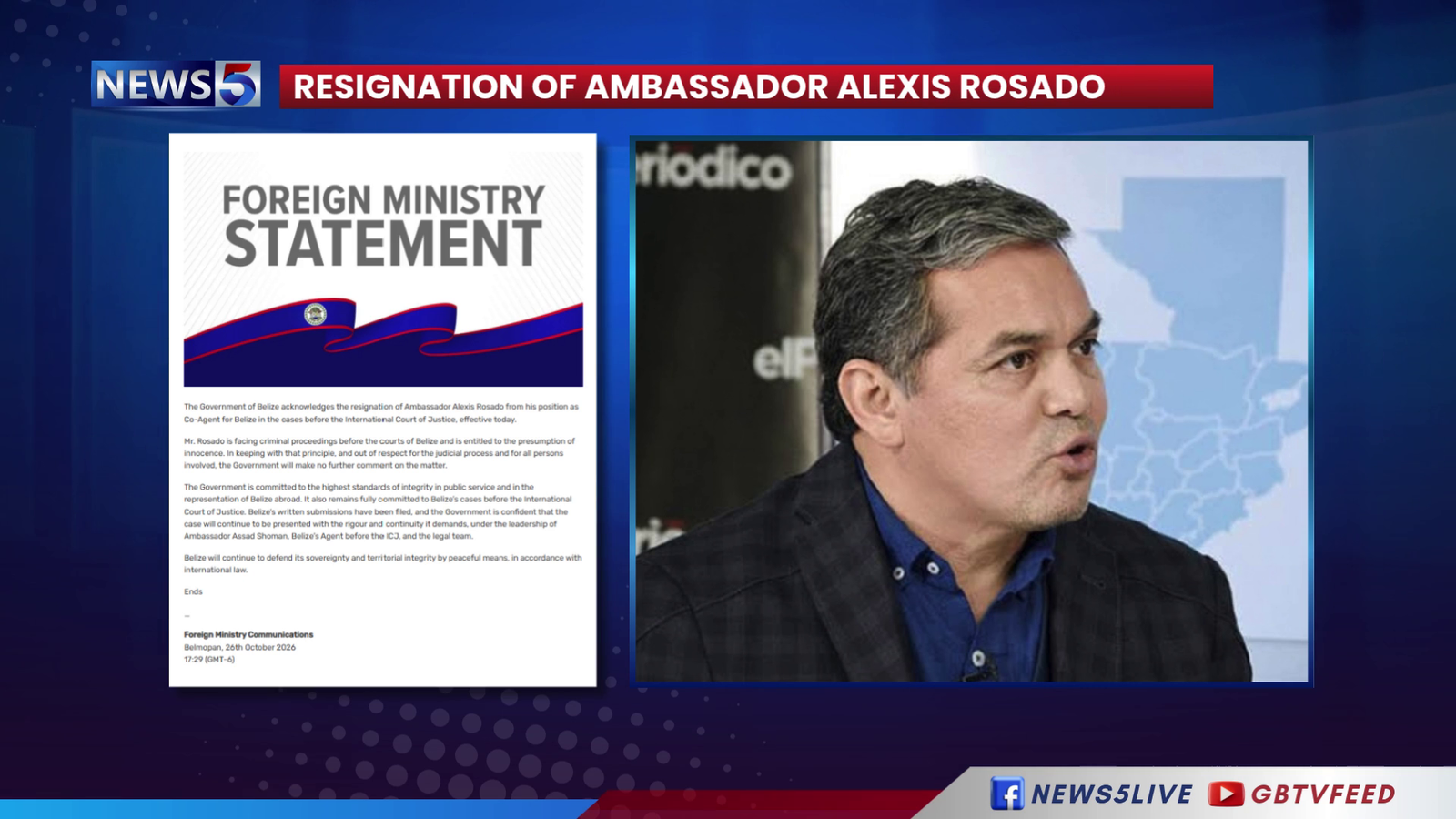
Ambassador Alexis Rosado has resigned as Belize’s Co-Agent in the cases before the International Court of Justice, bringing an end to weeks of public debate over whether he could continue representing the country while facing criminal proceedings. Government confirmed that the resignation takes effect immediately. It also stressed that Rosado remains entitled to the presumption of innocence and said it will make no further comment out of respect for the courts and everyone involved. That restraint is legally understandable. But does it fully answer the questions surrounding the controversy? Rosado has not been convicted, and a criminal charge should never be treated as proof of guilt. At the same time, his former position required him to represent Belize in cases tied directly to the country’s sovereignty and territorial integrity. That raises a difficult question: should the standard for remaining in such a sensitive public role be limited to whether someone has been convicted, or should public confidence also influence that decision? Government says it is committed to the highest standards of integrity in public service. Rosado’s resignation may support that principle, but it also invites closer scrutiny of how the matter was handled. Why did the resignation come now? Did Rosado make the decision independently, or did government ask him to step aside? Was there a formal process for reviewing whether he should remain on the ICJ team? And should Belize establish clearer rules for public officials who face serious criminal proceedings? These questions are not about deciding Rosado’s guilt. That is for the courts. They are about accountability and the standards expected of those representing Belize. Government says his departure will not disrupt the ICJ cases. Ambassador Assad Shoman remains in charge, and Belize has already filed its written submissions. But who will take over Rosado’s duties? Will government appoint another Co-Agent, and could the transition affect preparations? Rosado’s resignation settles his place on the team, but not the wider debate. Government must still balance the presumption of innocence with the public’s demand for integrity and accountability in high office.
Attention readers: This online newscast is a direct transcript of our evening television broadcast. When speakers use Kriol, we have carefully rendered their words using a standard spelling system.
Watch the full newscast here: