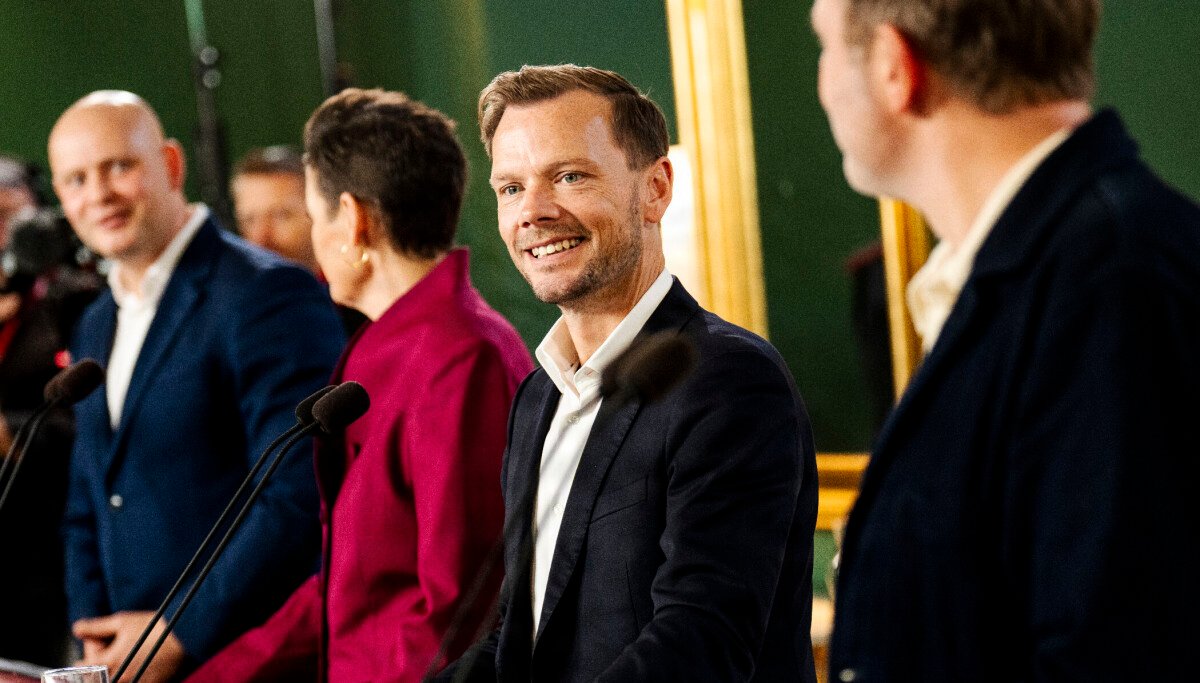
The Danish government’s financial bill for 2027 was presented in the Ministry of Finance on Friday, and must be negotiated in the coming time with the parliamentary parties, including the North Atlantic members.
The vast majority of the many billions – typically over 95 percent of the funds – are locked in advance and do not have to be negotiated. This applies, for example, to the block grant to Greenland of DKK 4 billion. kroner as well as the financing of the non-reclaimed areas of around DKK 2 billion. kroner. This also applies to all the agreements already concluded, such as the defense agreement (2024-33) and the framework agreement for initiatives and investments in Greenland of DKK 1.6 billion in the period 2027-30. The agreement contains, among other things, financing of an airport in Ittoqqortoormiit and a deep-water port in Qaqortoq, as well as certain health expenses.
Means of negotiation
What can be negotiated in the financial bill for 2027 are the so-called reserves, which amount to DKK 500 million. kroner annually in the period from 2027-20.
Among them, 120 million have been set aside. kroner in the North Atlantic pool from 2026-29, which are traditionally funds linked to Greenlandic projects in Greenland or Denmark.
You can read from the finance bill that, among other things, there is 1.3 million kroner in 2027 for Unicef Kalaallit Nunaanni’s efforts to involve children in schools and a further kroner 500,000 for the work of the Arctic Mayors’ Forum to strengthen involvement and development of experience between arctic municipalities.
There are also funds for legal aid in Greenlandic in Denmark and outreach legal aid in Greenland, as well as grants for several shelters, for example the Salvation Army in Greenland and the shelter Angakok and the Church’s Choir in Denmark.

Institute for Human Rights in Greenland
It also appears from the financial bill that the Institute for Human Rights is to have its grant increased by DKK 3.2 million. kroner in 2027, which will go to “strengthened mandate fulfillment in Greenland”.
– For some years we received grants via the North Atlantic pool, but not in recent years. We have a permanent employee and office in Nuuk, and have therefore inquired whether it was possible to get a grant targeted at our work in Greenland. Overall, we are very happy that the grant has now been written into the Finance Act for 2027, and we of course hope that it can become a more permanent solution, says the Institute for Human Rights’ national head, Johan Busse, who explains that the institute has good and close cooperation with the Greenland Council for Human Rights (IPPS) and, among other things, participates in their meetings and supports their work.
First treatment next week
The finance bill will have its first hearing in the Danish Parliament on Monday 19 October, where the parties will debate the general lines of the proposal. Subsequently, the bill goes to the finance committee for consideration.
Alongside the committee work, the Minister of Finance and the government must negotiate with the parliamentary parties in order to create a majority and enter into an overall finance law agreement. The proposal must go through a 2nd and 3rd reading and is expected to finally be adopted by a vote in the Folketing in December.