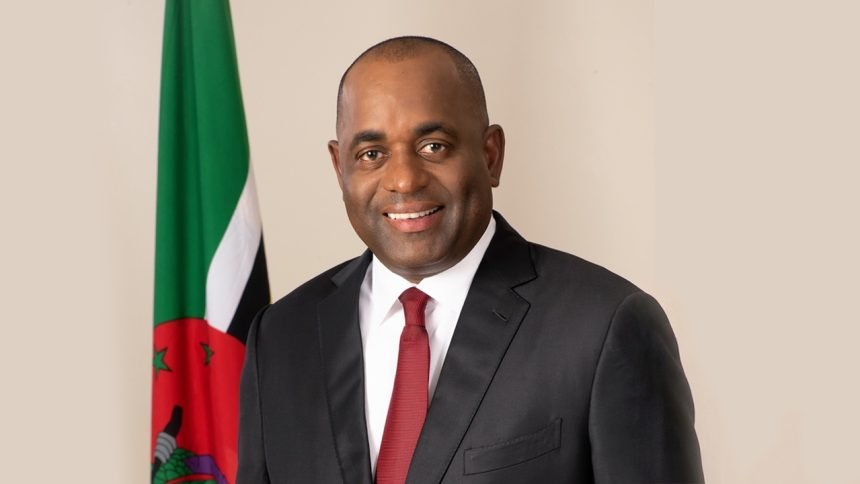

Prime Minister Roosevelt Skerrit has welcomed what he described as a “very constructive” meeting between Caribbean Community (CARICOM) leaders and the United States in Washington, D.C., while pressing Washington to address Dominica’s longstanding concerns over visa restrictions and the region’s development financing needs.
Speaking following last week’s meeting, Skerrit said the discussions represented an important step towards rebuilding US engagement with the Caribbean, particularly in areas beyond security cooperation.
“I’m happy that the United States government has recognised, to some extent, that the Caribbean has been abandoned by them in terms of engagement beyond just the security cooperation that we have,” he said.
According to the Prime Minister, Washington has made commitments in several areas aimed at helping Caribbean countries close critical development gaps. However, he stressed that the significance of the meeting extended beyond the prospect of financial assistance, arguing that the region needs a stronger and more sustained partnership with the United States.
“For us in Dominica, it is not really about the funds. It’s really about the engagement and the acknowledgement that they have been absent in the development of the Caribbean, especially where development financing is concerned to assist nations in developing infrastructure,” Skerrit said.
While welcoming the US intention to make development financing available through the Export-Import Bank of the United States, Skerrit made it clear that the terms of any arrangement would be critical.
He said Caribbean countries would prefer grants to finance major development projects but acknowledged that access to affordable loans could provide an important alternative for governments seeking to build and upgrade infrastructure.
The Prime Minister cautioned that the proposed financing arrangements must be assessed carefully, particularly regarding procurement procedures, repayment conditions and interest rates.
“These will have to be at highly concessionary rates, if not bettering what the World Bank is offering, but at least matching the interest rates of the World Bank,” he said.
His comments underscore Dominica’s position that development financing must be genuinely affordable and responsive to the needs of small Caribbean economies, rather than offered on conventional commercial terms that could place additional pressure on national finances.
Beyond development cooperation, Skerrit said he used a separate bilateral meeting with representatives of the US Department of State to raise the issue of visa restrictions affecting Dominica.
The Prime Minister described the issue as a major concern for his government and said he addressed it respectfully but firmly, reiterating his administration’s position that there was no basis for imposing the restrictions.
“Of course, top on our list of issues in the United States is with regards to the visa restrictions. And so this was discussed by myself and raised by myself very respectfully but firmly,” he said.
Skerrit disclosed that he presented a proposal to the US department and was assured that the matter would be discussed with senior officials before a response was communicated to Dominica.
“It is left now to them to determine how they will react to the visa restrictions in Dominica,” he explained. “But I did say to them that we hold a very firm view that there was no basis for the imposition of the visa restrictions.”
Although the Prime Minister suggested that some members of the US administration may have recognised the concerns raised, he acknowledged that the next move rests with Washington.
“But we will certainly continue engaging them,” he said, adding that his government was awaiting a response.
Despite the outstanding disagreements, Skerrit reaffirmed the importance of maintaining strong relations with the United States, describing it as a key ally and development partner for Dominica and the wider Caribbean.
He pointed to longstanding connections between the two sides, including cultural ties, family relationships and the movement of Caribbean students pursuing higher education at American universities.
Skerrit said opportunities to strengthen cooperation between the Caribbean and the United States should be welcomed, particularly at a time when regional countries are seeking greater support for their development priorities.
“Any opportunity that is given to us to enhance and to deepen the relationship between the Caribbean and the United States will certainly be welcome and taken advantage of,” he said.
For Dominica, the outcome of the Washington talks will ultimately depend on whether the commitments made translate into meaningful development support, affordable financing and progress on the visa restrictions.
While Skerrit has welcomed the renewed engagement, his remarks make clear that his government expects concrete action from Washington on issues it considers critical to Dominica’s national interests.