A few days ago, in the middle of a speech, the president Abelardo De la Espriella spoke again about the so-called “cultural battle” that his Government seeks to lead. But this was not like his previous interventions. This time he spoke directly against what other right-wing leaders in the region have declared as their enemy in said battle: “We are going to commit an open, determined and patriotic fight against wokism, “which is nothing more than an ideological current that aims to transform the moral, cultural and social foundations in the West, perverting values, family tradition, national identity.”
READ ALSO
In his words, the so-called wokism “it ignores the biological differences between men and women, falsifies history, reducing it to a succession of struggles between oppressors and oppressed. This liberticidal current imposes, through physical and verbal violence, its postulates on education, inclusive language and culture.” All this, he assured, is part of what his Government has described as one of its priorities: the so-called “cultural counterrevolution.”
The effects of this open fight against ‘woke’ culture (a term used to refer to progressive movements, particularly in defense of certain minorities) were seen that same day. De la Espriella announced in that same speech that the name of the Ministry of Cultures, Arts and Knowledge will be renamed the Ministry of Culture and Heritage, alleging that “culture can no longer be used as an instrument of ideology.”
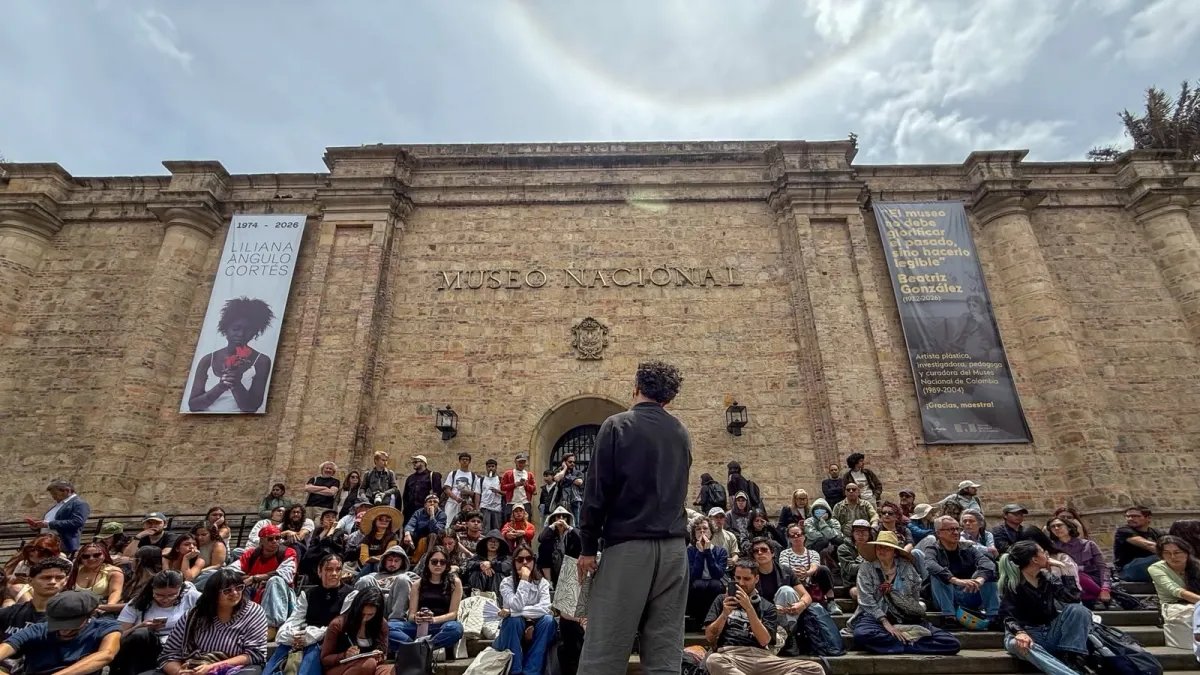
The gaps left by the decision. Photo:Juan José Ríos
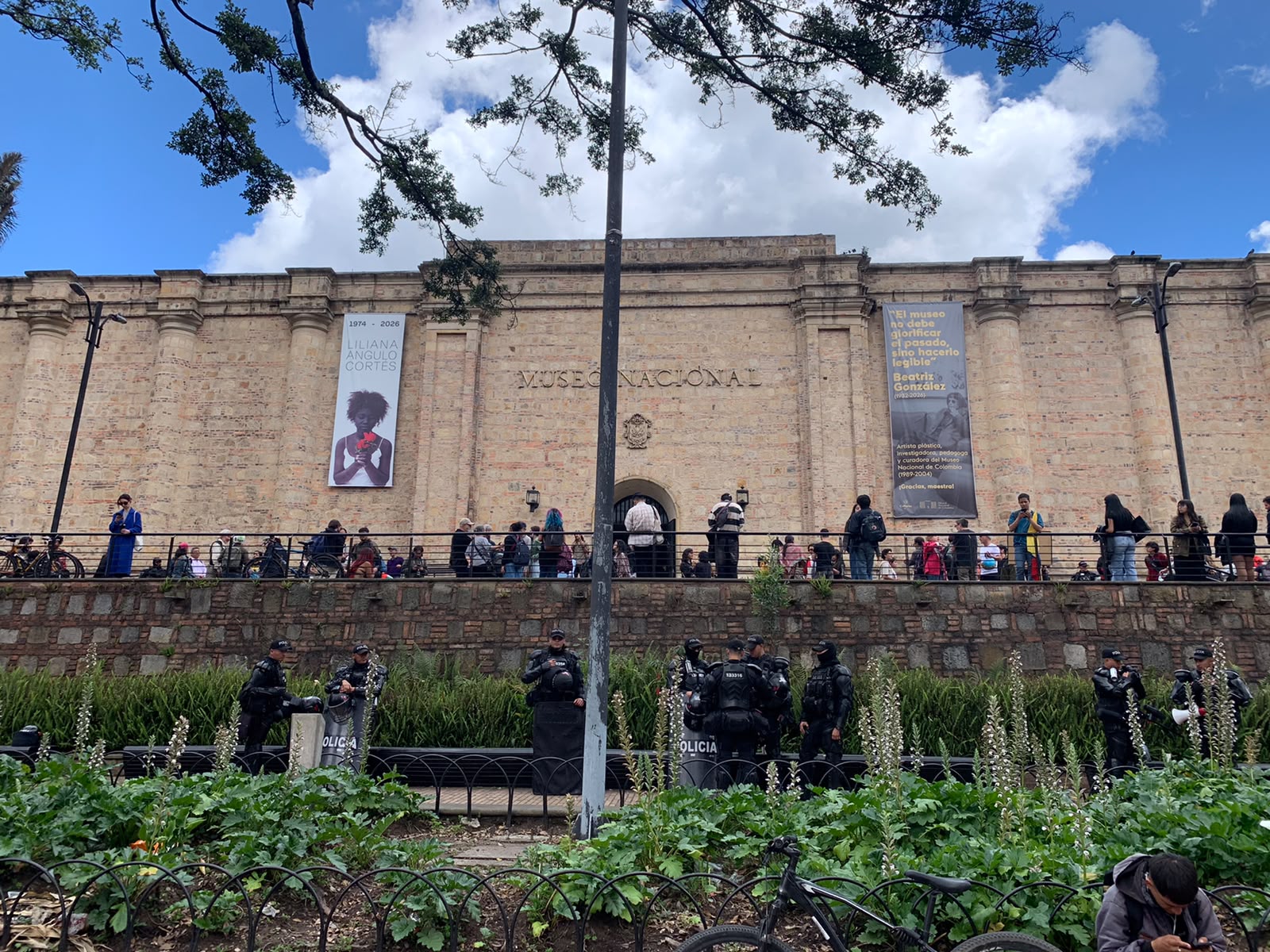
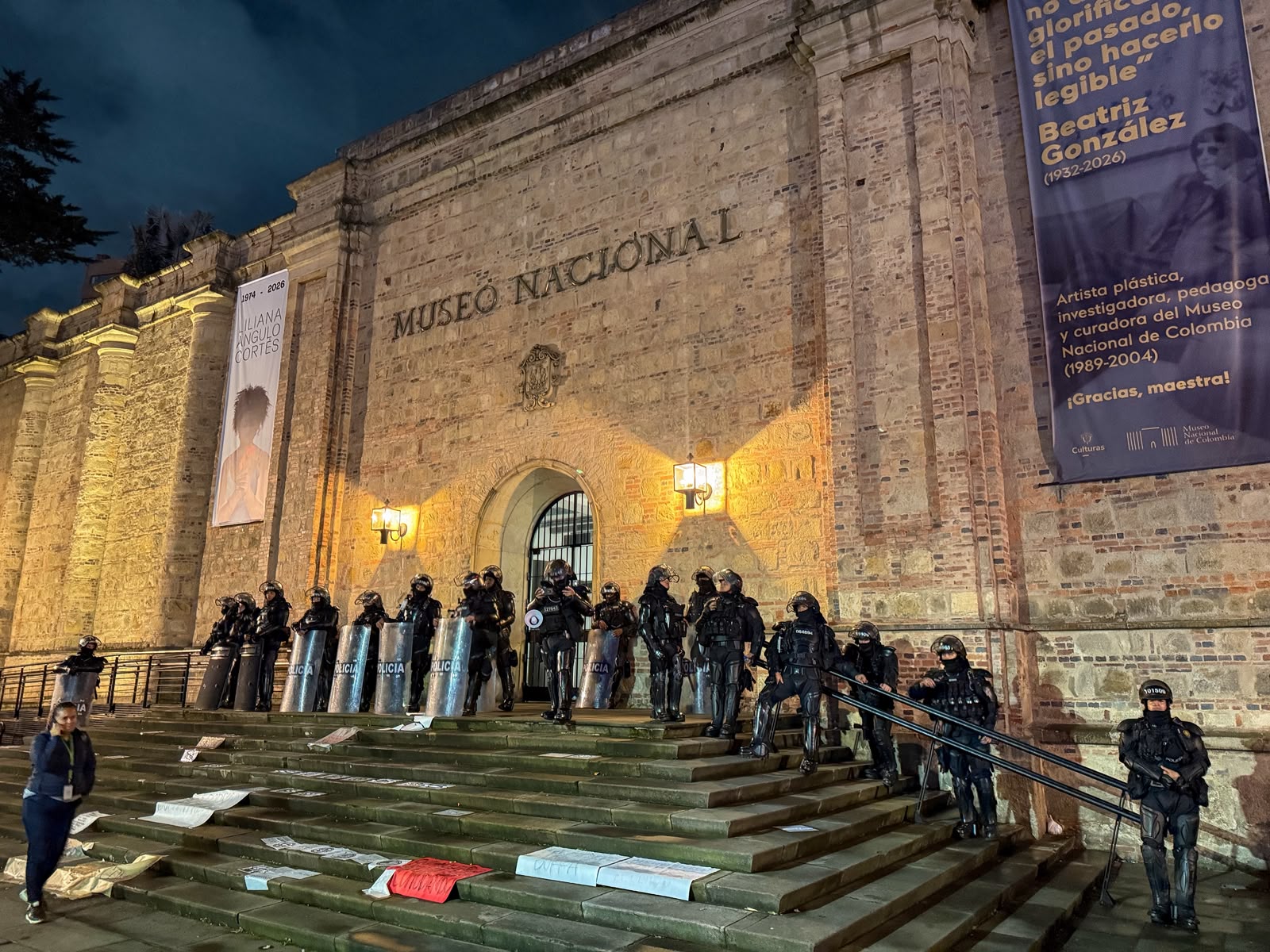
Just one day later, the country learned that several pieces alluding to the feminist movement, LGBTI population and left-wing leaders such as Carlos Pizarro and Bernardo Jaramillo Ossawere removed from the permanent exhibition of the National Museum.
Likewise, this week it was known an official letter sent to the president by the Minister of Education, Ilva Myriam Hoyos, requesting to repeal the resolution that establishes the National Sexuality Policy issued by the previous government, a document that, among other things, established guidelines on what sexual education should be like in the country’s schools. The above, in accordance with statements from the previous mineeducation, Viviane Morales, who at the time denounced the influence of “gender ideology” in sexual education in the country. Weeks before, a guideline in the ICBF to exclusively use the expression “children and adolescents”, omitting the word “girls” had already caused controversy.
These actions have transcended the international stage. A few weeks ago, Alejandro Ordóñez, acting as Colombia’s ambassador to the OAS, announced that the Government did not recognize abortion as a right, while the ambassador in charge of the UN, Álvaro Ayala, announced that “Colombia dissociates itself from the expression sexual and reproductive health and rights.”
Culture as a battlefield
What is the message that the Government wants to give by directly assuming a conservative position of these characteristics? What are the possible implications of assuming the cultural counter-reformation as a banner?
According to Bibiana Ortega, professor of Political Science at the Javeriana University and researcher on the relationship between politics and religion, The De la Espriella Government adopted a notion of cultural battle similar to that of other right-wing parties in the world, especially in America, in which “socialism, communism and progressivism are usually presented as part of the same phenomenon. From that perspective, the left-wing would have understood that the dispute for power is also fought in the cultural field and that, therefore, culture is political. The response of these new rights then consists of contesting that terrain again and questioning ideas that they consider to have been socialized and naturalized.”
About 30 works were removed. Photo:Juan José Ríos
And he added: “In that reading, feminist demands and the recognition of diversities, especially when translated into public policies, They are seen as results of a cultural battle that, for these rights, began from progressive sectors. That is why the cultural acquires a directly political dimension and becomes a central field of dispute.”
According to Carlos Charry, doctor in Sociology and professor and researcher at the Universidad del Rosario, All of these conceptions present in political discourse have led to culture and ideology being inevitably linked terms: “Today you cannot talk or debate about culture without making references to ideology and vice versa. Every cultural struggle is an ideological struggle and every ideology must be understood as a system of values that affects culture.”
READ ALSO
According to the expert, many of the positions of De la Espriella and his officials were expected as they were conservative sectors, with a great influence of religious principles and values: “It was to be expected that a right-wing government would not agree with many of the changes and evolutions that the country had in terms of rights, considering them contrary to its line of thought, which is not only legitimate but is not actually something new. What is new is the language with which the reference to ‘wokism’ is expressed.”
And for Charry, this has been a mistake by the Government, since, in his opinion, every struggle of any minority has been understood as part of that enemy that he identifies in the woke culture, and this has led him to take actions “more focused on pleasing his electorate, making mistakes in the process. A concrete example is what happened with the National Museum, where it is clear that there was a legal error in decision-making and for this reason there have already been judicial decisions. Another example is his fight against inclusive language. The Law of Childhood and Adolescence talks about children and adolescents. When the director of the ICBF tries to change it, a legal debate opens in which the law would have to be modified. Doing this may be good for her constituents, but exhausting in terms of governance.
A legitimate debate?
Much of the debate around this cultural counterrevolution is whether these statements and actions of this Government are legitimate and whether there is a possibility that rights may be violated in their wake.
In this regard, Hernán Olano, professor at the Faculty of Canon Law of the Pontifical Javeriana University, assures that the government of President De la Espriella has the right to defend the principles it confesses, and warns that the violation of rights and ideological imposition does not come only from the right: “Governments have the power to propose changes, review previous decisions and defend their convictions. However, the State does not ideologically belong to those who govern it at a given moment, it must also represent those who disagree with its ideas. In the previous four-year period, for example, there was no room for this discrepancy, there were also impositions in the name of progressivism.”
READ ALSO
For the analyst, however, defending Christian principles and values does not imply violating those who think differently, nor does he consider it correct when conservative sectors are censored: “Conservatism is not, by definition, contrary to human rights; nor does the invocation of traditional values exempt the public power from respecting the Constitution. The real progress consists in ensuring that the convictions of each other can coexist under common legal rules.”
However, for Andrés Agudelo, professor of the Political Science program at the University of La Sabana, the terms that the Executive has used so far in the framework of its cultural battle, as well as some of its decisions, would not be cultivating a democratic environment, and, on the contrary, would be deepening the polarization in the country.
“A healthy democratic society must strive to instill and cultivate the values of tolerance, autonomy, respect for difference, and the construction of agreements. In that sense, What does not contribute to the health of the debate in any democratic society is polarizationthe imposition of positions or the univocal vision in ideological terms or in terms of conception of the world. We have already experienced this in Colombia, for example with the peace agreements, the social outbreak or the ideological positions during the Petro government. What we are seeing today is one more contribution to that ideological bonfire that divides, that radicalizes political positions and that does not contribute to building a democratic environment.”