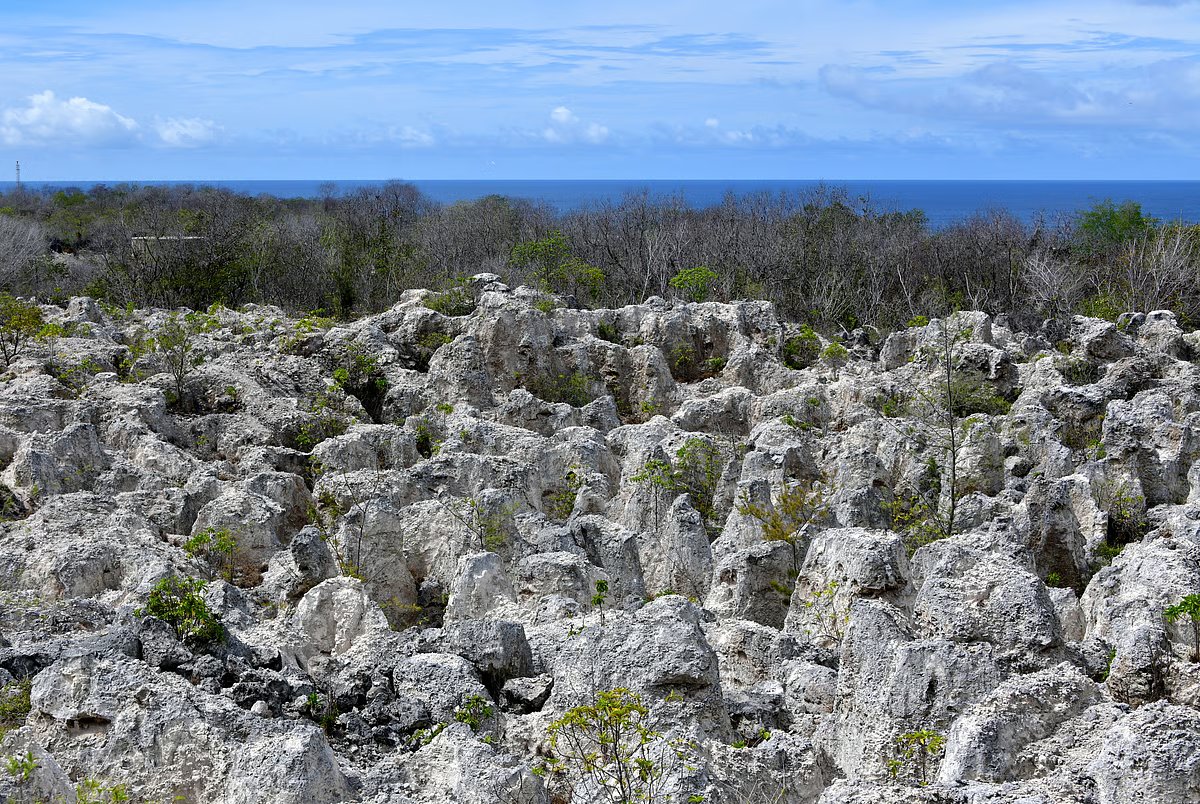
Imagine an island where birds helped create a mineral resource valuable enough to transform an entire country.
In the central Pacific Ocean lies Nauru, one of the world’s smallest independent nations. The island is surrounded by coral reefs and has a remarkable geological history.
For thousands of years, seabirds visited the island and deposited droppings known as guano. Guano contains phosphorus, an important nutrient for living organisms.
Over geological time, phosphate-rich material accumulated and interacted with the island’s limestone. The result was extensive phosphate deposits that eventually became commercially valuable.
The birds did not literally build mountains. Instead, their accumulated waste helped form mineral deposits within an island shaped by much older geological processes.
Phosphate is widely used in fertilisers because phosphorus is essential for plant growth.
Mining began on Nauru in the early twentieth century. Large quantities of phosphate were extracted and exported, transforming the island’s economy.
But this wealth came at an enormous environmental cost.
Mining removed much of the phosphate-bearing material from the island’s interior, leaving behind exposed limestone pinnacles and heavily disturbed ground. Large areas became difficult to use for farming or other activities.
The contrast between Nauru’s coastal settlements and its mined interior is striking. An island once rich in a valuable natural resource was left facing serious challenges over land restoration and economic sustainability.
Nauru’s story begins with seabirds, but it leads to a much larger lesson about geology, industry and the environment.
Something as ordinary as bird droppings can contribute to the formation of valuable mineral deposits. What humans do with those deposits can change an entire landscape.