A rain of around 5 hours was enough to demonstrate each of the flaws in Piura. A drainage system that does not work, flooded streets, unfinished works and also the danger of dengue, a disease that has already hit the northern region. Why does Piura live in a vicious circle in which we can only hope that the worst does not happen?
In 2017, in the midst of the El Niño Costero phenomenon, more than 50 died from dengue. In 2023, the year of Cyclone Yaku, almost 80 thousand cases and 148 deaths. In 2026, more than 13 thousand accumulated cases of dengue and 8 deaths will already be recorded. The outlook for 2027 is not very encouraging.
The rains produced in recent days only raised eyes again on a region that has already been greatly affected by natural disasters. Streets with floods were also seen in urbanizations in Piura, Chulucanas and Catacaos. Senamhi has already warned that the rains will continue in the coming months with more frequency and intensity. And given this imminent arrival of inclement weather, the question is, what is being done to contain as much as possible the ravages of an El Niño Phenomenon that is expected to be catastrophic?

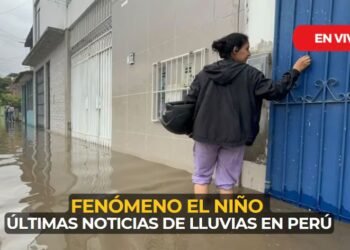
Neighbors walk through a flooded street in Piura, where water covers a large part of the road in front of homes and buildings. (Photo: GEC)
Dengue, a great threat
Edward Pozo, head of health intelligence at Essalud’s Piura healthcare network, spoke with El Comercio about how the northern region is doing weeks before the El Niño Phenomenon and after this rain that has been a kind of warning of what could come.
In hospitals, there will be intensive surveillance units for dengue, care places with medical supplies and medications. In addition, personnel who will be needed during the emergency will be hired.
“The rains have been a warning that it will greatly affect the health of Piura.”
“What is known about dengue is that at least after two weeks of the rainy period, cases of dengue begin to appear, in an endemic situation. But Piura has already had cases of dengue since the month of July, with active outbreaks. And this is due to the heat and high temperatures. What these recent rains do is add one more variable that will increase the risk of a greater number of cases (of dengue).”
Regarding forecasts and how to prepare for what is predicted as a FEN of “strong to extraordinary” magnitude, the biologist pointed out that with historical data, they have put themselves in the worst possible scenario. “The worst was in 2023 with Cyclone Yaku. Essalud had 35 thousand cases of dengue. The PAHO in its guide has told us to calculate with an attack rate of 4.5 to the population. That is, 4.5% of the population could become ill with dengue.”
Vaccination as a defense system
“The Diresa gives part of these vaccines to Essalud, but they are the ones who monitor those figures and progress. We, as the Piura – Essalud healthcare network, were provided with 2,500 vaccines. More than 50% have already been administered to insured people in the age group of 10 to 20 years. And we are carrying out intense campaigns in Morropón, Bajo Piura and Sullana. Once we have that covered, we will request more vaccines.”
Nancy Jiménez, correspondent in Piura for América Noticias and Canal N, answers us about the incidence of dengue in the region: “Piura is a completely endemic city. Right now we are in the middle of an outbreak. There are more than 13 thousand cases and 9 deaths. Of them, 4 are minors.”

Dengue cases in Piura have registered peaks of infections in recent weeks. (Photo: Andina)
The region faces the El Niño Phenomenon and dengue, once again
What is going to happen now that the rains are coming? The vulnerability of highly endemic areas or areas with high dengue transmission, such as Chulucanas, Sullana, Piura or Castilla, is because they are the most populated and, therefore, more likely to develop outbreaks of the disease.
“The young people of these cities, who do not have basic services, are going to have many problems due to the accumulation of water, and even worse, to have drinking water for their consumption and personal hygiene. This with the rains is going to become much more acute. The availability of drinking water is going to be quite difficult. They are much more vulnerable to having dengue and also respiratory diseases, mycosis or diarrhea, due to the same conditions that this phenomenon generates,” said Edward Pozo.

A person rides a motorcycle through a flooded street in Piura, Peru. (EFE/ Malú Ramahí).
/ Malú Ramahì
This is how Piura is today
When we were in Piura a few months ago, we saw that several streets in the historic center looked broken and without visible progress in the works. The people who passed through that area only told us “it has been like this (broken and in apparent abandonment) for a long time.” In this regard, our colleague Nancy Jiménez adds:
“Piura is completely destroyed, with roads that you can’t even walk on and not just the center of Piura, but in the region, in the city, they have started a series of works already at the end of the administration. They close one road, they break it, they close another, they break it, without even restoring the one they broke previously. According to the Piura Chamber of Commerce, at least 80% of the businesses in the area have been affected.”
Works that should have already been completed and that register progress of less than 40%, SARES (rainwater collection and evacuation systems) of the Ministry of Housing that have not had the expected response from the municipalities, which due to the closure of their efforts, have neglected these functions.
And no, this is not a “dry drill” as the Minister of Defense, Rafael Belaúnde, who visited the affected areas in Piura, would say. The northern region is only warning that it is not ready and the clock is ticking. The El Niño Phenomenon and dengue do not wait.

The rains in Piura began the night of last Monday the 19th and lasted until this Tuesday the 20th. (Photo: Public Ministry)