Moscow/Prague/Havana/The Kremlin praised the United States on Thursday for its mediation efforts in Ukraine and criticized European countries for “doing nothing” to contribute to the peaceful settlement of the conflict. The statements contrast with those of the president of the Czech Republic, Petr Pavel, who believes that Donald Trump frustrated the possibility of a truce by allowing the arrival of Russian diesel to international markets.
“The US administration does a lot to contribute to a peaceful settlement. European capitals do nothing,” Kremlin spokesman Dmitri Peskov said in his daily telephone press conference. On the contrary, he added, the Europeans “do a lot to provoke the continuation of military actions.” Peskov stressed that he had not heard “a single statement” about the Europeans’ intention to opt for a dialogue “that takes into account Russia’s legitimate security interests.”
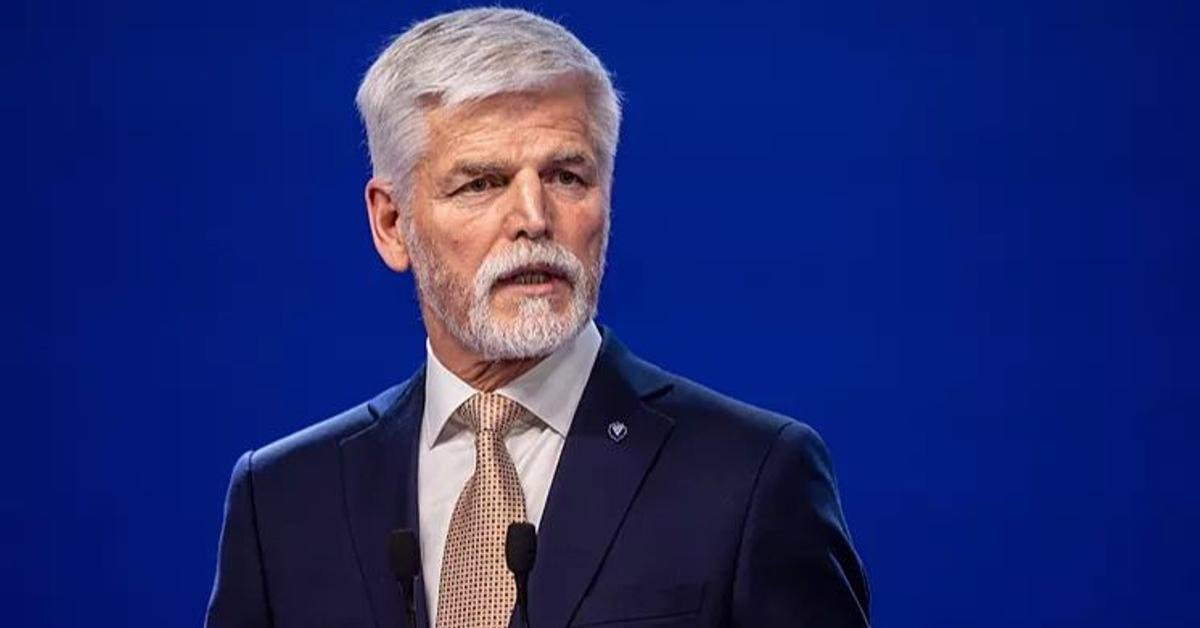
Pavel, on an official visit to Germany, stated that the truce between Russia and Ukraine was “quite close” until Trump lifted the sanctions on Russian diesel, according to the Slovak newspaper reported this Thursday. Pravdawhich reproduced his statements to media from the Axel Springer group.
Petr Pavel affirmed that the truce between Russia and Ukraine was “pretty close” until Trump lifted sanctions on Russian diesel
“I still don’t know if we can call it treason, but I would say it is a mistake,” declared Pavel, for whom the diesel agreement clearly goes against Europe’s interests.
“Russia is taking advantage of this situation to relieve pressure, and it serves as a kind of morale boost,” he said.
After meeting in Germany with Chancellor Friedrich Merz, Pavel declared that he does not share the position of some European countries that stopping aid to Ukraine would reduce tensions with Russia and its hybrid attacks, according to the Czech agency CTK.
“On the contrary, I maintain that the opposite would happen, since this would embolden Russia,” he said.
Pavel believes that Trump does not perceive the war caused by the Russian invasion of Ukraine “as a struggle between democracy and autocracy”, but interprets it “through the prism of the economic prosperity of the United States.”
Peskov refused to reveal in detail the content of the consultations between Vladimir Putin and the White House emissary, Steve Witkoff.
For his part, Peskov refused to reveal in detail the content of the consultations held on Wednesday in Saint Petersburg by the Russian president, Vladimir Putin, and the White House emissary, Steve Witkoff.
“Any kind of megaphone diplomacy can only harm” the process, he said.
The spokesman denied that Putin had submitted any counterproposal to the US envoy and that Moscow had made a final decision on the members of the delegation that will participate in the next round of tripartite negotiations, the resumption of which the Russian leader promised in November.
The Kremlin stressed the day before that Putin would study the proposals agreed upon by the United States with the Europeans and Ukrainians in Oslo, something confirmed this Thursday by the Russian Deputy Foreign Minister, Sergei Ryabkov.
“I hope that the Ukrainians will do the same,” said Riabkov, who expressed his confidence that Washington will communicate the Russian position to those who “are still not willing to move forward along the path of settlement” and maintain the illusion of imposing “unacceptable” positions on Moscow.
Peskov also assured that there is no news about plans for a tripartite summit in November between Putin, Trump and Chinese President Xi Jinping, viewed with suspicion by kyiv and Brussels.
No decision has yet been made on Putin’s possible participation in the G20 summit to be held in December in Florida.
Regarding Putin’s possible participation in the G20 summit to be held in December in Florida, he indicated that a decision has not yet been made. “There is an invitation. It will be studied in light of all the circumstances,” he stated.
The American press reported that Trump would like Putin and Ukrainian President Volodymyr Zelensky to sign a peace agreement at the end of this year, within the framework of said summit.
“I was talking to Vladimir Putin about how to resolve his war with Ukraine and I think we are getting closer to a solution. In fact, it may be the closest we have ever been,” Trump said Wednesday.
Zelensky, for his part, advocated a trilateral meeting with Russia and the United States “as soon as possible.”
“The agenda is clear: stop the war, bring peace closer and prepare, as I see it, prepare everything for a meeting at the leaders’ level,” he stated.
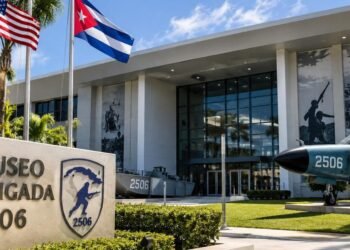
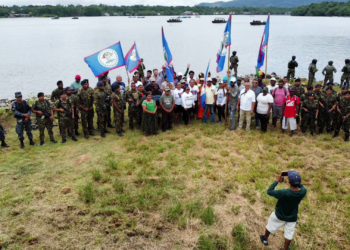
In the midst of diplomatic contacts, the Cuban Government on Wednesday “categorically” rejected the United States’ accusations that involve it in the military conflict in Ukraine, considering them “false, without any basis or evidence.”
“Cuba is not part” of the conflict in Ukraine, nor does it participate with military personnel there, or in any other country,” said the Ministry of Foreign Affairs.
“Cuba is not part of this conflict, nor does it participate with military personnel there, or in any other country,” the Ministry of Foreign Affairs said in a statement.
The Foreign Ministry maintained that Cuba supports the peaceful solution of conflicts through dialogue and negotiations, “in accordance with International Law and the Charter of the United Nations.”
Likewise, he stressed that “none of the Cuban citizens who have participated or are participating in any of the parties to this conflict have the encouragement, support or consent of any Cuban state or government institution.” According to the statement, “the vast majority” were recruited from abroad.
Havana affirmed that it maintains a policy of “zero tolerance” towards mercenarism. As evidence, he cited that since 2023, 17 files have been investigated for this crime, with 49 accused, of which 43 were presented to the courts in 12 processes, with requests for sentences of between five and 16 years in prison.
Havana affirmed that it maintains a policy of “zero tolerance” against mercenarism
In five cases, corresponding to six defendants, the Prosecutor’s Office decided not to pursue criminal action due to lack of evidence. According to the report, ten oral trials have been held and two others are pending. The accused tried were punished in accordance with the requests of the Prosecutor’s Office, the statement added.
While diplomatic contacts continue, the European Parliament this Thursday addressed security in the Black Sea following the latest deadly attacks off the coasts of Bulgaria and Romania, as well as repeated violations of Romanian airspace.
In a non-binding resolution, approved with 432 votes in favor, 52 against and 88 abstentions, MEPs condemned the attacks against civilian ships and held Russia responsible for the escalation of the war towards the western part of the Black Sea.
“The EU and its Member States should consider deploying an EU naval operation in the Black Sea,” the European Parliament said in a statement. He added that freedom of navigation and maritime security “are part of protecting NATO’s eastern flank, the Black Sea region and the Danube Delta.”
“The EU and its Member States should consider deploying a naval operation in the Black Sea,” the European Parliament said in a statement.
The text maintains that the latest attacks fit into a “clear pattern of escalation by Russia” and expresses concern about the “ambiguous management of the Russian threat by the Bulgarian government” and its “weak diplomatic response.”
MEPs also urged NATO to consider a Black Sea initiative, building on discussions about a possible Black Sea Sentineland called for greater cooperation between Bulgaria, Romania and Türkiye.
The resolution also calls for supporting Bulgaria and Romania in the early detection of hostile drones and strengthening the protection of underwater telecommunications infrastructure, electrical transmission and data cables through maritime surveillance and rapid response mechanisms.