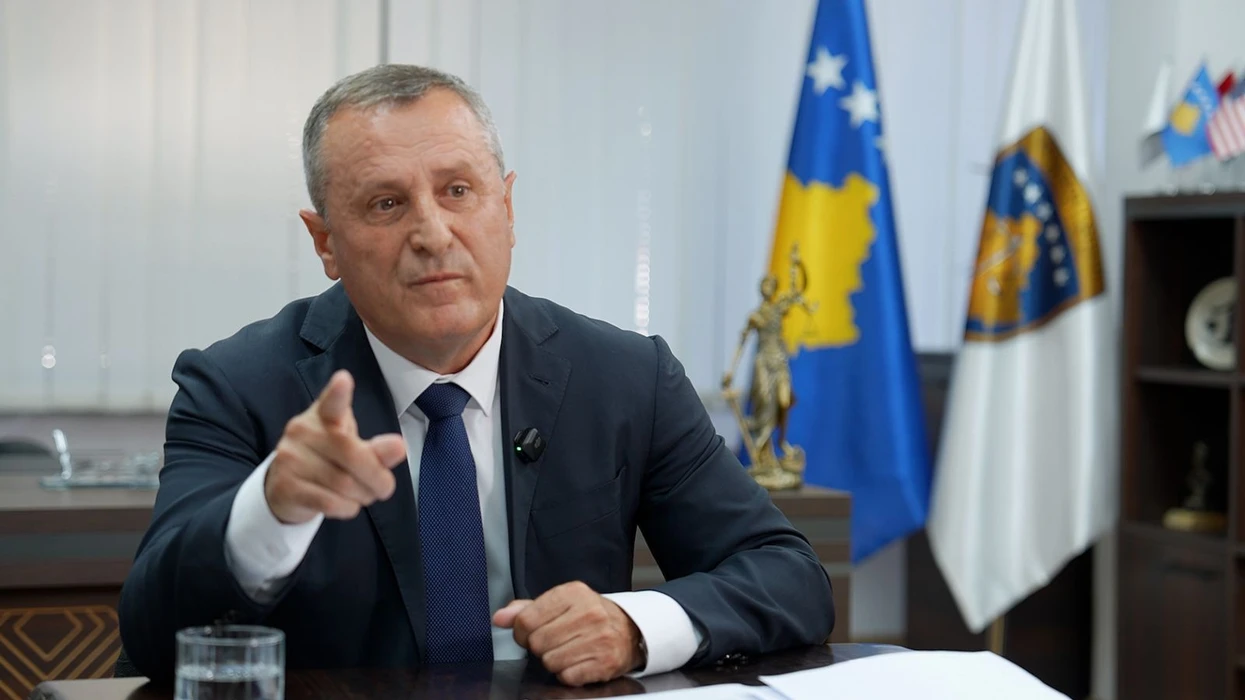
What does Blerim Isufaj’s appeal to the Supreme Court for his dismissal contain?

tidings

Express Newspaper
22/10/2026 6:53
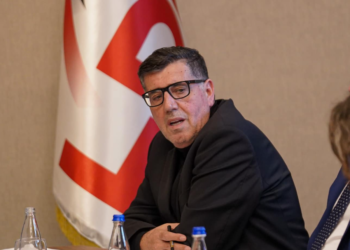
Blerim Isufaj, dismissed from the position of chief prosecutor of the Special Prosecution, has raised doubts that the decision to dismiss him was prepared before it was voted on in the KPK.
In the complaint addressed to the Supreme Court, which Dukagjini television provided, Isufaj requests that this decision be dismissed and that he return to the position of the leader of this Prosecutor’s Office.
“The reasoning of a collegial decision must be a reflection of the discussion and conviction that is formed in the meeting. When the reasoning exists before the vote, the discussion turns into a formal ratification of a prepared text, the arguments of members who might have a different opinion have no chance to be reflected, and any possible argument of the appellant is worthless from the start.”
In the decision of the KPK, for his dismissal, it was said that Isufaj had mismanaged the Prosecutor’s Office and had tendencies to influence cases that were under investigation.
“The assertion that manual segregation created a risk that the chief prosecutor would ‘directly influence the direction and outcome of the investigation’ remains abstract. The decision does not allege or identify a single case in which manual segregation was used to influence the investigation. Abstract risk is not proven conduct.”
To his complaint, Isufaj also attached the decision of the Supreme Court, with which he canceled the decision of the KPK, for the dismissal of Besim Kelmendi from the position of acting chief state prosecutor.
While on several pages he has listed the most important and complicated cases that have been handled by PSRK prosecutors, including the cases of espionage but also that of 23 missing intellectuals, who were recently found in a mass cemetery in the north and the case of state reserves.
“Among the cases of particular importance are the cases related to the Jasharaj neighborhood, the case known as SKY ECC, as well as other important cases that have required increased professional and institutional commitment. The handling of these cases proves the importance of the SP’s specialized capacities in addressing serious and complex forms of criminality, including war crimes and organized crime.”
Assessing that he was denied the right to be heard by the Council, he proposed that the court hold a public hearing in which Isufaj would speak.
Currently, the case is being processed in the Supreme Court, and the Prosecution Council of Kosovo must respond to this complaint within 15 days, and then make a decision.
Blerim Isufaj, who was not decreed by the President for the position of Chief State Prosecutor, has been the leader of the Special Prosecution since 2019.