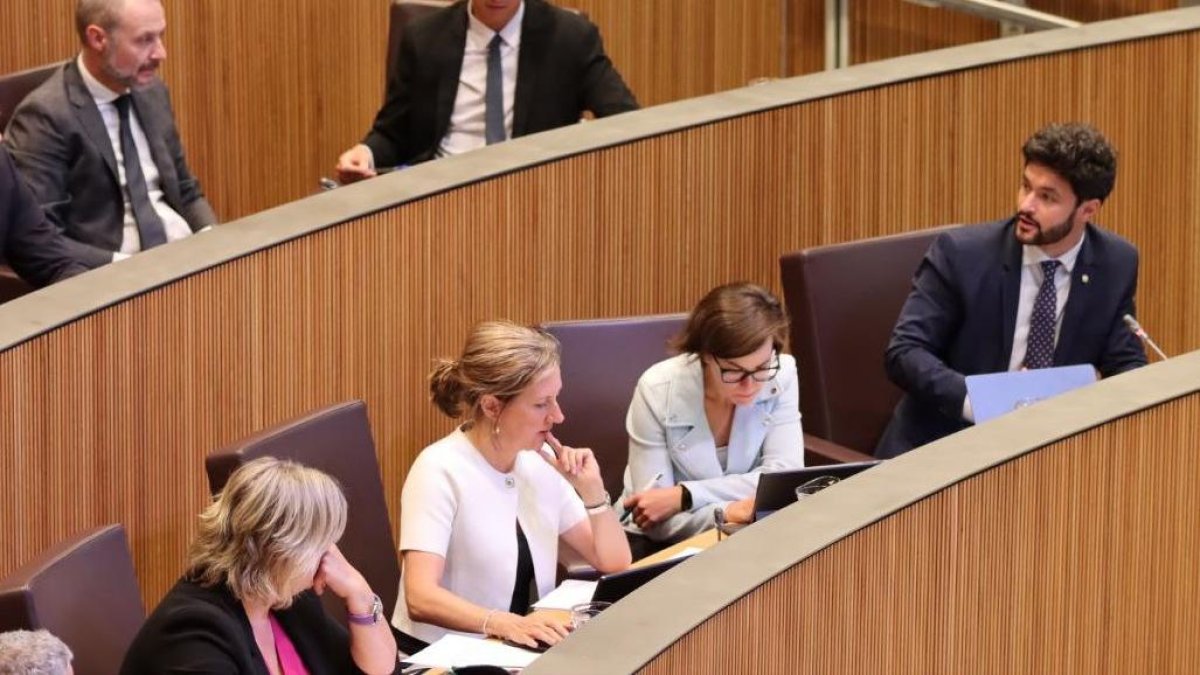

concord has presented sixteen amendments to the modification of the Law of higher education with the aim of linking the implementation of new universities to the needs of the countrystrengthen the planning of the system and specify the competences of theHigher Education Quality Agency of Andorra (AQUA).
The formation proposes that the authorization of new private universities and other higher education institutions be linked to the objectives of theNational Higher Education Strategy (ENES) and preceded by an evaluation based on criteria of need, sustainability and suitability to the reality of the country. This analysis should take into account the existing training offer, the evolution of the university population, the current and future needs of the labor market, the strategic sectors and the impact on the territory, infrastructures, services and, where appropriate, public resources.
The parliamentary group also wants to give more weight to the ENES as an instrument for ordering and planning the system. For this reason, it advocates that the five-year plans start from a diagnosis of Andorran higher education and incorporate a forecast of future needs, both educational and labor, to guide the training offer, the necessary resources and the implementation of new institutions and degrees.
In addition, the amendments propose that the development of the strategy includes the participation of the main players in the system before the Government approves it. The proposal envisages sending it to the competent legislative committee of General Council, at AQUA, in Andorra Research and Innovation, at the University of Andorra (UdA) and the other authorized higher education institutions.
More powers for AQUA
Another axis of the amendments is to strengthen the role of the WATER as responsible for ensuring the external quality assurance of higher education. concord proposes that all institutions be periodically assessed and accredited by the agency before receiving authorization, during implementation and operation and afterwards.
In this sense, it proposes eliminating the power of Government to monitor higher education institutions and establishes that the WATER draw up, within a maximum period of six months from the entry into force of the law, a regulation that defines the legal effects of the assessments.
The training also proposes that the denominations of the state qualifications and the corresponding levels of the Marc Andorrà of Qualifications (MAQ) they cannot be used to identify own degrees, in order to avoid confusion about the nature of the studies. It also advocates that all institutions integrated into the Andorran higher education system are subject to external quality assurance mechanisms, regardless of whether they provide state degrees or their own degrees.
Qualified teachers and stable teams
The amendments also affect the human resources of the universities. concord expresses that it wants to guarantee that the institutions have qualified teaching staff and stable teams suitable for the number of students, the degrees they offer and the research needs.
To facilitate medium-term planning, he proposes revising the categories of teaching and research staff so that they are defined according to the skills, qualifications and responsibilities they exercise. It also suggests avoiding excessively rigid qualification or dedication requirements when they are not necessary and expanding the possibilities of collaboration with professionals, research centers and other institutions.