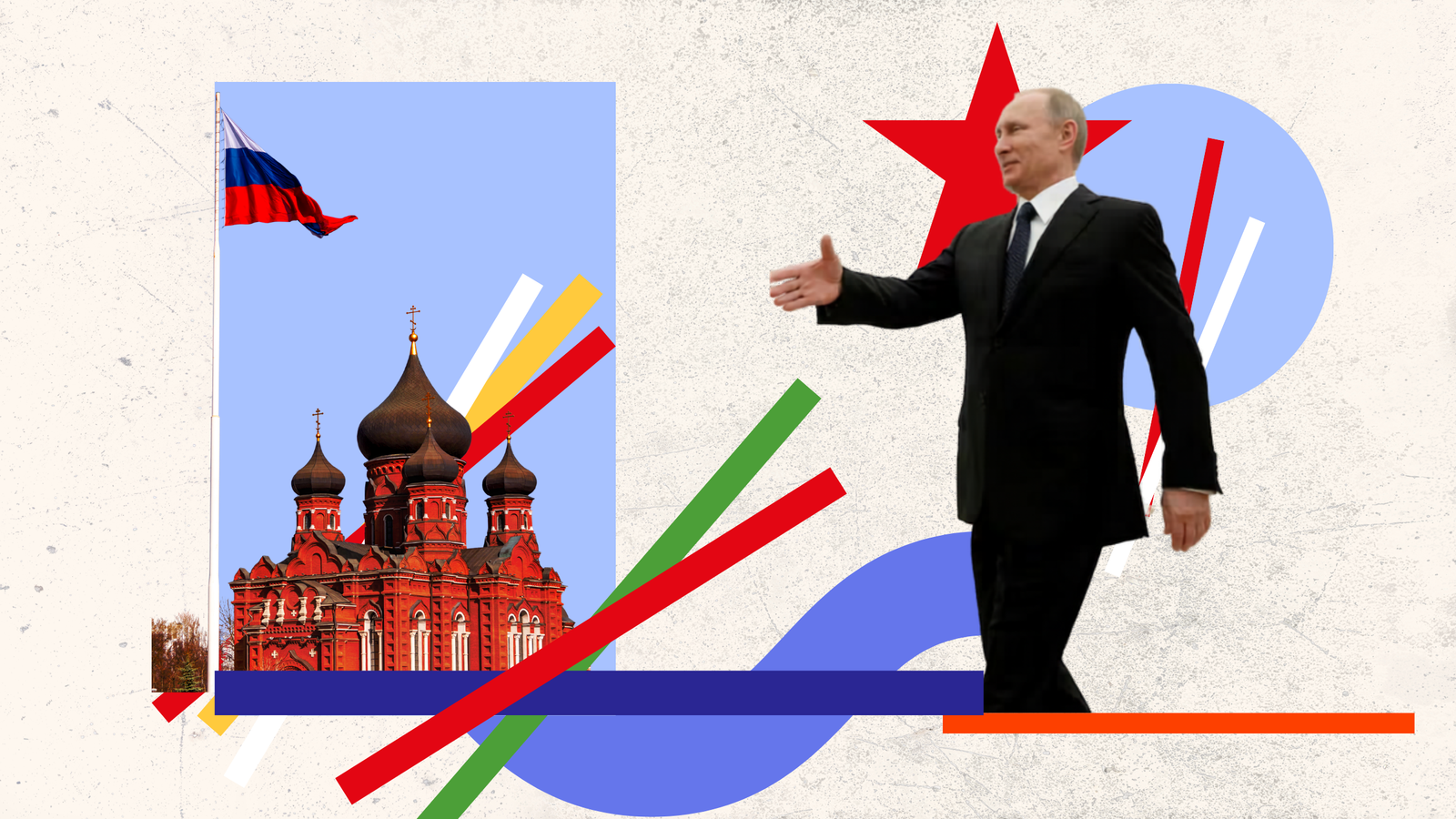
Below is the weekly digest of key developments and discourses in and around the occupied regions of Abkhazia and Tskhinvali/South Ossetia, as well as those concerning Tbilisi–Moscow relations.
Sokhumi
- De Facto Parliament Protects Opposition Leader Kvarchia
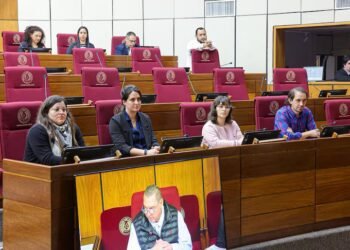
In Abkhazia, the de facto parliament has refused to lift the immunity of MP Kan Kvarchia in a case linked to Russian political consultants, as requested by the so-called prosecutor general’s office. The decision was taken despite Moscow’s position and a ruling by the Abkhaz “Supreme Court”, which found indications of a criminal offense in his actions.
Only three deputies voted in favor of lifting immunity, four abstained, and the remaining 23 voted against. Only three deputies voted in favor of lifting immunity, four abstained, and the remaining 23 voted against. There is speculation that the three votes in favor were orchestrated for show to Moscow – meant to signal, “we tried, but we are a democracy and decisions are made by majority vote.”
Earlier last week, the so-called Committee on State-Legal Policy had also rejected the request to strip Kvarchia of his immunity. According to the de facto prosecutor general’s office, a formal investigation against Kvarchia will not be launched due to his retained immunity. However, proceedings will continue against other individuals involved in the incident.
The case relates to an incident that occurred on November 5, 2025, at the office of Russian political consultants working in Sokhumi ahead of “local elections.” Kvarchia, deprived of Russian citizenship, is wanted in Russia and faces charges of armed robbery against three Russian nationals. The Abkhaz de facto authorities have stated that they will not extradite their “citizens” to Russia but have launched their own investigation into the case. Several opposition figures have already been placed under house arrest.
- De Facto MFA Comments on Freedom House Assessment of Georgia
The de facto Foreign Ministry of occupied Abkhazia has issued a statement in response to the recent report by Freedom House, “Cooperation and Resistance: Tracking Transnational Repression in 2025,” which, among other countries, includes Georgia.
According to the de facto MFA, the report’s findings are “not surprising” and are seen as confirmation of what it describes as a long-standing pattern in Georgia’s political development. The statement argues that even organizations “traditionally aligned with Tbilisi had to officially include Georgia among states engaging in transnational repression.”
The de facto authorities characterize the report as evidence of what they call a “systemic crisis” in Georgian statehood, which they claim has historically relied on coercive methods – “from the bloody punitive expeditions of 1918 and the administrative erasure of Abkhaz identity in 1937 to the full-scale aggression of 1992, aiming at the physical and cultural destruction of the Abkhaz people.”
The statement further asserts that “a state that has chosen repression as an instrument of foreign policy and demonstrates disregard for the fundamental freedoms of its own citizens has ultimately forfeited the right to appeal to democratic values”.
- Sokhumi Agrees With Zakharova
The de facto foreign ministry of occupied Abkhazia said in an April 20 statement that Sokhumi “has taken note” of recent remarks by Russian Foreign Ministry spokesperson Maria Zakharova and “shares Russia’s position on the consequences of Georgia’s accession to the EU.” During an April 16 press briefing, Zakharova said that if Georgia were to join the European Union, Russia “would have” to add Georgia to its list of states with “unfriendly regimes” and extend “retaliatory economic measures” against it.
The de facto ministry said it is “closely monitoring” developments in Georgia’s foreign policy and that Tbilisi’s course “does not contribute to strengthening trust in the region,” citing what it called “periodic statements by the Georgian side, military cooperation with NATO, refusal to sign with the Republic of Abkhazia a legally binding agreement on the non-use of force, and Georgia’s policy aimed at the international isolation of the Republic of Abkhazia.” Read more.
An Abkhaz Telegram channel, Amra-Life, has reported allegations concerning Alexandra Smychkovich, head of the Sokhumi office of the Food and Agriculture Organization (FAO). She allegedly “exceeded the scope of her mandate” by organizing meetings and work-related activities without notifying the de facto Ministry of Foreign Affairs. Sources described this behaviour as a “deliberate violation of established protocol and an attempt to place herself above state institutions.”
Amra-Life further reports that the de facto Foreign Ministry summoned Smychkovich and reiterated that all activities conducted by international organizations must be coordinated in accordance with established “procedures”. According to the channel, Smychkovich has decided to leave Abkhazia; however, it remains unclear whether her reported departure is directly linked to the incident.
In September 2022, the then de facto Foreign Minister Inal Ardzinba declared another FAO local staff member, Tiphaine Lucas, “persona non grata”, accusing her of “collecting intelligence data” in Abkhazia.
According to unconfirmed reports, de facto President Badra Gunba is planning a reshuffle of several de facto ministers, including Defense Minister Vladimir Anua, Health Minister Eduard Butba, and Interior Minister Robert Kiut. The changes are also expected to affect the Presidential Chief of Staff Beslan Eshba. Notably, the latter is said to have directly coordinated the activities of Russian political consultants in Abkhazia ahead of the so-called municipal elections.
Tskhinvali
- Cultural Heritage Sites in Need of Restoration and Preservation
All registered cultural heritage sites in the occupied Tskhinvali Region need conservation or restoration, Larisa Bagaeva, a representative of the “Ministry of Culture” of the occupied region, said at a press conference in Tskhinvali. According to her, the region is distinguished by an exceptional diversity of monuments spanning the period from the Paleolithic to the 19th century. Among them, she listed prehistoric human settlements in the Java district, the Tli necropolis from the Bronze Age, 7th-century examples of church architecture, and 19th-century structures erected by the Society for the Restoration of Orthodox Christianity in the Caucasus. She also noted that towers from various eras requiring preservation are also found in all districts.
- Yarovitsky Sets Tasks for Preparations for Summer Training
Yuri Yarovitsky, the occupied Tskhinvali region’s “Defense Minister”, held a meeting with his deputies, during which he defined key tasks for the preparatory period leading up to the summer training phase for armed formations. According to local news agency RES, the summer training period begins on June 1, with the preceding month set aside for organizational and inspection activities. Among the priorities listed are preparations for the May 9 military parade, conducting inspection exercises, and the development and approval of regulatory documents.
- Local Woman Investigated Over Transporting Energy Drinks
The occupied Tskhinvali region’s law enforcement officers seized 48 cans of non-alcoholic energy drinks from a Tskhinvali resident’s car. The 25-year-old woman’s car was stopped at a “border checkpoint” in the village of Roka in the Java district during an operation. An administrative case has been filed against her, and an investigation is underway to refer the case to court.
Tskhinvali has one of the strictest regulatory regimes governing the circulation of energy drinks. The ban is systematic in nature and applies to virtually all stages of their circulation – from import to sale. De facto authorities first imposed a ban on the import and sale of energy drinks in 2012, citing risks to public health. In 2024, the “parliament” adopted an updated law that established a complete ban on the import, production, storage, transportation, and sale of energy drinks (including low-alcohol beverages). The stated goal is to protect the health and well-being of citizens.
Raids are regularly conducted in Tskhinvali, during which prohibited beverages are seized from stores. Violations are punishable by fines and confiscation of products, with penalties becoming stricter for repeat offenses.
- Tskhinvali ‘Foreign Ministry’ Accuses Tbilisi of Using Myths about ‘Annexation’ and ‘Threats‘
The “Foreign Ministry” of the occupied Tskhinvali region commented on the annual report by the Georgian State Security Service, in which Russia and the “occupation” of the Tskhinvali region and Abkhazia were once again named as the main threats to Georgia’s national security. The de facto agency stated that Tbilisi continues to adhere to “old patterns,” using myths about “annexation” and the Russian threat while ignoring established geopolitical realities. It also noted that such rhetoric is aimed at “distorting well-known facts” and attempting to “portray Georgia as a victim,” despite the conclusions of the EU international commission led by Heidi Tagliavini regarding the events of August 2008. The agency emphasized Russia’s role as a “key factor of regional stability” and stated that the Russian military presence is based on bilateral agreements. At the same time, according to the de facto “Foreign Ministry,” the Georgian side remains unprepared for an equal and constructive dialogue, including within the framework of international security discussions.
Moscow – Tbilisi
- Spy Suspect Arrested by SSSG Reportedly Worked for Russia, Is from Akhalgori
A man arrested by the State Security Service of Georgia (SSSG) on spying charges, who pro-government media said worked for Russia, has been identified by RFE/RL’s Georgian Service as Tamaz Goloev (Goloti), a 27-year-old resident of Akhalgori, a town in the occupied Tskhinvali region.
The SSSG said on April 22 that it arrested one Georgian citizen on suspicion of “espionage” for a foreign intelligence service, adding that it would seek Interpol notices for two other Georgians currently outside the country. According to the SSSG, the detainee was recruited by a foreign intelligence service to collect “various types of information,” including about strategic facilities, “against Georgia’s interests,” and to pass it on to the service.
While the agency has not identified the individuals or the foreign country they allegedly worked for, pro-government media, including Rustavi 2, and later Imedi, reported that the suspects spied for Russia. More here.
- Georgia One of ‘Most Ambiguous Partners’ for Russia, Opinion Poll Says
According to a survey by the Russian Public Opinion Research Center (VCIOM), Russians perceive Georgia as one of the most ambiguous partners in the post-Soviet space, writes Rossiyskaya Gazeta. The countries of the South Caucasus, including Georgia, form a “zone of turbulence” where the level of trust fluctuates between 3% and 12%. Despite Georgia’s popularity as a tourist destination and the normalization of economic ties, it is viewed with caution. At the same time, as VCIOM expert Ilona Gezalyan notes, the image of Georgia is noticeably more positive among the young “digital generation”: the country is viewed as open, attractive, and successful due to personal experience, tourism, and cultural proximity, rather than the political agenda.
- Russian Judoka’s Victory Met with Boos in Tbilisi
Georgian fans booed at the Russian Federation’s anthem during the awards ceremony following the victory of Russian athlete Timur Arbuzov during the European Judo Championships in Tbilisi. In the final of the 81-kg weight class, he defeated three-time world champion Tato Grigalashvili of Georgia. The tournament is taking place in the Georgian capital with athletes from 48 countries participating; the Russian team competed while wearing their national symbols. Meanwhile, in Russia, officials commented on the booing of the Russian national anthem by Georgian fans. Mikhail Mamiashvili, president of the Russian Wrestling Federation, sharply criticized the spectators’ behavior. “Like little offended mice, they’re whistling from under the baseboard. All we can do is pray for such wretches,” he said.
- Izvestia on EU-Georgia, Tbilisi-Moscow Relations
The European Union believes that the restoration of full-fledged relations with Georgia and the advancement of its European integration are unlikely until at least the 2028 parliamentary elections, as the ruling “Georgian Dream” party is viewed in Brussels as a key obstacle, the Russian outlet Izvestia reports. As Czech MEP Tomáš Zdechovský told the outlet, there is no formal ban in the EU on Georgia’s integration under the current government, but “in practice, there is indeed very serious and growing concern in Brussels precisely on this point.” According to the report, Tomáš Zdechovský admits for the possibility of the resumption of cooperation before 2028 if the Georgian authorities make concessions on judicial reform, media freedom, and foreign policy.
Relations with Russia remain a separate issue. Said Gafurov, an associate professor at Moscow State Linguistic University (MSLU) and the Russian State Social University (RSSU) and a political scientist, emphasized that Georgia’s refusal to impose sanctions against Russia is driven by economic interests and the desire to maintain ties with the Russian Federation. According to Vadim Ganin, the CEO of the CIS Business Center, Georgia’s economic cooperation with Russia “is perhaps even increasing in some areas,” and the proximity factor makes these ties stable.
- Russian Tour Operators Name Georgia Among Most Affordable Destinations for Russian Tourists
Tourism market experts consider Georgia to be a budget destination for Russians, writes RIA Novosti. “Budget vacations for Russians are possible in many popular destinations with the right choice of flights and hotels: for example, in Vietnam, China, and Georgia,” Lyubov Voronina, managing director of the tour operator Let’s Fly, told RIA Novosti.
According to Russian tour operators, a vacation in Georgia is relatively inexpensive if you choose the right flight and accommodation. The cost of tours to Georgia starts at approximately 78,000 rubles (about $820) for two people, making the destination affordable.
Also Read:
- 17/04/2026 – Sokhumi, Tskhinvali, Moscow Digest – April 10-16, 2026
- 10/04/2026 – Sokhumi, Tskhinvali, Moscow Digest – April 3-9, 2026
- 03/04/2026 – Sokhumi, Tskhinvali, Moscow Digest – March 27-April 2, 2026
- 27/03/2026 – Sokhumi, Tskhinvali, Moscow Digest – March 20-26, 2026
- 20/03/2026 – Sokhumi, Tskhinvali, Moscow Digest – March 14-19, 2026