Imagine a Moroccan citizen hearing every day that “Morocco is in its Sahara and the Sahara is in its West,” that the issue of sovereignty over it has been resolved, and that diplomatic efforts are moving towards its final removal from the United Nations Decolonization Commission. Then he reads news saying that Morocco voted in favor of a resolution related to the decolonization of Western Sahara!
It is natural for this citizen to ask: Why? If the Sahara is Moroccan, as my government says, who is the colonizer whose territory should be decolonized? Why did my country not vote against the resolution, or at least explain clearly how its vote was consistent with it?
This is the question whose answer, in the circulating media discourse, did not receive the clarification it deserved.
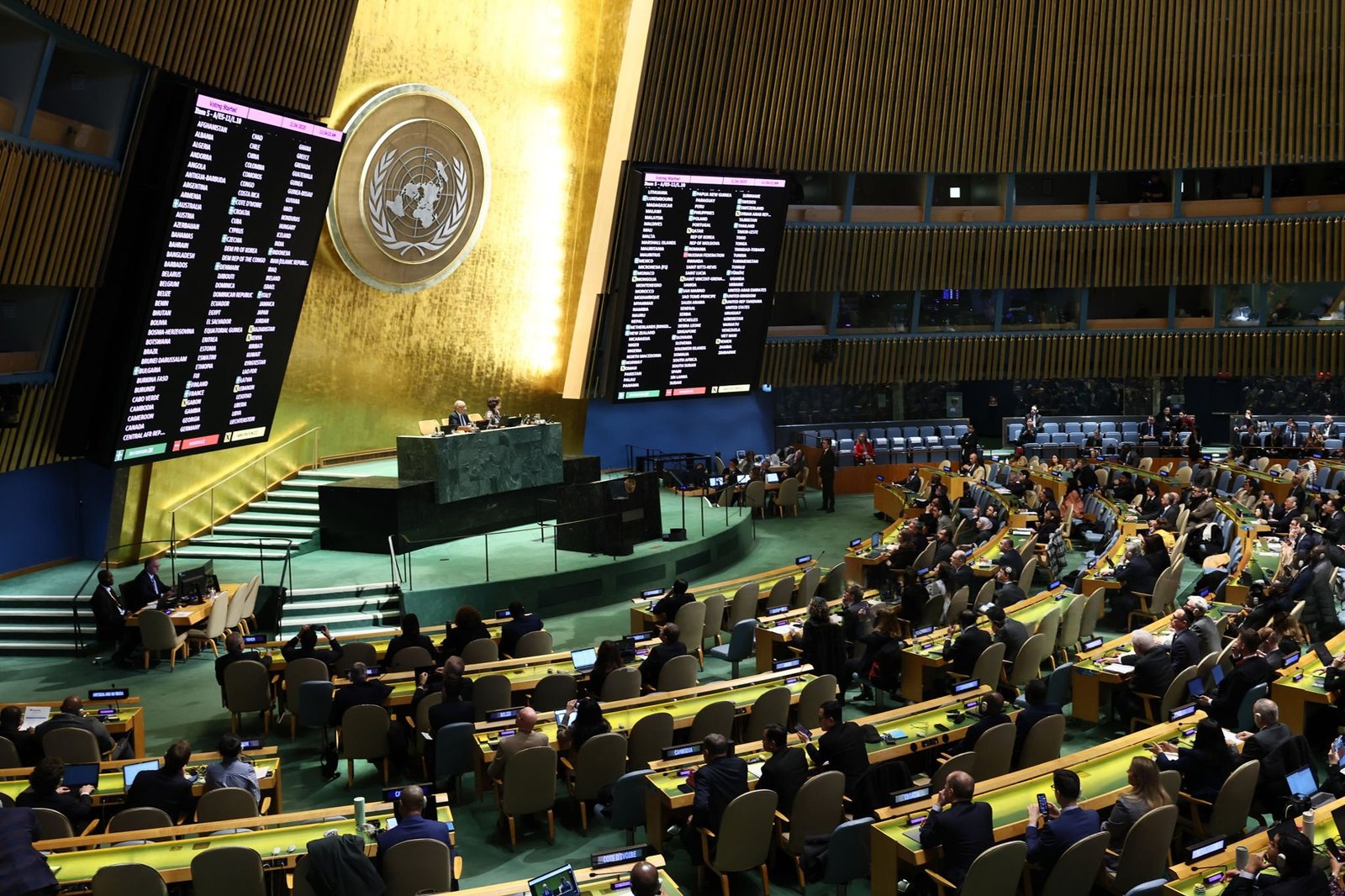
On October 15, 2026, Morocco voted in favor of the resolution of the Fourth Committee of the United Nations General Assembly on Western Sahara, in a vote supported by 152 countries, opposed by the United States and Israel, while seven countries abstained from voting. Instead of stopping at this paradox and explaining it to the reader, some Moroccan headlines focused on what they considered to be the gains of the Moroccan position, relying on the references related to Resolution 2797 contained in the preamble and not in the operative text of the resolution.
But the question did not disappear by changing the title: Why did Morocco vote in favor of a resolution that falls within the path of decolonization, which confirms that the region is part of its territory?
The official explanation may be that Morocco does not see a conflict between the vote and its position on sovereignty, but presenting this explanation does not exempt the press from clarifying another fact: the United Nations still lists Western Sahara among the non-self-governing territories, and this vote did not issue a decision to remove it from the list of territories concerned with decolonization.
Here lies the problem. The Marouki citizen, who was told that the issue had been settled, and that the date for removing it from the Fourth Committee was imminent, finds himself facing a different international reality: the file is still on the table, the decision did not announce the end of the process of decolonization, and the right of the Sahrawi people to self-determination is still part of the international reference for the issue.
Does Morocco’s vote mean that it recognized that it is a colonial country? No, and does this mean that Morocco recognized the Sahrawi Republic? No either. But these two explanations do not eliminate the basic question: How does the state explain its vote in favor of a resolution dealing with the decolonization of a territory that it considers part of its territory?
The second paradox is that the United States and Israel, which have strategic relations with Morocco, voted against the resolution, while Morocco voted in favor of it. This reveals that positions are not identical as some media discourses might suggest. Why does the Moroccan press not explain to its audience the reasons for this difference, instead of simply presenting the result as a confirmation of the Moroccan position?
The Moroccan citizen is not required to be an expert in international law in order to understand this issue. It is enough to know that there is a difference between a country saying that a territory belongs to it, and the United Nations continuing to include it among the territories awaiting decolonization. There is also a difference between the autonomy proposal that Rabat defends, and resolving the final status of the region according to an acceptable political settlement and within the framework of the relevant terms of reference, that is, the implementation of Resolution 1514, which stipulates the right to self-determination for colonial countries and territories.
The Marouk citizen has the right to ask his press: If voting serves the Moroccan position, as you say, then explain to us how? If it does not contradict it, then explain to us where the consistency lies between it and the statement that the Sahara issue has been decided once and for all? As for being satisfied with a title that talks about diplomatic gain, and leaving the basic question unanswered, it does not help the citizen understand, but rather increases the distance between the media discourse and the international reality.
The dilemma is not that Morocco voted yes or that its two allies voted no; The dilemma is that the Moroccan citizen wants to understand how his country can support a decision within the framework of decolonization, while affirming in its political discourse that the Sahara is in Morocco?
This is a legitimate question, and it is not enough to answer it by repeating slogans. UN documents do not change with titles, and the truth does not become clear simply because the press describes every development as a gain.
When the headlines lie, the question remains that the title cannot hide: If Morocco does not consider itself a colonial state in Western Sahara, what is the explanation for its vote in favor of the decolonization decision, and why was this contradiction not explained to the citizen in a clear and convincing way?