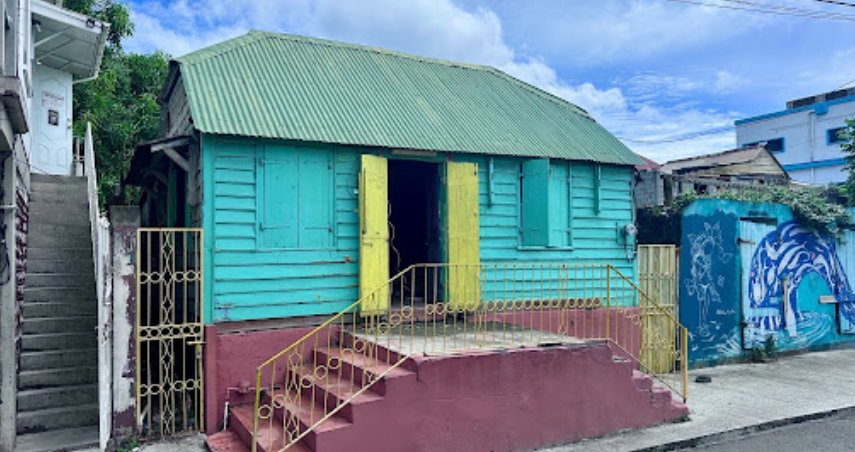

The Society for Historic Architectural Preservation and Enhancement (SHAPE) has secured support from the Caribbean Culture Fund (CCF) to restore a historic wooden ti kai in Roseau, as part of its Resilient Houses Project. The initiative, being undertaken in collaboration with the Saba Heritage Center through a Caribbean Collaboration grant, will focus on rehabilitating the building at 14 Hillsborough Street, which dates back to at least the 1850s.
Now owned by Prevo Cinemall, the structure is set to be preserved as an important part of Dominica’s architectural heritage. Prevo Cinemall Chairman Norris Prevost explained that acquiring the property formed part of the company’s vision to establish a heritage hub, adding that the decision to retain and restore the building, rather than demolish it for a modern concrete structure, led to its partnership with SHAPE.
Beyond architectural restoration, the project will transform the property into a centre for cultural activities, education and community engagement.
In partnership with Valarie Honore of the I Have a Right Foundation, plans include establishing a café where young people participating in the organisation’s programmes can gain practical experience in running a small business. A museum will also showcase the building’s history and cultural significance, while a bookshop will offer affordable second-hand titles and publications by Caribbean and Dominican writers, including works from local publisher Papillote Press.
Dominican author Joanne Skerrett, known for Island Man and Abraham’s Treasure, will operate the bookshop. The property will additionally accommodate art exhibitions, literary gatherings and cultural events in collaboration with the Waitukubuli Artists Association. SHAPE President Marica Honychurch said the project recognises historic buildings as repositories of community memories and shared experiences, providing an opportunity to preserve Roseau’s architectural legacy while keeping its stories alive for future generations.
The restoration also seeks to draw attention to the distinctive construction methods behind Dominica’s ti kai, which reflect influences from Kalinago, West African and European building traditions adapted to the Caribbean environment. Despite their demonstrated resilience to hurricanes, these traditional wooden structures face increasing threats from modern development and fires, with recent fires in Roseau highlighting the vulnerability of the island’s built heritage.
The project builds on the themes explored in Still Standing, a book by Adom Philogene Heron, featuring photography by Marica Honychurch, which documents ti kai across Dominica. Through its partnership with the Saba Heritage Center, SHAPE also hopes to promote regional cooperation and the exchange of ideas on safeguarding historic buildings while finding sustainable uses for them.
The Resilient Houses Project ultimately seeks to demonstrate that heritage conservation can protect traditional architecture while creating vibrant spaces for cultural expression, community participation and intergenerational learning.