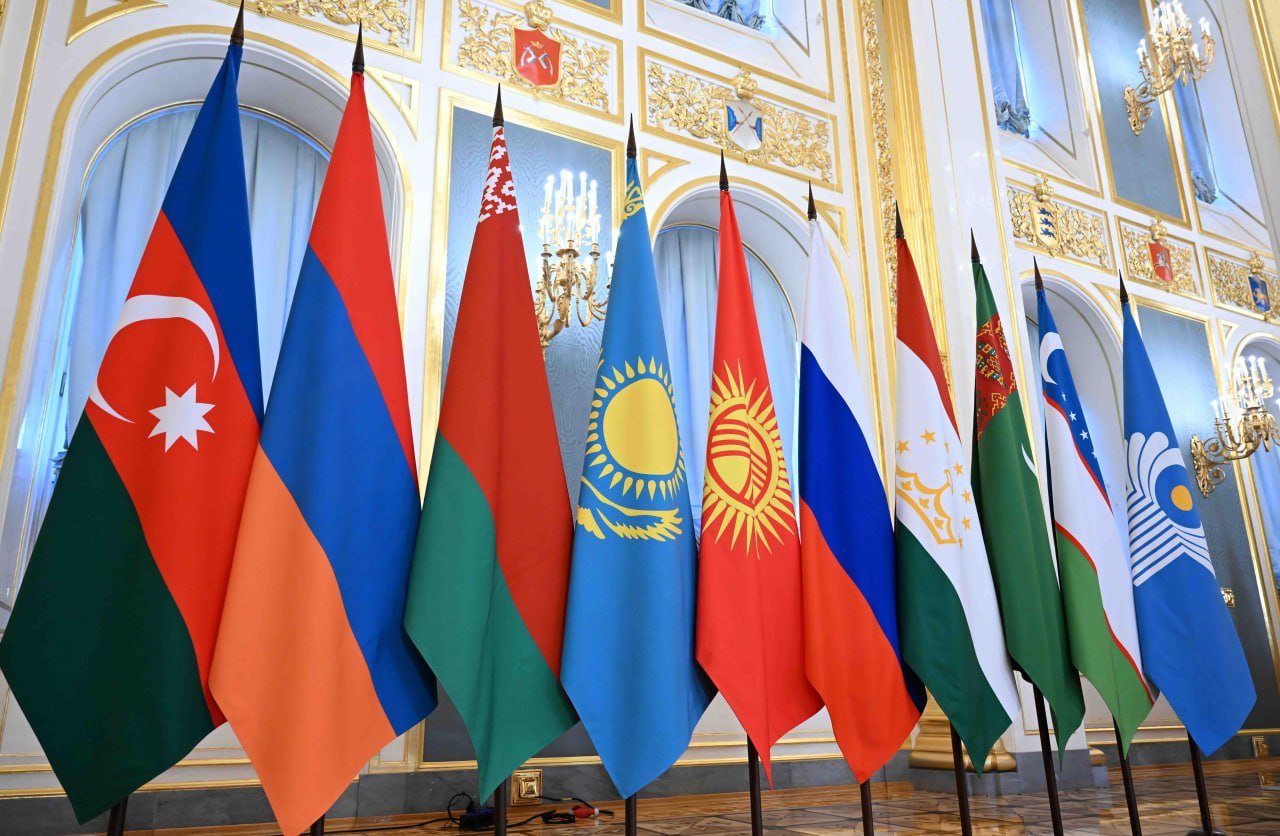
BAKU, Azerbaijan, October 9. The CIS summit has begun in
Awaza, Turkmenistan. Azerbaijani President Ilham Aliyev has arrived
at the Caspian resort alongside his fellow leaders from the
Commonwealth, and for Baku, the meeting looks well beyond the
immediate agenda. The leaders will decide who will chair the CIS in
2027 and, at the same time, map out the organization’s calendar for
the coming years. Azerbaijan features prominently in that calendar:
in 2027, it will become a co-chair, and in 2028, it will chair the
Commonwealth.
The CIS chairmanship changes every year on January 1, with the
rotation following the Russian alphabetical order of country names.
Turkmenistan, the host of the current summit, currently holds the
chairmanship. Alongside it are two co-chairs – Tajikistan, which
chaired the organization last year, and Uzbekistan, which will take
over the chairmanship in January. Azerbaijan will follow.
There are always two co-chairs in the Commonwealth: the outgoing
and incoming chairs. The arrangement is designed to ensure
continuity, allowing responsibilities to be transferred smoothly
and major events to be prepared jointly by the three countries. The
chair sets the agenda for the year and hosts the main events,
including meetings of the Council of Heads of State and the Council
of Heads of Government. In other words, CIS leaders will travel to
Azerbaijan in 2028.
For the same year, the CIS is proposing to declare 2028 the
“Year of Social Development and Quality of Life.” The theme is
broad enough to encompass almost everything, from pensions and
healthcare to labor migration, giving the chair considerable room
to shape the agenda. The following year, 2029, is proposed as the
“Year of Transport Connectivity.” The theme is particularly
relevant for Baku: in recent years, Azerbaijan has been emerging as
one of the key transit hubs between Europe and Asia and has
invested heavily in this sector.
The agenda also includes an anniversary. On December 8, the CIS
will mark its 35th anniversary – the agreement establishing the
organization was signed in Minsk in 1991 by Belarus, Russia and
Ukraine. The heads of state will adopt a joint statement on the
occasion. They will also decide where they will meet next. The
answer is not difficult to predict: Uzbekistan, as the chairmanship
passes to Tashkent.
Azerbaijan joined the Commonwealth later than its founders. The
Council of Heads of State approved its admission on September 24,
1993, during one of the most difficult periods in the country’s
history. Over more than three decades, Baku has developed its own
approach to working within the CIS, and it is well known in Minsk,
where the organization is headquartered. Azerbaijan takes part in
areas that serve its interests and firmly maintains its position
where it differs from the common line. Baku has attached
reservations and special opinions to a number of CIS documents.
Azerbaijan does not participate in the CIS Economic Court, one of
the organization’s seven statutory bodies. There is plenty to
choose from, however: the Commonwealth has 84 bodies in total,
including 66 sectoral bodies.
Baku takes the summits themselves seriously. Azerbaijani
President Ilham Aliyev has attended all the meetings in recent
years. In December 2020 and October 2021, at the height of the
pandemic, the leaders met by videoconference. They were followed by
in-person meetings in Astana, Bishkek, Moscow and Dushanbe. Awaza
is the seventh consecutive summit attended by the Azerbaijani
president. For post-Soviet leaders, such meetings have long
provided a convenient opportunity to hold a whole series of
bilateral talks over a day or two, and today is unlikely to be an
exception.
The most notable recent changes concern Armenia. For many years,
Azerbaijan’s position within the CIS included one consistent
provision: Baku would work with all Commonwealth members except
Yerevan in cultural, humanitarian, scientific and other areas.
Azerbaijan has now lifted its previous restrictions on the transit
of goods to Armenia. The two countries are taking their first steps
in economic and trade cooperation. Azerbaijani goods and transit
cargo from third countries are already moving to Armenia through
Azerbaijani territory. Until recently, this would have seemed
almost unimaginable. Against this backdrop, the proposed “Year of
Transport Connectivity” in 2029 carries considerably more substance
than such titles usually suggest.
The CIS Charter is full of the right words about friendship,
good-neighborliness, trust and the peaceful settlement of disputes.
The history of the Commonwealth has also included wars between its
members and the withdrawal of entire countries – something Baku
remembers better than most. What Azerbaijan values in the
organization are more tangible things: direct dialogue with
neighbors, trade and humanitarian ties.
There is more than a year to go before January 2028.
Preparations for Azerbaijan’s chairmanship are, in effect,
beginning today in Awaza. Under President Ilham Aliyev, Azerbaijan
has gained extensive experience in chairing various international
organizations. It is enough to recall the country’s chairmanship of
the Non-Aligned Movement – the world’s second-largest organization
after the UN – which effectively gave the movement a new lease of
life and brought it back into the ranks of relevant international
organizations.
The CIS, too, may soon receive a new impetus for development –
under the leadership of President Ilham Aliyev.