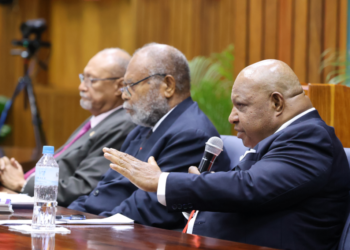
THE renovation of the Institute of Papua New Guinea Studies (IPNGS) infrastructure reaffirms the Government’s commitment to restoring the high value placed on our culture since independence, says Tourism, Arts and Culture Minister Belden Namah.
IPNGS opened its newly-renovated facilities at the cost of over K2 million yesterday.
“It is a commitment to preserve the stories of our ancestors, to protect the wisdom of our people and to ensure that the identity of Papua New Guinea remains strong for generations to come,” he said.
The new infrastructure includes a new administration building, conference room, ablution block, book store and director’s residence.
The renovation began in 2023, was aimed at improving staff working conditions and modernising its facilities.
Namah said many nations had been encouraged to measure progress using foreign standards but true progress began with our identity when we indigenise national development.
IPNGS was founded in 1974 and was the first institution in the country dedicated primarily to conduct research into indigenous cultures.
Its core functions under the National Cultural Commission Act 1994 included:
- RESEARCHING, recording and interpreting traditional cultures;
- ESTABLISHING archives of music, folklore and oral history;
- SUPPORTING literature, drama, visual arts and film;
- PUBLISHING cultural materials for national education and awareness;
- REGULATING and facilitating cultural research; and,
- MAINTAINING trust funds for cultural research.
IPNGS remains the only Government institution devoted exclusively to cultural research, publication and archiving.
National Cultural Commission (NCC) executive director Steven Kilanda said the funding was made available through the public investment programme (PIP) budget allocation to the commission for its three institutional rehabilitation and renovation programmes.
“It took almost two years to complete because the funding was allocated monthly,” he said.
Kilanda said the renovation work was done by skilled workers who were mostly youths that served through service level agreements that saved significant costs compared to hiring established contractors.
NCC also launched its 2026 calendar and annual operational plan during the opening of the facilities.
The IPNGS plays a crucial role in documenting, preserving and promoting the cultural expressions of Papua New Guinea.
Its core mission includes research, recording, and safeguarding the music and dance of the country.
The institute also engages in fieldwork, documentation, publication and dissemination of oral history, folklore, music, dance and ceremonial activities.
With over 12,000 hours of materials in over 6,000 collections, IPNGS is the largest collection of Papua New Guinea music recordings in the world, dating from 1898 to the present.