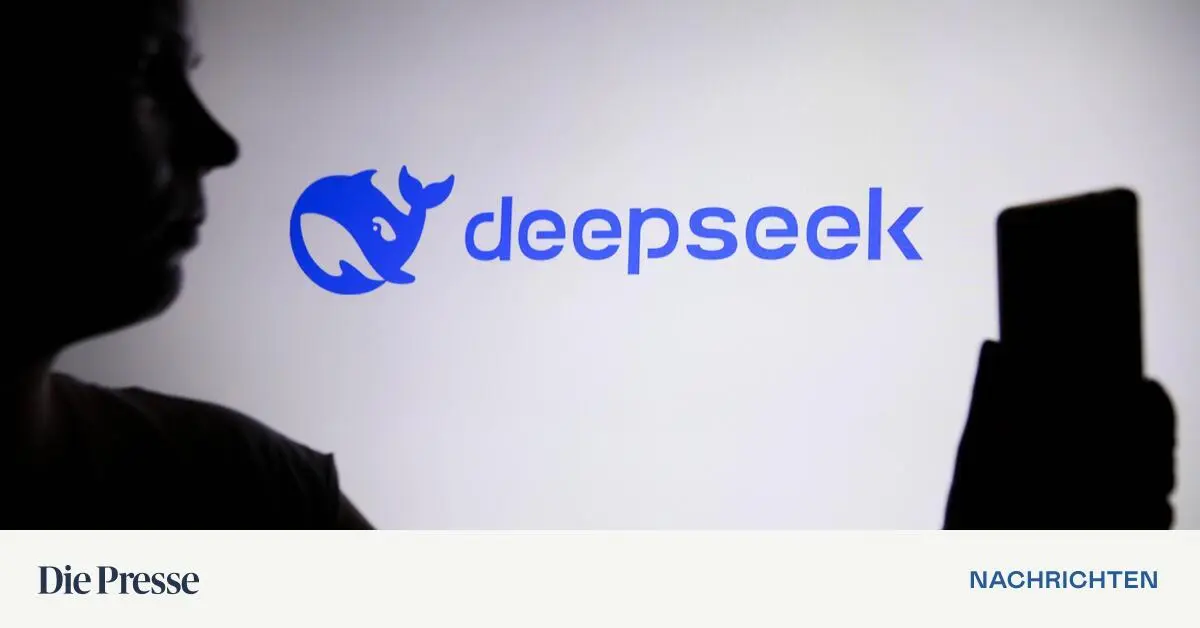
It could trigger another tremor on the stock market: The Chinese AI manufacturer DeepSeek is presenting two new models. More powerful, cheaper and with Huawei chips for the first time.
DeepSeek unveiled early versions of a new flagship artificial intelligence model on Friday, unveiling its biggest improvements yet a year after shaking up Silicon Valley with a groundbreaking platform.
The Chinese startup introduced the V4 Flash and V4 Pro models, revealing fairly basic information about prices, parameters and the ability to process a maximum issuance capacity of 384,000 tokens. For comparison: GPT-4o & GPT-4o mini support a maximum issuance of 16,384 tokens per response. The o1 series offers an issuance capacity of 100,000 tokens and the older model GPT-3.5 Turbo has a maximum issuance of 4096 tokens.
DeepSeek described the efficiency with which this context length was achieved on WhatsApp’s Chinese counterpart WeChat as “world-leading” and spoke of “drastically reduced computing and storage costs”. “As support for ultra-large contexts becomes standard, long text processing should move from highly specialized research labs into the commercial mainstream,” said Zhang Yi, founder of technology research firm iiMedia. Neil Shah, vice president of research at the analysis company Conterpoint Research, also agrees with this assessment. It is “serious proof” of DeepSeek’s strength in keeping inference costs low. These describe the computational and financial costs involved in operating an AI model.
The quiet system change that Deepseek has made is also exciting: for the first time, the new open source models rely on processors from Huawei. This is reported by the US magazine “The Information”. The processor is based on the Ascend architecture developed by Huawei. It remains unclear whether Huawei chips were also used to train the AI models and to what extent. Chinese companies are still severely restricted due to the trade ban. So it’s actually not possible for them to buy Nvidia chips. That’s why the People’s Republic is also pushing to use domestic alternatives.
The Hangzhou-based AI startup sparked a trillion-dollar stock market sell-off in 2025 with the release of R1, an open-source model that mimics the process of human thought. R1 rivaled the performance of cutting-edge AI systems from companies like OpenAI, but was reportedly developed at a fraction of the cost.
Almost overnight, some technology companies and investors began to question the wisdom of investing billions in AI development. That spending has since increased again, as American tech giants are expected to invest around $650 billion in AI infrastructure and data centers in 2026.