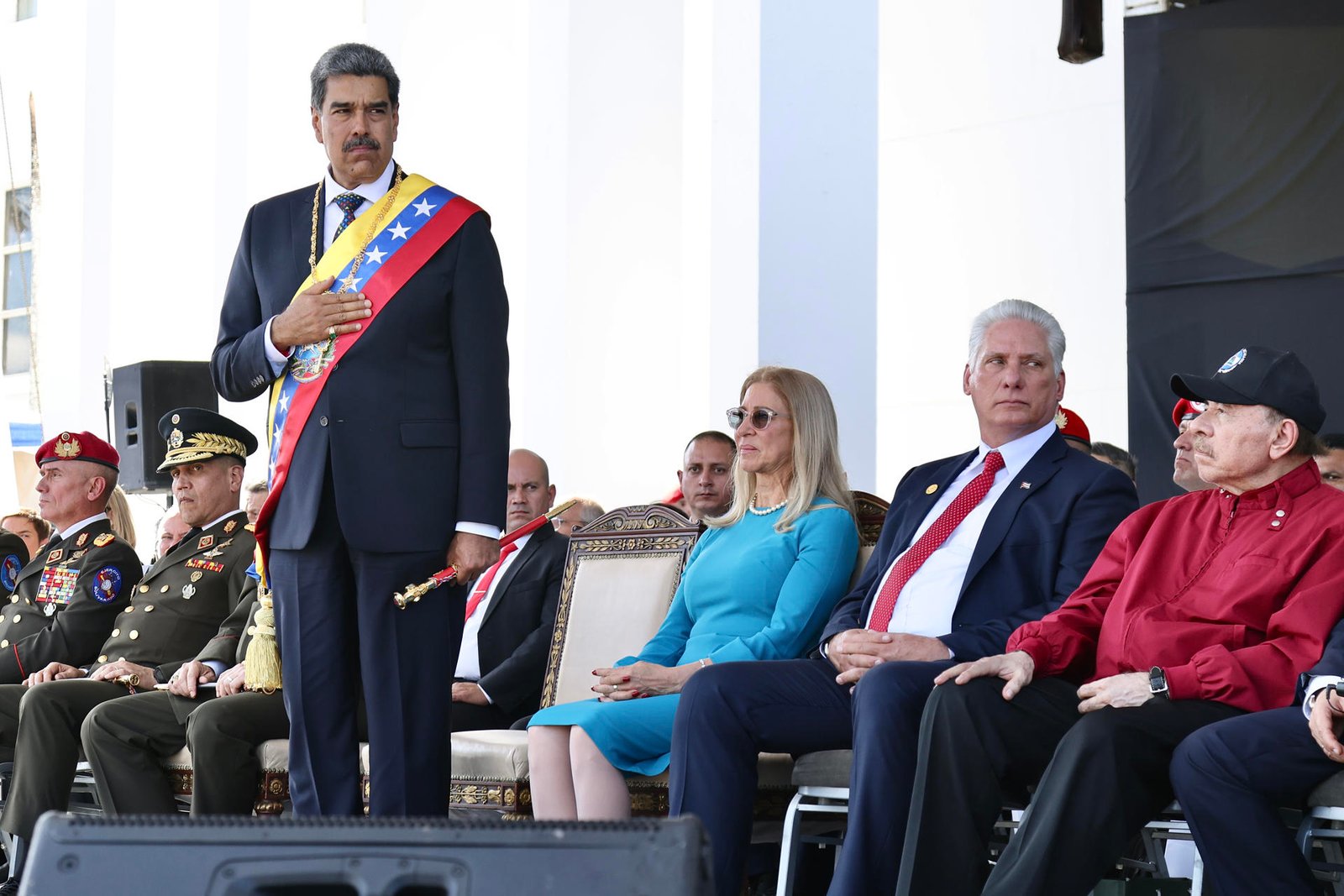
The Inter-American Commission on Human Rights (Cidh) considered that 2025 was the year in which a “dictatorial regime” was consolidated in Venezuela, arguing that Nicolás Maduro remained in power “without democratic legitimacy”, after an electoral process characterized by “widespread allegations of fraud” and “serious human rights violations.”
In its annual report, released this Thursdaythe IACHR stressed that Maduro’s inauguration, in January 2025, marked “a turning point in the political history of Venezuela,” after the National Electoral Council (CNE) proclaimed him the winner of the 2024 presidential elections, although without publishing the voting records, as required by its schedule, which gave rise to complaints of lack of transparency.
Therefore, the Commission indicated that it cannot consider these elections as a process with democratic legitimacy, due to “electoral opacity, serious allegations of fraud and systematic restrictions on political rights.”
“Such circumstances reflect the use of a disguised electoral process to project a false appearance of democracy, as well as the lack of minimum conditions for the effective exercise of political rights in Venezuela,” he stressed.
Furthermore, he assured that in 2025 the Prosecutor’s Office and the Judiciary did not investigate, prosecute or sanction the “murders, cruel, inhuman or degrading treatment, arbitrary detentions and violations of due process that occurred during and after the 2024 electoral process”, in the midst of a political crisis.
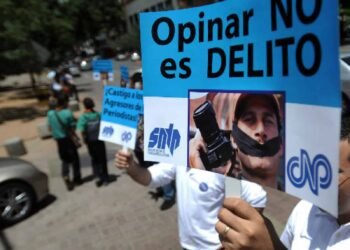
“In 2025, the State security forces intensified the arbitrary detention of foreigners and people with dual nationality, with the apparent purpose of using them as an exchange object for people of Venezuelan nationality deprived of liberty abroad,” he highlighted.
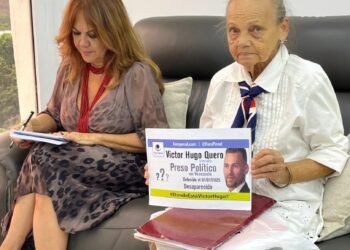
The Venezuelan State has also not given “any information on the progress in the investigation, prosecution and punishment of the serious human rights violations that occurred in the electoral context”, when 28 “murders”, 195 injuries, 2,229 arrests, including 158 adolescents, were recorded, according to the report.
Furthermore, the IACHR recognized the difficulty of accessing verifiable data on the human rights situation in Venezuela due to the opacity of information and the lack of transparency of public institutions.
“The ‘official’ information available is scarce, fragmentary and, in many cases, lacking credibility, responding to state propaganda purposes rather than accountability criteria,” he added.
For all of the above, he considered that a “dictatorial regime” has been established in the country, after the collapse of human rights, democracy and the rule of law as a result of the “co-option of public powers” and the “breakdown of the constitutional order.”
The IACHR urged Venezuela to adopt “urgent institutional measures” to “return to democracy and the rule of law,” and guarantee a “legitimate and peaceful constitutional succession” that reflects the “will” of Venezuelans expressed in the presidential elections, when the largest opposition coalition claims that its candidate, Edmundo González Urrutia, defeated Maduro.
This report was approved on December 17, 2025 and on January 20, 2026, a copy of the document was sent to the Venezuelan State, although the Government in charge of Delcy Rodríguez, who assumed power after Maduro’s capture, did not present observations, the IACHR noted.
The change must be accompanied by an opening to human rights groups
The president of the Inter-American Commission on Human Rights (IACHR), Edgar Stuardo Ralón Orellana, warned that a democratic transition in Venezuela must involve support from organizations that can monitor the situation in that country, included for years on the entity’s “black list.”
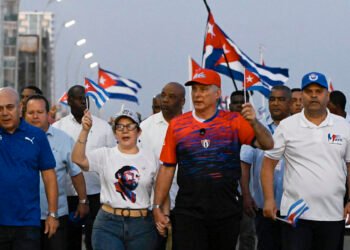
In its annual report for 2025, published this Thursday, the organization maintains Venezuela, Cuba and Nicaragua in the chapter of nations on which it places “a special focus” due to what it identifies as severe human rights violations and an environment of repression.
In the midst of the rapprochement of the United States and the Government of the president in charge of Venezuela, Delcy Rodríguez, after the capture and deposition of former president Nicolás Maduro last January, the IACHR “has expressed its intention to pay a visit” to the country, which until now has prohibited the entry of the entity’s delegations.
“We believe that after Venezuela is isolated and not held accountable, this change should be accompanied by an opening that allows the Commission to go on the ground to verify the human rights situation,” Ralón Orellana told EFE.