The presence of thebones a Andorra it goes down The monitoring carried out by flags it has allowed four specimens to be detected during the first eight months of the year, all males, half of the eight that were identified last year. Although the data is still provisional, the Minister of Environment, Agriculture and Livestock, Guillem Casalremarked in statements to the Newspaper that the current indicators point to a lower presence of the species in the country. “We are not in an expansive phase, but in a more conservative phase or one with less presence”, he pointed out Casal The minister explained that both the number of specimens detected and the raids registered were lower than last year. In 2025, eight different bones were identified, seven males and one female, while this year the samples analyzed have made it possible to identify four males.
“We are not in an expansive phase, but in a more conservative phase or one with less presence”
The director of the Banders corps, Ferran Teixidóexplained that the monitoring season begins every year in March, when the surveillance system is activated with photo-trap cameras and other detection mechanisms, such as hair traps. To these systematic signs are added opportunistic signs, such as footprints or droppings located on the ground. Between March and August, the flags they collected 19 samples, 16 of which were valid for genetic analysis. The first analytical round made it possible to identify four different individuals. One is Tuc, a ten-year-old male regular at Principality; another had already been detected last year, and the other two are young males less than four years old who are “looking for territory”, he summarized weaving on these new specimens.
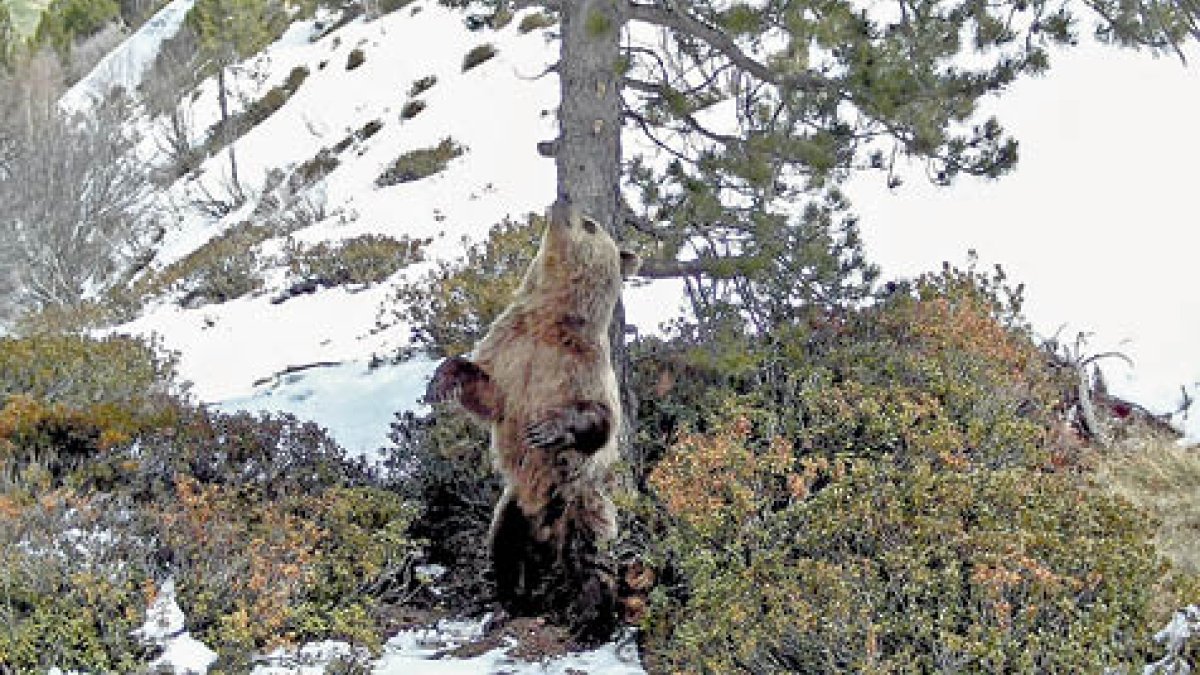
A bone specimen identified this year by Banders’ body.
“Andorra has a filter of human activity in the mountains, the bone is afraid of man”
The head of the Banders remarked that Andorra it remains more of a passage zone than a stable territory for the bones. “Andorra it has a filter of human activity in the mountain. “The bone is an animal that is afraid of man and that likes quiet spaces,” he explained weavingthis human pressure makes it difficult for plantigrades to become permanently established there. “You could say that the Tuc is the bone that rolls the most around here, but that it is established is complicated”, he indicated.
This situation is also reflected in the absence of incidents. “We have not had any incidents, they have all been sporadic movements”, said Teixidó, who added that there has been no direct observation or any noteworthy episode related to people or herds. The head of the Banders he gave as an example the week of the chamois hunt, when the human presence in the mountain is particularly high. “No one has seen the bone and hardly anyone would not have seen it. They are people who go with binoculars and have not seen it”, he emphasized.
Teixidó insisted that, for now, it is an animal “very discreet” and that the tracking is maintained without there being “social alarm“. The vigilance is complemented by constant communication with the livestock farmers, considered the group most directly affected. Through theAssociation of Farmers and Cattlemen of Andorrato, the flags they report on detected movements and share campaign data. Cattlemen also have collars GPS in the herds, which makes it possible to check anomalous movements of the animals and compare them with the signs collected on the ground. “So far there are no incidents“, he reiterated weaving
Tracking is not yet closed. The flags they have four more samples pending analysis and will continue to collect more until the bones go into hibernation. Afterwards, a final analysis and a meeting with theOPEN to explain the movements detected and take stock of the entire campaign. weaving he pointed out that most of the samples tend to be obtained in the spring and that in the autumn the detected presence tends to decrease. At the moment, however, the picture is clear: four specimens identified compared to eight last year and no notable incidents. An evolution that reinforces the idea expressed by Casal that the presence of the bone in principality is not expanding.
MORE PROTECTION IN THE MADRIU VALLEY
The ranchers of the Madriu valley this year they have more tools to monitor their herds and detect possible alterations linked to the presence of the bone. Guillem Casal explained that the Government has enabled specific coverage in an area where much of the valley has no telephone signal, which allows the use of adapted tracking collars. “It allows us to have information and know if when there is the presence of a bone there are alterations or not”, he pointed out. The system also makes it easier for farmers to locate the animals when they come to control them. So far, however, no strange movement has been detected.