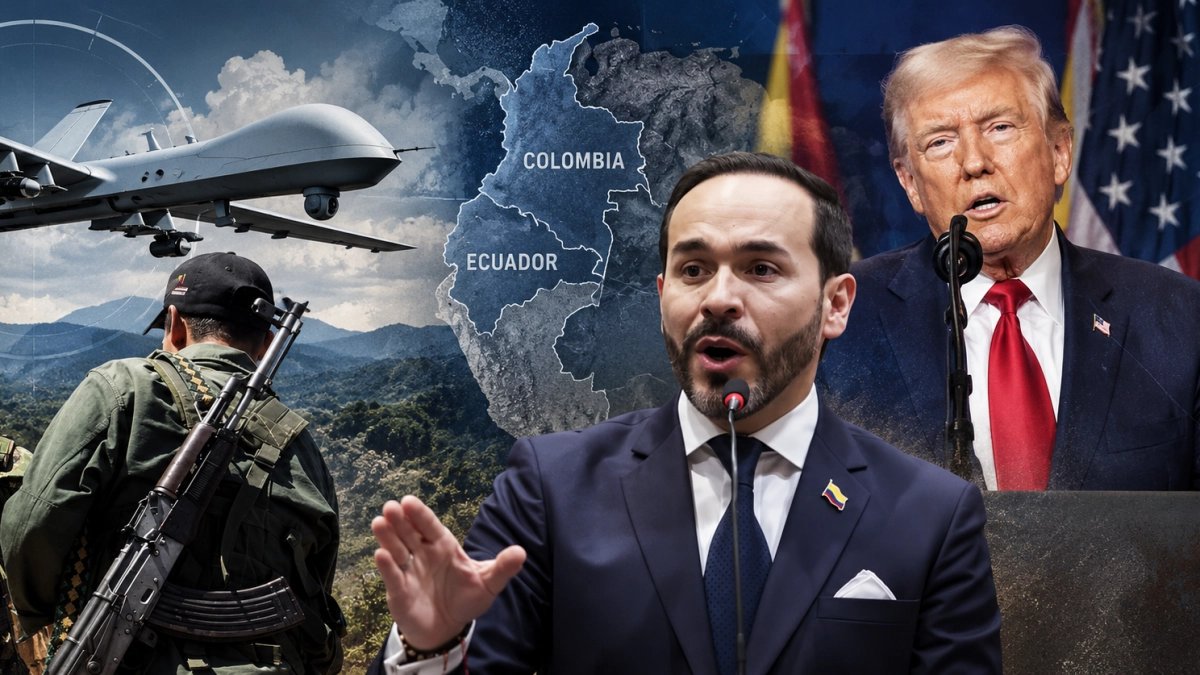
The United States transferred Colombia and Ecuador from Africa a small number of drones MQ-9 Reaperaircraft capable of surveillance for long periods and execute precision attacksin a new sign of the expansion of the Donald Trump administration’s military offensive against drug trafficking organizations in Latin America.
READ ALSO
This was revealed this Tuesday The New York Timeswhich cited two US officials familiar with the decision. The sources requested anonymity because they were not authorized to speak publicly about operational matters.
About a month ago, EL TIEMPO had reported that Colombia was advancing the procedures to receive three of these powerful devices, intended to expand the surveillance and reconnaissance capabilities of the Public Force.
The new report indicates that Washington has moved from relocation plans to aircraft redeployment, although it is not yet known how many have actually arrived in each country.
President De La Espriella and part of his cabinet in Casa de Nariño. Photo: Presidency
The movement comes as the US government prepares an expansion of its campaign against groups dedicated to drug trafficking. According to the newspaper, General Francis L. Donovan, the top US military commander for most of Latin America, has noted that Washington plans to extend operations from attacks against ships to targets on land.
What are the Reapers and why is their arrival relevant?
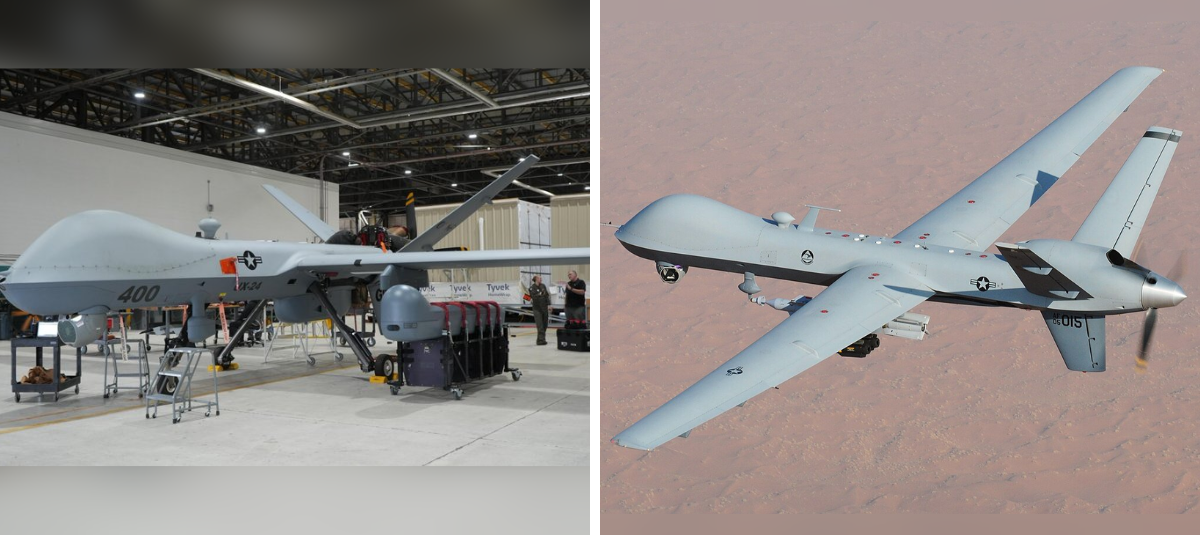
The MQ-9 Reaper are remotely piloted military aircraft, designed to combine intelligence, surveillance and reconnaissance with the ability to engage targets. Although they do not carry a crew on board, they require pilots, sensor operators, control stations and communication systems to execute their missions.
Their importance lies in the fact that they can observe a target for prolonged periods and, If they are armed and have the corresponding authorization, attack him. The US Air Force describes them as highly autonomous platforms used both to locate targets and to collect information.
READ ALSO

Depending on their configuration, they can carry Hellfire missiles and bombs guided by laser or navigation systems. This combination explains the name “hunter-killer”.
The Reaper has greater payload capacity and autonomy than its predecessor, the Predator. According to the Times, it can carry thermal cameras and equipment to intercept electronic communications, capabilities that allow it to track movements and gather intelligence on possible targets.
His record includes operations against the Islamic State and Al Qaeda in the Middle East, as well as against Al Shabab in Africa. It was also used in the attack that killed in Baghdad, in January 2020, to Iranian General Qassim Suleimani, commander of the Quds Force of the Revolutionary Guard.
In Colombia, its surveillance capacity could help locate leaders of armed organizations in mountainous and jungle areas where they have managed to elude the authorities.
The MQ-9 Reaper are remotely piloted military aircraft. Photo:Social networks.
What is known about the deployment
According to officials cited by the Times, the number of aircraft transported is small. However, they did not specify how many correspond to Colombia, how many to Ecuador or how many are already in their destinations.
The newspaper recalled that Colombian officials had announced during the summer an agreement to receive three Reapers and that the country would consider purchasing an additional aircraft.
In Ecuador, on the other hand, the Minister of Defense, Gian Carlo Loffredo, stated in a radio interview last Friday that two devices delivered within the framework of cooperation They were already operating in the country’s airspace.
READ ALSO

The defense ministries of Colombia and Ecuador did not respond to the newspaper’s requests for comment. The US Southern Command, responsible for military operations in the region, declined to comment for operational security reasons.
The transfer from Africa had been scheduled for September, when cnn reported that aircraft assigned to the US command in charge of that continent could be sent to Latin America. At that time it was not clear which recipient countries would be.
For Francisco Palmieri, former US ambassador in charge of Colombia and a former official involved in Washington’s counternarcotics strategy, the decision represents an unequivocal political signal that the administration is seeking to expand both the level and type of cooperation.
Colombia and Ecuador are among the countries that have accepted joint operations with the US within their territories. Both host organizations linked to drug trafficking that Washington has designated as terrorists.
Meeting of the Shield of the Americas. Photo: Chancellery
The Colombian president, Abelardo De La Espriella, has promoted a military offensive against leaders of groups accused of participating in cocaine trafficking. In Ecuador, Daniel Noboa was the first leader in the region to authorize joint military operations this year, according to the Times.
Ecuadorian cooperation has also raised questions due to the presence of US troops at a military installation. That country’s Constitution prohibits foreign military bases, a restriction that voters ratified in a referendum last year.
According to the newspaper, the possible expansion of the attacks towards the mainland has generated concern among human rights defenders about the risks to the civilian population.
Experts cited by this medium also warn that killing members of criminal organizations, even their main leaders, does not necessarily reduce the flow of drugs, since the structures can replace them.
READ ALSO

Washington has defended lethal attacks against suspected drug traffickers, calling them enemy combatants. However, various legal specialists question this justification and maintain that participating in criminal activities does not automatically make a person a legitimate military target.
Shipping also involves a redistribution of limited resources. According to the Timessome Reapers can cost up to US$50 million and at least 45 have been destroyed during the war in Iran, a figure equivalent to about a quarter of the US fleet.
Removing them from Africa could reduce the capabilities available for operations against organizations such as Al Shabab in Somalia, where the Pentagon has relied heavily on these aircraft.
For now, the transfer confirms a greater military priority for Latin America. What remains unknown is how far this cooperation will go and whether the Reapers will be used exclusively for surveillance or also to carry out attacks in Colombian and Ecuadorian territory.
SERGIO GÓMEZ MASERI – EL TIEMPO Correspondent – Washington – @sergom68