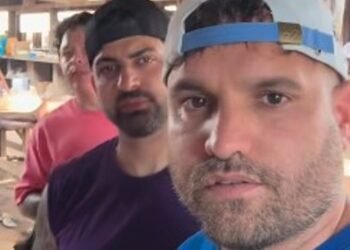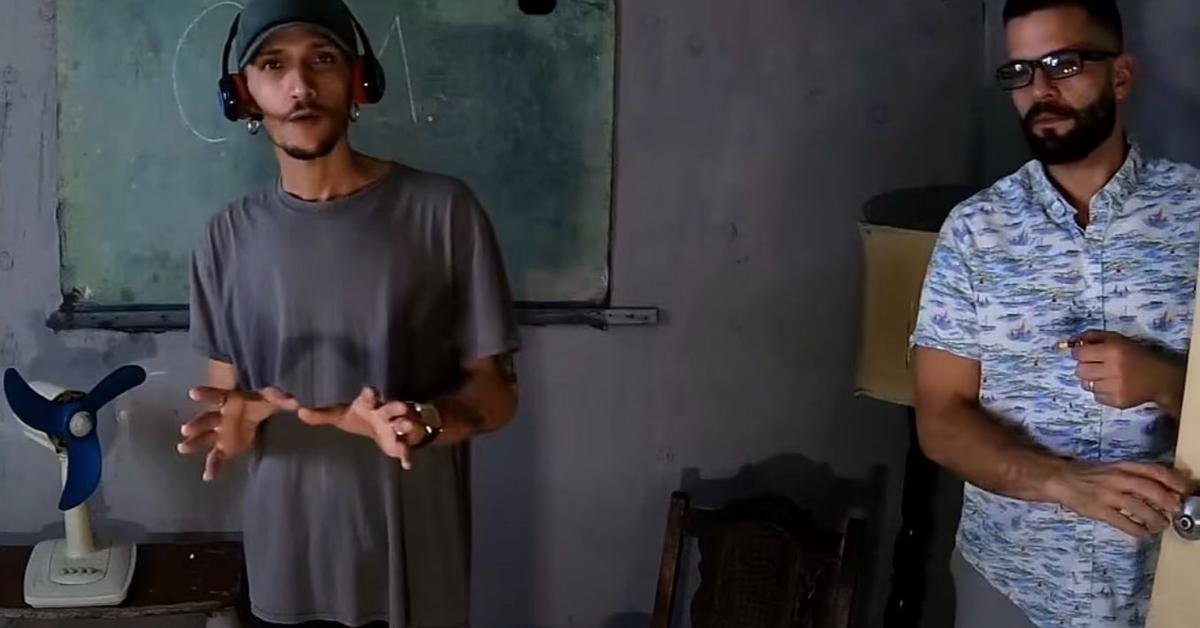
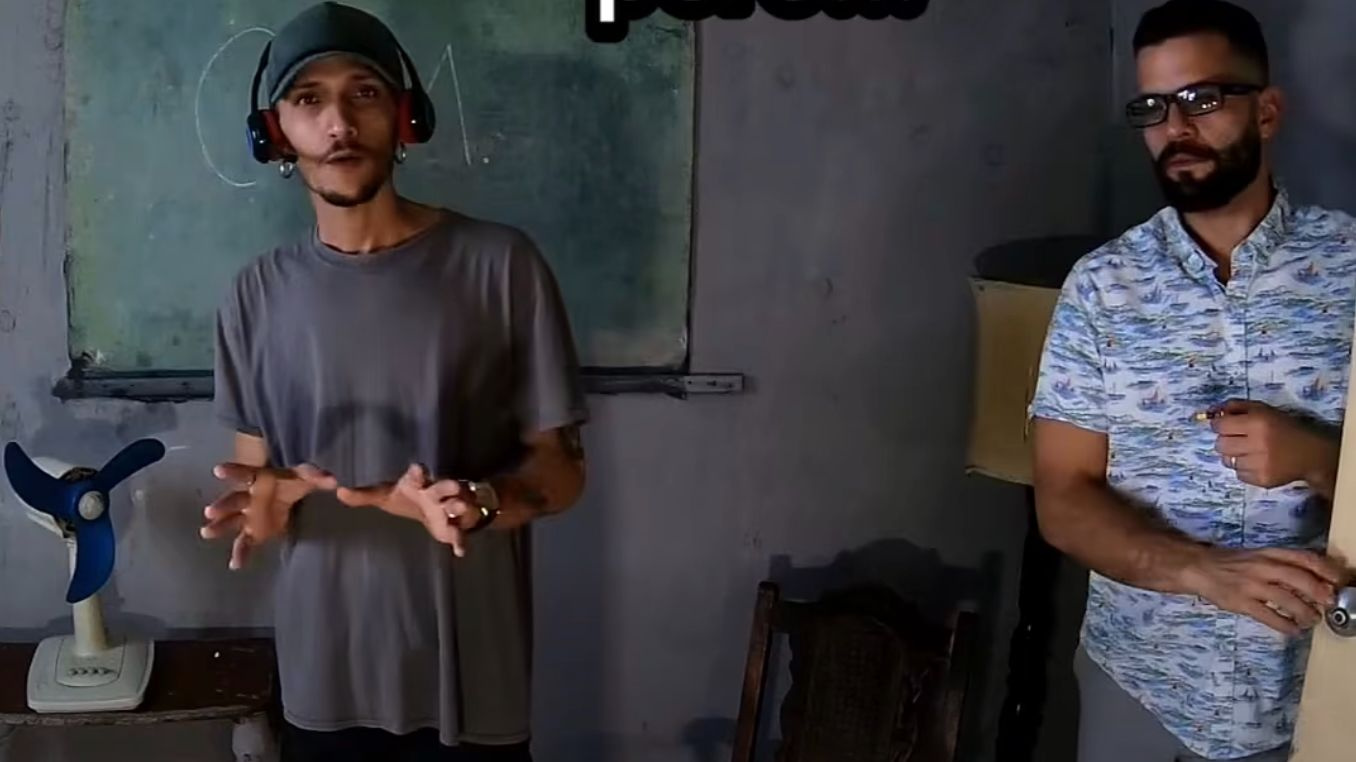
Madrid/Ernesto Ricardo Medina and Kamil Zayas Pérez, members of the project El4ticoface eight and ten years in prison for the crimes of propaganda against the constitutional order, defamation of institutions and organizations and of heroes and martyrs, and instigation to commit a crime. Martí News had access to the conclusions provisional measures of the Provincial Prosecutor’s Office of Holguín, which has sent the petition to the First Criminal Chamber of the Court. This, in turn, has ordered the opening of an oral trial, which will be held within a minimum period of 10 days, although there is no set date.
In statements to the Miami-based media, Medina’s mother was convinced that there will be a conviction. “Perhaps their sentence will be reduced a little, but we have no doubt that they will be condemned. We know that in Cuba there is no rule of law, we do not have any legal guarantee, their opinion prevails and they will be condemned because they exercised the right of freedom of expression. They are young people who have the right to say what they think, contributing what, from their perspective, they consider would be good for our country,” he said.
Mileydis Medina Machín stated that State Security is, technically, the only thing that works well in a country where almost everything goes wrong. “It is the way to stay in power,” he argued.
Mileydis Medina Machín stated that State Security is, technically, the only thing that works well in a country where almost everything goes wrong. “It is the way to stay in power,” he argued.
In the document, the Prosecutor’s Office maintains that the accused acted since November 7, 2025 to establish and implement the digital communication project called El 4tico, for which they “equipped a filming location in Ricardo Medina’s residential property, located in the Piedra Blanca neighborhood of the city of Holguín, from where they produced and disseminated content on social networks.”
The text continues Martí Newscites examples of content in which criticism is made of the Communist Party of Cuba, mass organizations and the Ministry of the Interior, in addition to asking the agents of this organization and members of the Armed Forces to ignore “the established legal order.”
To disseminate the contents, they relied on technology purchased abroad, the Prosecutor’s Office maintains, including computers, telephones, microphones, cameras and other accessories. The Public Ministry links these acquisitions to conversations between young people with exiled opponents in Spain, among them Yunior García Aguilera, Carolina Barrero and Amelia Calzadilla, from whom they allegedly asked for advice, technical training and scripts.
“They are common means. They are not advanced or sophisticated technological items. Of course, they did not seize weapons, propaganda, flyers, posters,” highlights Medina Machín, who has also referred to the relationship with the exiles. “They are people who, at some point in history, have also expressed their disagreement with certain things that happen in this country, but that does not prove anything. They talk about scripts that were sent, edited abroad, about people who once greeted them, but it does not mean that they edited a script,” he argued.
Medina and Zayas were arrested on February 6 of this year – they have therefore been in preventive detention for eight months – after several house searches. The young people remain held in the Holguín Provisional Prison and have received support from organizations such as Cubalex, the Cuban Institute for Freedom of Expression and Press and Prisoner Defenders, in addition to international organizations such as Amnesty International, Human Rights Watch or the Inter-American Commission on Human Rights.
“They wanted to encourage critical thinking among people. We have been accustomed for many years to having a way of thinking imposed on us, but the new generations no longer accept that,” claimed Medina.
“They wanted to encourage critical thinking among people. We have been accustomed for many years to having a way of thinking imposed on us, but the new generations no longer accept that”
During his stay in prison, Kamil Zayas wrote in a letter a vindication of his convictions: “It has been worth it. Do not give up. Let us now build a town, a fair and good one. We are counting on you. Long live Cuba Digna.”
Ricardo Medina, for his part, disclosed through his mother a handwritten letter in which he denounced that State Security was pressuring him to recant through a video. The young man refused and stressed that repenting “would be a lie.”
The news came the same day that the sentence was announced in oral proceedings for Anna Sofía Benítez, known on social media as Anna Bensi, and her mother, Caridad Silvente. For each of them, “two years of limitation of freedom” have been requested, although is pending the Court’s ruling.