Friday, October 2, 2026
    The GeoStrategic Consensus
    No Result
    View All Result
    • Login
    • HOME
    • AMERICAS
      • Argentina
      • Brazil
      • Canada
      • Chile
      • Colombia
      • Costa Rica
      • Cuba
      • Dominican Republic
      • Ecuador
      • El Salvador
      • Greenland
      • Guatemala
      • Honduras
      • Mexico
      • Nicaragua
      • Panama
      • Paraguay
      • Peru
      • United States
      • Uruguay
      • Venezuela
    • ASIA-PACIFIC
      • Australia
      • Brunei Darussalam
      • Cambodia
      • China
      • Federated States of Micronesia
      • Fiji
      • Indonesia
      • Japan
      • Kiribati
      • Laos
      • Malaysia
      • Marshall Islands
      • Mongolia
      • Myanmar
      • Nauru
      • New Zealand
      • North Korea
      • Palau
      • Papua New Guinea
      • Philippines
      • Samoa
      • Singapore
      • Solomon Islands
      • South Korea
      • Taiwan
      • Thailand
      • Timor-Leste
      • Tonga
      • Tuvalu
      • Vanuatu
      • Vietnam
    • CARICOM
      • CARICOM – Non-English
        • Haiti
        • Suriname
      • CARICOM Associates
        • Anguilla
        • Bermuda
        • British-Virgin-Islands
        • Cayman-Islands
        • Curacao
        • Turks-and-Caicos
      • CARICOM English
        • Antigua and Barbuda
        • Barbados
        • Belize
        • Dominica
        • Grenada
        • Guyana
        • Jamaica
        • Montserrat
        • Saint Kitts and Nevis
        • Saint Lucia
        • Saint Vincent and the Grenadines
        • The Bahamas
        • Trinidad and Tobago
    • EURASIA
      • Armenia
      • Azerbaijan
      • Balarus
      • Georgia
      • Kazakhstan
      • Kyrgyzstan
      • Moldova
      • Russia
      • Tajikistan
      • Turkmenistan
      • Ukraine
      • Uzbekistan
    • EUROPE
      • Albania
      • Andorra
      • Austria
      • Bosnia and Herzegovina
      • Bulgaria
      • Croatia
      • Cyprus
      • Czech Republic
      • Denmark
      • Estonia
      • Finland
      • France
      • Germany
      • Greece
      • Holy See
      • Hungary
      • Iceland
      • Ireland
      • Italy
      • Kosovo
      • Latvia
      • Liechtenstein
      • Lithuania
      • Luxembourg
      • Malta
      • Monaco
      • Montenegro
      • Netherlands
      • North Macedonia
      • Norway
      • Poland
      • Portugal
      • Romania
      • San Marino
      • Serbia
      • Slovakia
      • Slovenia
      • Spain
      • Sweden
      • Switzerland
      • United Kingdom
    • MIDDLE EAST AND NORTH AFRICA
      • Algeria
      • Bahrain
      • Egypt
      • Iran
      • Iraq
      • Israel
      • Jordan
      • Kuwait
      • Lebanon
      • Lybia
      • Morocco
      • Oman
      • Palestinian Territories
      • Qatar
      • Saudi Arabia
      • Syria
      • Tunisia
      • Turkey
      • United Arab Emirates
      • Western Sahara
      • Yemen
    • SOUTH ASIA
      • Afghanistan
      • Bangladesh
      • Bhutan
      • India
      • Maldives
      • Nepal
      • Pakistan
      • Sri Lanka
    • SUB-SAHARAN AFRICA
      • Angola
      • Benin
      • Botswana
      • Burkina Faso
      • Burundi
      • Cabo Verde
      • Cameroon
      • Central African Republic
      • Chad
      • Comoros
      • Cote d’Ivoire
      • Democratic Republic of the Congo
      • Djibouti
      • Equatorial Guinea
      • Eritrea
      • Eswatini
      • Ethiopia
      • Gabon
      • Gambia
      • Ghana
      • Guinea
      • Guinea Bissau
      • Kenya
      • Lesotho
      • Liberia
      • Madagascar
      • Malawi
      • Mali
      • Mauritania
      • Mauritius
      • Mozambique
      • Namibia
      • Niger
      • Nigeria
      • Republic of the Congo
      • Rwanda
      • Sao Tome and Principe
      • Senegal
      • Seychelles
      • Sierra Leone
      • Somalia
      • South Africa
      • South Sudan
      • Sudan
      • Tanzania
      • Togo
      • Uganda
      • Zambia
      • Zimbabwe
    • HOME
    • AMERICAS
      • Argentina
      • Brazil
      • Canada
      • Chile
      • Colombia
      • Costa Rica
      • Cuba
      • Dominican Republic
      • Ecuador
      • El Salvador
      • Greenland
      • Guatemala
      • Honduras
      • Mexico
      • Nicaragua
      • Panama
      • Paraguay
      • Peru
      • United States
      • Uruguay
      • Venezuela
    • ASIA-PACIFIC
      • Australia
      • Brunei Darussalam
      • Cambodia
      • China
      • Federated States of Micronesia
      • Fiji
      • Indonesia
      • Japan
      • Kiribati
      • Laos
      • Malaysia
      • Marshall Islands
      • Mongolia
      • Myanmar
      • Nauru
      • New Zealand
      • North Korea
      • Palau
      • Papua New Guinea
      • Philippines
      • Samoa
      • Singapore
      • Solomon Islands
      • South Korea
      • Taiwan
      • Thailand
      • Timor-Leste
      • Tonga
      • Tuvalu
      • Vanuatu
      • Vietnam
    • CARICOM
      • CARICOM – Non-English
        • Haiti
        • Suriname
      • CARICOM Associates
        • Anguilla
        • Bermuda
        • British-Virgin-Islands
        • Cayman-Islands
        • Curacao
        • Turks-and-Caicos
      • CARICOM English
        • Antigua and Barbuda
        • Barbados
        • Belize
        • Dominica
        • Grenada
        • Guyana
        • Jamaica
        • Montserrat
        • Saint Kitts and Nevis
        • Saint Lucia
        • Saint Vincent and the Grenadines
        • The Bahamas
        • Trinidad and Tobago
    • EURASIA
      • Armenia
      • Azerbaijan
      • Balarus
      • Georgia
      • Kazakhstan
      • Kyrgyzstan
      • Moldova
      • Russia
      • Tajikistan
      • Turkmenistan
      • Ukraine
      • Uzbekistan
    • EUROPE
      • Albania
      • Andorra
      • Austria
      • Bosnia and Herzegovina
      • Bulgaria
      • Croatia
      • Cyprus
      • Czech Republic
      • Denmark
      • Estonia
      • Finland
      • France
      • Germany
      • Greece
      • Holy See
      • Hungary
      • Iceland
      • Ireland
      • Italy
      • Kosovo
      • Latvia
      • Liechtenstein
      • Lithuania
      • Luxembourg
      • Malta
      • Monaco
      • Montenegro
      • Netherlands
      • North Macedonia
      • Norway
      • Poland
      • Portugal
      • Romania
      • San Marino
      • Serbia
      • Slovakia
      • Slovenia
      • Spain
      • Sweden
      • Switzerland
      • United Kingdom
    • MIDDLE EAST AND NORTH AFRICA
      • Algeria
      • Bahrain
      • Egypt
      • Iran
      • Iraq
      • Israel
      • Jordan
      • Kuwait
      • Lebanon
      • Lybia
      • Morocco
      • Oman
      • Palestinian Territories
      • Qatar
      • Saudi Arabia
      • Syria
      • Tunisia
      • Turkey
      • United Arab Emirates
      • Western Sahara
      • Yemen
    • SOUTH ASIA
      • Afghanistan
      • Bangladesh
      • Bhutan
      • India
      • Maldives
      • Nepal
      • Pakistan
      • Sri Lanka
    • SUB-SAHARAN AFRICA
      • Angola
      • Benin
      • Botswana
      • Burkina Faso
      • Burundi
      • Cabo Verde
      • Cameroon
      • Central African Republic
      • Chad
      • Comoros
      • Cote d’Ivoire
      • Democratic Republic of the Congo
      • Djibouti
      • Equatorial Guinea
      • Eritrea
      • Eswatini
      • Ethiopia
      • Gabon
      • Gambia
      • Ghana
      • Guinea
      • Guinea Bissau
      • Kenya
      • Lesotho
      • Liberia
      • Madagascar
      • Malawi
      • Mali
      • Mauritania
      • Mauritius
      • Mozambique
      • Namibia
      • Niger
      • Nigeria
      • Republic of the Congo
      • Rwanda
      • Sao Tome and Principe
      • Senegal
      • Seychelles
      • Sierra Leone
      • Somalia
      • South Africa
      • South Sudan
      • Sudan
      • Tanzania
      • Togo
      • Uganda
      • Zambia
      • Zimbabwe
    No Result
    View All Result
    Agentially
    No Result
    View All Result
    Home ASIA-PACIFIC Nauru

    Australia’s security race in the South Pacific • Inside Story

    The Analyst by The Analyst
    October 1, 2026
    in Nauru
    Australia’s security race in the South Pacific • Inside Story


    Waging a “permanent contest” with China in the South Pacific, Australia is building new alliances and a new security system. Treaties signed with Island states are driven by fear and shock in Canberra, yet also by a sense of responsibility — plus a determination to be the top regional power.

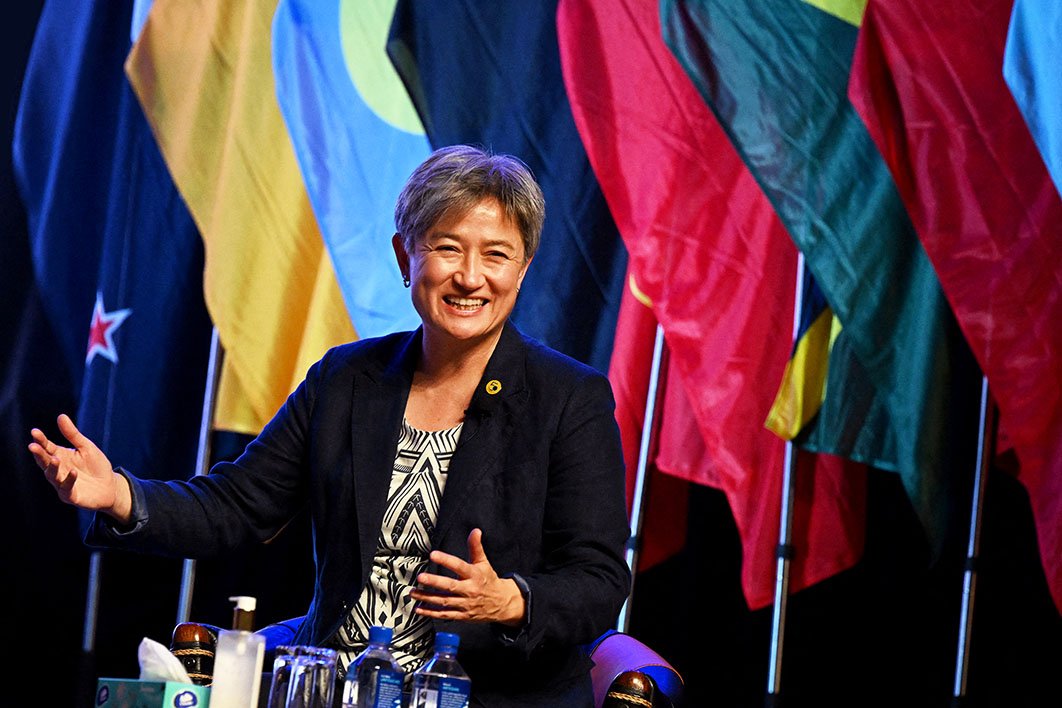
    Prone to amnesia about its permanent Pacific interests, Australia has been given a jolting reminder by the permanent contest with China. The headline phrase was coined by foreign minister Penny Wong in a 2024 interview: “We’re in a state of permanent contest in the Pacific — that’s the reality.”

    To emphasise the headline, Wong repeated the “permanent contest” line three times, and it has since become a policy touchstone. Visiting Fiji in May this year, she declared: “I’ve been upfront with Australians — I’ve described us being in permanent contest in the Pacific, and that we have to work very hard to be the partner of choice. And I’ve explained why we want to be the partner of choice. We want that because our security and our stability are grounded in, are located in, our region.”

    The race is on. Since Wong’s declaration, Australia has been busy signing treaties to embrace the Islands and shut out China.

    The mutual defence agreements with Papua New Guinea (October 2025) and Fiji (July 2026) are Australia’s first formal alliances since signing the ANZUS treaty with the United States and New Zealand in 1951. Australia would welcome an alliance with Tonga to match those with PNG and Fiji; these are the only three countries in the Islands with a military.

    A Tonga–Australia Statement of Intent (September 2025) promised to elevate the relationship because the “threats and challenges that face our nations have evolved and multiplied. From climate change to strategic competition, from transnational crime to cyber-attacks, from natural disasters to conflict — our world has become increasingly dangerous and uncertain.”

    For the rest of the South Pacific without military forces, Australia offers security agreements rather than alliances, signing treaties with Tuvalu (November 2023), Nauru (December 2024) and Vanuatu (June 2026). Solomon Islands is next in line, as Canberra seeks to expand the 2017 bilateral security treaty, signed at the end of the Regional Assistance Mission to Solomon Islands. To clinch the new treaty, leaked texts show Australia offering to give an extra $980 million in aid.

    Australia wants to bar China from any military role in the region — the mantra is “No China bases” — and crowd it out of Island police forces and intelligence and surveillance agencies. Such is the fear China has injected into Australia’s view of the South Pacific.

    The new security system Australia is constructing is a two-way deal, demanding commitment by both sides. Australia’s security guarantee requires a matching promise from Island governments that rhymes with “No China.”

    The texts of the alliance and security treaties offer partnership with Australia along with forsaking-all-others provisions. The PNG treaty prohibits “activities, agreements or arrangements” that would harm the alliance. The Fiji treaty says “no party shall act in a manner that would undermine its ability to meet any of its obligations” under the mutual defence pact. The Vanuatu agreement declares: “To reinforce Pacific collective security and sovereignty Vanuatu shall not permit its territory to be used for any foreign military base or infrastructure.”

    The Nauru agreement has an Australian veto clause: “Nauru shall mutually agree with Australia any partnership, arrangement or engagement with any other State or entity on matters relating to Nauru’s security including maritime security, defence, policing, border protection and cyber security sectors, and Nauru’s critical infrastructure concerning banking and telecommunications.”

    The veto clause with Tuvalu is similar: “Tuvalu shall mutually agree with Australia any partnership, arrangement or engagement with any other State or entity on security and defence-related matters.” Tuvalu pledges to seek Australian approval on “defence, policing, border protection, cyber security and critical infrastructure, including ports, telecommunications and energy infrastructure.”

    The new security system draws on a deep “strategic denial” instinct — the need to deny any rival power a role close to Australia. When roused, the instinct has policy heft. It always has. When Australia became a nation in 1901, the constitution gave special attention to the South Pacific, noting the Commonwealth’s power over “external affairs” but adding a further clause specifying “the relations of the Commonwealth with the islands of the Pacific.”

    At birth, the young Commonwealth fretted about what France or Germany would do in the island arc. The long-feared nightmare — the existential threat from Japan that still haunts strategic thinking — arrived in 1942. The Soviet Union became the power to be denied in the 1970s, and for a panicky period in the 1980s even Libya loomed. Facing China, all the history and instinct kicks in.

    For more than 200 years, Australia went out into the South Pacific as bible-bashers and blackbirders, as carpetbaggers, captains and colonisers. The Islands have been so important to Australia for so long, it’s amazing how much Australia forgets about its South Pacific roles and ambitions. When musing two decades ago about missionaries, miners and mariners, I lamented that Australia’s work in the South Pacific is beset by policy taboos, popular amnesia and political failure.

    Perhaps forgetting is what settler societies must do, marching forward and discarding much. The amnesia means the South Pacific remembers our history in the region better than we do.

    When not scared by other powers arriving in the Islands, Australia’s focus is on trade and the big “As” of Asia and Alliance. One benefit of the China scare is to keep Canberra’s attention from straying.

    A laudable habit that is a constant is signing aid cheques. For nearly fifty years, Australia has been the top aid donor in the Islands. Papua New Guinea gets the most, but everyone shares.

    As the Lowy Institute Pacific aid map reports, “Australia remains the Pacific’s largest development partner by a considerable margin, disbursing US$1.5 billion in Official Development Finance to the region in 2024, accounting for 37 per cent of all regional development flows.”

    Our attention fluctuates, but the dollars are a continuous statement of intent. Too often over those fifty years, aid policy was Pacific policy. It was the end not the start of Canberra’s thinking. The challenge with the new alliance system will be to avoid the one-policy-does-it-all trap and ensure security doesn’t dominate to the exclusion of all else.


    When Australian leaders talk of “our region” or “our backyard” or “our neighbourhood,” the important word is “our,” with not enough attention to the views of the neighbours. In the newly published Neighbours: Australia and the Pacific two fine academics give a mighty kick to the “our” syndrome: “Ignorance, paternalism, contempt and neglect have been common features of Australia’s attitude towards the Pacific since British colonial settlement. This has been punctuated by spurts of enthusiasm.”

    The wallop is delivered by Joanne Wallis, of Adelaide University, and Jack Corbett, of Monash University:

    READ ALSO

    This tiny country wants you to call it by its new name

    Cold and Flu Forecast for Yaren, Nauru – The Weather Channel

    Australia frequently gets its Pacific relationships wrong. This has damaged its ability to pursue its foreign and strategic policy interests in the region. For decades, Australia has given large amounts of aid and other assistance to Pacific Island countries. But its history of engagement with the Pacific has been characterised by intense periods of colonisation, exploitation, extraction and intervention. Those periods have been truncated by long stretches of indifference and neglect, which have ended abruptly when regional developments have taken Australia by surprise.

    The China surprise, Wallis and Corbett write, shows Australia needs a new story about its place in the Pacific and a new pattern of involvement. Too often, the Islands have been seen as “an irritant that distracts Australia from its ‘real’ foreign and strategic policy objectives in the broader Indo-Pacific.”

    The China challenge has erased the old Canberra dichotomy: Asia the main game, the Islands an afterthought. Being part of the “main game” with Asia horrifies Island leaders but simplifies Australia’s focus problem. The answers in the South Pacific, though, are still different from those in Asia because of Australia’s larger role.

    Canberra confronts the Gulliver dilemma, the giant trying to tiptoe around the South Pacific just as Gulliver stepped carefully around the fictional islands of Lilliput. The predicament is set by differences in size, perspective and power.

    Wallis and Corbett define four recurring problems in Australia’s complex history in the Islands:

    Asymmetry: With the twelfth-largest economy in the world, Australia represents 95 per cent of the region’s GDP, 91 per cent of its defence and security spending and 60 per cent of its population when New Zealand is included. Fiji, PNG, Samoa and Vanuatu are classified as “developing countries” while Kiribati, Solomon Islands and Tuvalu are “least developed.”

    Difference: Identities and interests often differ. “Australia sees itself as a ‘middle power’ with a role to play in strategic competition in the Indo-Pacific as an ally of the United States and security partner of the United Kingdom,” Wallis and Corbett write, a perspective crystallised by the AUKUS security partnership. At the United Nations, Australia is a member of the “Western European and Other” group while Island countries belong to the “Asia-Pacific” group. Canberra continues to “look to the distant horizons of Washington and London for its security” and to see Island countries as “stepping stones” to be used by a potential foe. Islands reject the “stepping stone” image and see Australia’s strategic denial instinct as denying their autonomy and limiting their diplomatic options.

    Misunderstanding: Australia and the Islands can “talk past each other, assuming shared interests or understandings that don’t exist, or assuming domestic political support for foreign and strategic policy endeavours that isn’t there.” Wallis and Corbett judge that over the past twenty years Australia has devoted increasing policy attention to the Pacific. “The cross-agency Office of the Pacific in the Department of Foreign Affairs and Trade now has 330 staff, plus many more diplomats in posts around the region.” Yet the Australian government “still frequently misunderstands its neighbours.”

    Confusion: “Australia pursues two potentially contradictory policies in the region,” Wallis and Corbett write. One Canberra policy articulated by Foreign Affairs is aimed at “building a stronger and more united Pacific family.” The other policy, led by Defence, is strategic denial, with Australia aiming to be the region’s “primary security partner.” The Islands, though, aren’t too sure about Australia’s permanent race with China: “Competition does not necessarily meet the priorities of Pacific Island countries, particularly those who seek to be ‘friends to all.’”

    The four problems can cause Australian policymakers to feel “unappreciated and taken advantage of” just as “Pacific leaders can feel bullied and disempowered.”


    Wallis and Corbett align asymmetry, difference, misunderstanding and confusion with the security headache that always afflicts Australia as “a relatively small settler population huddled on the edges of a large continent that perceives itself to be in a hostile region far from its allies.”

    The new security system is “the most recent attempt to solve this dilemma.” But Wallis and Corbett’s dour judgement is that the network of treaties can’t resolve the dilemma. The South Pacific, they write, is too large for a nation of Australia’s capability to secure:

    Pacific nations have different security interests, not only from each other but also from larger states. The consequence is that Australia is often perceived as both unable to impose its will in the Pacific and overreaching its capability and engaging in neo-colonial interventionism. This fundamental problem has been evident for more than a century but has been exacerbated by China’s rising influence because, for the first time since World War Two, Australia faces the prospect of an adversary with the potential to achieve superiority in both military capability and diplomatic influence, at the same time as its long-time ally the US appears to be in decline. Australia needs to better explain this dilemma to Pacific Island countries, which often misunderstand how Australia sees the world and acts in response.

    Australia may never be able to convince the Islands to share its anxieties and interests, Wallis and Corbett note. The solution they offer is to do what good neighbours usually manage: to talk and understand. Canberra should “better explain what its interests are, why it has them, and the way they shape policy, and then listen more attentively to the region’s response.”

    Wallis and Corbett are sceptical about a new term that has entered Australian foreign policy: the Pacific “family.” Scott Morrison’s government embraced the family idea, with Morrison declaring the relationship to be based on “respect, love, commitment” for “our family in the Pacific, who we love dearly.” The Albanese government, too, wants to be in the family. As Penny Wong told the UN General Assembly in 2022: “Australians are part of the Pacific family. Families are about care, love and forgiveness. But they are also about duty and loyalty, looking out for each other, and listening to each other.”

    The concept of “family” is tricky, Wallis and Corbett write, because there are different understandings of where Australia sits in the family. Is Australia a parent, a cousin, a sibling, a mad aunt or a distant rich uncle?

    In the Islands, kinship both demands and delivers much. The authors think the Pacific understanding of family is different from what Australia has in mind. The solution they offer is to aim to be a good neighbour, not family.

    To counter the four recurring problems of Australia’s complex place in the Islands, they offer four attributes of good neighbourliness: respecting boundaries, disagreeing well, fostering self-awareness and prioritising cooperation. These would “serve as an antidote to the confusion and misunderstanding that have dominated Australian foreign policy in the Pacific for well over a century.”

    The four suburban attributes advocated by Wallis and Corbett are a down-home version of the central tenets of diplomacy: offering respect and “face” to other states, honesty as the best form of persuasion, precision and accuracy in defining and dealing with issues, and patience (keep shuffling the cards) linked to a readiness to act when a chance does arrive.

    Good-neighbour diplomacy can never change the asymmetries between the Islands and the nation that has its own continent, Wallis and Corbett write, but it can offer “a more realistic view of the relationship and its future.” They conclude: “Australia must first understand how its past practice of treating the region as an irritant, and its more recent focus on being a patronising family member, has acted as a barrier to the achievement of its foreign policy objectives. By contrast, our suggestion that Australia would be better off focusing on becoming a better neighbour has the potential to improve relations in the interests of all countries, large and small.” •

    Neighbours: Australia and the Pacific
    By Joanne Wallis and Jack Corbett | La Trobe University Press with Black Inc. | $36.99 | 296 pages

    Source link

    Related Posts

    This tiny country wants you to call it by its new name
    Nauru

    This tiny country wants you to call it by its new name

    October 1, 2026
    Nauru

    Cold and Flu Forecast for Yaren, Nauru – The Weather Channel

    October 1, 2026
    Nauru

    Nauru Geography Coloring Poster | Country Facts Activity

    October 1, 2026
    Australia’s security race in the South Pacific • Inside Story
    Nauru

    Australia’s security race in the South Pacific • Inside Story

    October 1, 2026
    ICC board regrets Nauru withdrawal
    Nauru

    ICC board regrets Nauru withdrawal

    September 30, 2026
    GK: Which Country Has No Official Capital?
    Nauru

    GK: Which Country Has No Official Capital?

    September 30, 2026
    Next Post
    J&K govt. to formulate media policy to regulate online, social media news platforms

    J&K govt. to formulate media policy to regulate online, social media news platforms

    POPULAR NEWS

    2026 Regional and International Conventions of Jehovah’s Witnesses

    2026 Regional and International Conventions of Jehovah’s Witnesses

    July 7, 2026
    Thaksin, Yingluck and Paetongtarn meet Indonesian President Prabowo for investment talks

    Thaksin, Yingluck and Paetongtarn meet Indonesian President Prabowo for investment talks

    July 13, 2026
    This is how Nicolás Maduro and Cilia Flores reappeared in their hearing

    This is how Nicolás Maduro and Cilia Flores reappeared in their hearing

    July 24, 2026
    No deliverance: when gig workers fall prey to road accidents

    No deliverance: when gig workers fall prey to road accidents

    July 25, 2026

    All posts

    July 23, 2026

    EDITOR'S PICK

    Oman Club build youth ranks ahead of new season

    Oman Club build youth ranks ahead of new season

    August 26, 2026

    Opposition Leader rolls out HERO initiativeAugust 23, 2026

    August 28, 2026
    Kobakhidze thanked the President of Nauru for revoking the recognition of Abkhazia and South Ossetia

    Kobakhidze thanked the President of Nauru for revoking the recognition of Abkhazia and South Ossetia

    August 27, 2026
    Five Iranian drones intercepted: Jordan

    Five Iranian drones intercepted: Jordan

    July 23, 2026

    Recent Posts

    • The Catalan requirement is lowered for residents with limited understanding
    • Captains Regent in San Marino. From six months to six months
    • PDK one step closer to changing the law on the Special, it only needs the majority of deputies present in the hall for approval
    • Rama takes out the photo with Donald Trump: Since I couldn’t meet him… – Shqip.com

      © 2026 Agentially - Navigating shifting sovereignties and global risk .

      Welcome Back!

      Login to your account below

      Forgotten Password?

      Retrieve your password

      Please enter your username or email address to reset your password.

      Log In
      No Result
      View All Result
      • HOME
      • AMERICAS
        • Argentina
        • Brazil
        • Canada
        • Chile
        • Colombia
        • Costa Rica
        • Cuba
        • Dominican Republic
        • Ecuador
        • El Salvador
        • Greenland
        • Guatemala
        • Honduras
        • Mexico
        • Nicaragua
        • Panama
        • Paraguay
        • Peru
        • United States
        • Uruguay
        • Venezuela
      • ASIA-PACIFIC
        • Australia
        • Brunei Darussalam
        • Cambodia
        • China
        • Federated States of Micronesia
        • Fiji
        • Indonesia
        • Japan
        • Kiribati
        • Laos
        • Malaysia
        • Marshall Islands
        • Mongolia
        • Myanmar
        • Nauru
        • New Zealand
        • North Korea
        • Palau
        • Papua New Guinea
        • Philippines
        • Samoa
        • Singapore
        • Solomon Islands
        • South Korea
        • Taiwan
        • Thailand
        • Timor-Leste
        • Tonga
        • Tuvalu
        • Vanuatu
        • Vietnam
      • CARICOM
        • CARICOM – Non-English
          • Haiti
          • Suriname
        • CARICOM Associates
          • Anguilla
          • Bermuda
          • British-Virgin-Islands
          • Cayman-Islands
          • Curacao
          • Turks-and-Caicos
        • CARICOM English
          • Antigua and Barbuda
          • Barbados
          • Belize
          • Dominica
          • Grenada
          • Guyana
          • Jamaica
          • Montserrat
          • Saint Kitts and Nevis
          • Saint Lucia
          • Saint Vincent and the Grenadines
          • The Bahamas
          • Trinidad and Tobago
      • EURASIA
        • Armenia
        • Azerbaijan
        • Balarus
        • Georgia
        • Kazakhstan
        • Kyrgyzstan
        • Moldova
        • Russia
        • Tajikistan
        • Turkmenistan
        • Ukraine
        • Uzbekistan
      • EUROPE
        • Albania
        • Andorra
        • Austria
        • Bosnia and Herzegovina
        • Bulgaria
        • Croatia
        • Cyprus
        • Czech Republic
        • Denmark
        • Estonia
        • Finland
        • France
        • Germany
        • Greece
        • Holy See
        • Hungary
        • Iceland
        • Ireland
        • Italy
        • Kosovo
        • Latvia
        • Liechtenstein
        • Lithuania
        • Luxembourg
        • Malta
        • Monaco
        • Montenegro
        • Netherlands
        • North Macedonia
        • Norway
        • Poland
        • Portugal
        • Romania
        • San Marino
        • Serbia
        • Slovakia
        • Slovenia
        • Spain
        • Sweden
        • Switzerland
        • United Kingdom
      • MIDDLE EAST AND NORTH AFRICA
        • Algeria
        • Bahrain
        • Egypt
        • Iran
        • Iraq
        • Israel
        • Jordan
        • Kuwait
        • Lebanon
        • Lybia
        • Morocco
        • Oman
        • Palestinian Territories
        • Qatar
        • Saudi Arabia
        • Syria
        • Tunisia
        • Turkey
        • United Arab Emirates
        • Western Sahara
        • Yemen
      • SOUTH ASIA
        • Afghanistan
        • Bangladesh
        • Bhutan
        • India
        • Maldives
        • Nepal
        • Pakistan
        • Sri Lanka
      • SUB-SAHARAN AFRICA
        • Angola
        • Benin
        • Botswana
        • Burkina Faso
        • Burundi
        • Cabo Verde
        • Cameroon
        • Central African Republic
        • Chad
        • Comoros
        • Cote d’Ivoire
        • Democratic Republic of the Congo
        • Djibouti
        • Equatorial Guinea
        • Eritrea
        • Eswatini
        • Ethiopia
        • Gabon
        • Gambia
        • Ghana
        • Guinea
        • Guinea Bissau
        • Kenya
        • Lesotho
        • Liberia
        • Madagascar
        • Malawi
        • Mali
        • Mauritania
        • Mauritius
        • Mozambique
        • Namibia
        • Niger
        • Nigeria
        • Republic of the Congo
        • Rwanda
        • Sao Tome and Principe
        • Senegal
        • Seychelles
        • Sierra Leone
        • Somalia
        • South Africa
        • South Sudan
        • Sudan
        • Tanzania
        • Togo
        • Uganda
        • Zambia
        • Zimbabwe

      © 2026 Agentially - Navigating shifting sovereignties and global risk .

      This website uses cookies. By continuing to use this website you are giving consent to cookies being used. Visit our Privacy and Cookie Policy.