This summer’s mackerel trips in international waters in the North Atlantic is over for Greenlandic shipping companies. Greenland’s 2026 quota for mackerel is 20,376 tonnes compared to 37,502 tonnes last year.
Despite low quotas, the shipping companies have earned very well in 2026. The explanation is that the prices of mackerel that the companies have unloaded in the Faroe Islands have been record high. In 2025, prices were also high.
This summer’s mackerel trips in international waters in the North Atlantic is over for Greenlandic shipping companies. Greenland’s 2026 quota for mackerel is 20,376 tonnes compared to 37,502 tonnes last year.
Despite low quotas, the shipping companies have earned very well in 2026. The explanation is that the prices of mackerel that the companies have unloaded in the Faroe Islands have been record high. In 2025, prices were also high.
Mackerel has for many years been among the most important fish species in Greenlandic fisheries. Compared to 2025, Greenland’s mackerel quota in 2026 has been reduced by 48 percent. And the quota is historically low. On the other hand, the shipping companies’ income from the sale of the catches has been at the high end.
Sikuaq Trawl
When the calculations in the four shipping companies Polar Pelagic, Polar Seafood Greenland, Pelagic Greenland and Sikuaq Trawl are done, 2026 promises to be one of the best mackerel years ever.
The shipping companies will find it difficult to deny this when they publish their 2026 accounts next year.
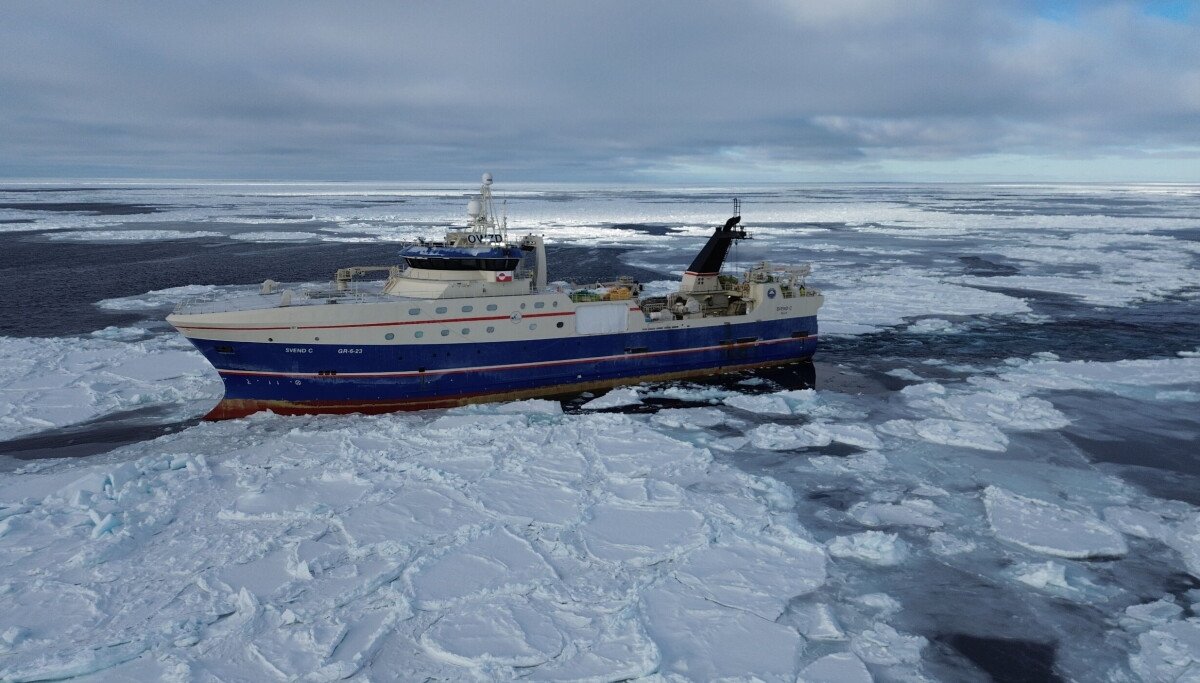
– We have an extremely skilled crew on the vessel Svend C, who have fished up the mackerel quota quickly at a good price, says trawler coordinator at Sikuaq Trawl, Jákup Emil Hansen to Sermitsiaq.
In relation to the vessel’s plans, the expectation in Sikuaq Trawl is that the remaining quota of shrimp will also be quickly fished out.
– Therefore, we hope that Svend C in October and November will be in the running to be allocated cod in West Greenland in connection with the redistribution of unfished cod quota. In any case, we cannot see the logic in Svend C having to lie at the quay at the same time as the National Treasury loses income from valuable fishing fees because the quota is not fished up, he says.
Svend C had a quota of 3,900 tonnes of mackerel this year.
Royal Greenland
Royal Greenland is the main shareholder in Pelagic Greenland, while the Icelandic Íséfelag Vestmannaeyja is a minority shareholder. Pelagic Greenland has been fishing for mackerel with the vessel Tasiilaq, which had a quota of 3,900 tonnes.
– It has been a good year for the mackerel fishery, just as 2025 was also a good year. But the mackerel fishery needs to be looked at over a longer period. We have had several years where earnings have been significantly lower, and at the same time we are looking into a period when the quotas are expected to fall further.
– Fishing is fickle, and both quantities, prices and earnings can vary considerably from year to year. For us, it is crucial that there is also a long-term basis for a stable and value-creating mackerel fishery, says Royal Greenland’s trawler director Andrias Olsen to Sermitsiaq.
Polar Pelagic has fished for mackerel with the vessels Polar Amaroq and Polar Ammassak, while Polar Seafood Greenland fished with the vessel Polar Princess. In total, the two vessels had a quota of almost 7,800 tonnes.
Polar Seafood Greenland is the main shareholder in Polar Pelagic, while the Icelandic Sildavinslan, which is part of the giant group Samherji, is a minority shareholder.
We have asked Polar Seafood Greenland for a comment on the fishery, but the company has not returned. Biologists recommended a drastic reduction in quota
The biologists of the International Council for the Exploration of the Sea, ICES, recommended that the mackerel quota in the North Atlantic in 2026 should not exceed 174,000 tonnes. This is a decrease of 71 percent compared to the recommendation for 2025.
This has happened after a number of years of overfishing. The council wrote in a report that the mackerel stock in 2025 is below the biological limits and thus at a level where the stock’s production will be reduced.
The Faroe Islands, Iceland, Great Britain and Norway, which have entered into an agreement, agreed to reduce the TAC by 48 percent in 2026 compared to 2025.
Over a number of years, Greenland has set their quota corresponding to 6.5 percent of the TAC in the agreement and this year, as mentioned, the quota has been reduced by 48 percent.
Greenland is the North Atlantic’s smallest mackerel nation. In addition to Greenland, these countries participate in the fishery: Great Britain, Norway, the Faroe Islands, Iceland and the EU, including Denmark, France and Ireland. Russia also fishes the stock in international waters.
The pelagic consumer industry in Norway primarily lives off the margins on kilos and produced quantity. With lower quotas, the industry is dependent on a greater difference between the prices to the fishing companies and the export prices of the products in order to maintain profitability. This is written by the Norwegian fishing media, Fiskeribladet.no.
Despite lower quotas than last year and lower margins per kilo of mackerel, several land plants report satisfactory profitability, writes the media.
According to Fiskeribladet, the best paying export markets are in Asia, primarily Japan and South Korea as well as the restaurant segment.
Although demand in Europe and the US was strong in the first half of 2025, two-thirds of the mackerel fished by Norwegian shipping companies went to Asia in August.
This year’s Norwegian mackerel quota is just over 81,000 tonnes. Last year, Norwegian vessels caught 156,000 tonnes of mackerel. In the past 10 years, Norwegian vessels have fished a total of 217,500 tonnes per year, Fiskeribladet reports.