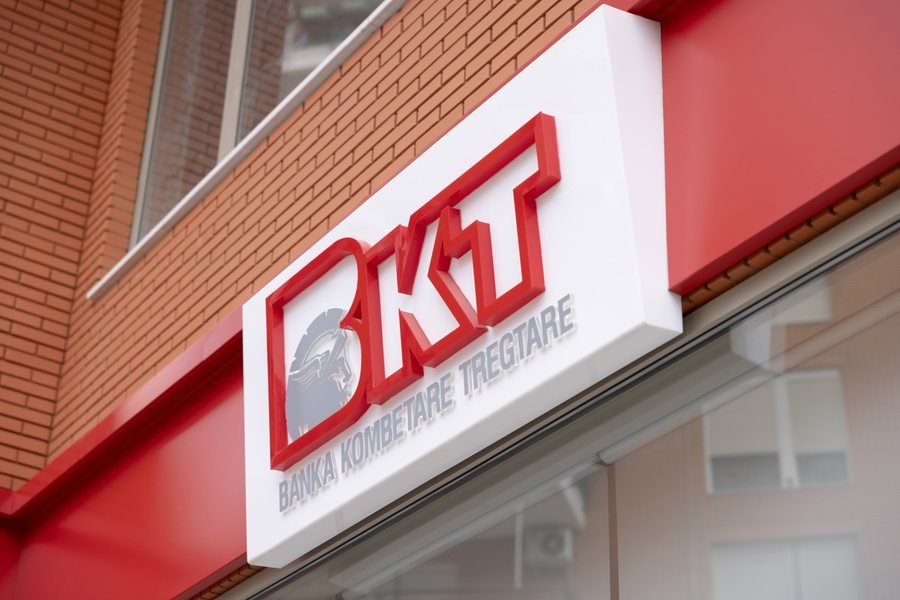
At the beginning of 2022, the Board of Directors of the National Commercial Bank urgently and in a panic called an extraordinary meeting.
The Turkoash people running BKT had “played roulette” and lost a lot of money. This had put the country’s largest bank before two elections. Either add about $100 million in capital, or be taken over by the state.
But Seyhan Pencabligil, who came to Albania as a riosh two decades ago and turned into the king of Albanian banking, had found a third solution while sitting behind the doors of the Bank of Albania; change of notebooks.
Sometime between February 24 and March 3, 2022, BKT’s Board of Directors announced a change in business model.
Behind the exotic buzzword of the business model was actually just an accounting maneuver to wipe out the bank’s losses on paper. The whole maneuver was related to the massive investments that BKT had made in the securities, bonds of the Albanian government and those of foreign governments.
Reclassification $1 billion
At the end of 2021, BKT had total assets of $5.2 billion. But half of this portfolio or 2.6 billion dollars were investments in securities, i.e. Albanian and foreign government bonds.
In finance there is a golden rule. When interest rates in the market rise, the value of existing securities falls. The problem was that at the time interest rates in the market were rising rapidly as central banks were trying to contain the huge inflationary wave caused by the war in Ukraine.
When securities are held at market value, as BKT had, the increase in interest automatically translates into a decrease in their value and a loss on the balance sheet.
To protect itself from this steep decline that was eroding its capital, BKT’s board of directors reclassified $947 million in securities from held-to-market bonds to held-to-maturity bonds.
But what did this mean in practice?
By officially declaring that we will not sell these securities before maturity, but will hold them until the state pays us back at the end of the maturity period, BKT won the legal accounting right to no longer reflect losses from daily market price fluctuations.
BSH closed his eyes
The internal decision of the Board of Directors of BKT to reclassify USD 1 billion worth of securities was submitted to the Supervision Department at the Bank of Albania as part of mandatory periodic reporting. BSH accepted this argumentation as legally valid under the umbrella of IFRS 9 rules.
But this was a farce of which the Bank of Albania was fully aware. In fact, BKT was not the only bank that faced this problem.
Many European banks, especially in the Eurozone, suffered the same hidden losses as BKT. However, the European Central Bank and the European Securities and Markets Authority took a very aggressive stance.
Regulators in the EU declared that the simple increase of interests or the market crisis was a macroeconomic risk, not a real change of the operational structure of the banks. They warned banks that if they dared to reclassify their securities simply to hide accounting losses, they would face heavy regulatory penalties and financial statement derecognition.
In the United States of America, Silicon Valley Bank, the famous bank that held the money of the technology sector, went into bankruptcy for this very fact. Because they did not allow the reclassification of the assets they held in securities.
In the case of Albania, BSH was more pragmatic and tolerant than the ECB in Frankfurt. As the Albanian market is small and sensitive, the local regulator allowed a more flexible interpretation of IFRS 9 for BKT and some other banks, recognizing that the 2022 shock constituted a major force that legitimized the change in the treasury management model.
If the ECB’s strict standards were followed, the BKT movement would most likely have been blocked in the first place.
Dividends of Seyhan
If the Bank of Albania had not accepted the reclassification of the securities, BKT would have been forced to add about 100 million dollars of capital urgently.
This is because at the initial moment of the reclassification (February-March 2022), the unrealized loss from the decline in the value of BKT’s bonds was calculated around 40.8 million USD, while by the end of 2022 it reached 90 million USD.
BKT crisis card
These losses had to be replaced by capital injection to keep BKT’s capital parameters at the values required by law. But BKT did not pay any money because it reclassified the titles.
The financial rescue that BSH gave to BKT was a necessary step in order not to plunge the banking system into a financial crisis. But what happened next was a perversion.
A month after BKT’s Board of Directors reclassified securities to wipe out the paper loss, its executives distributed $50 million in dividends to the owner in Turkey. This was an oversight.
BKT was too big to fail. In English the term is “too big to fail”. Consequently, the inevitable happened. Profits for Seyhan and Çalik, while losses for the public.
Even, shamelessly, the executive director of BKT publicly stated that the year 2022 was a historical record for BKT.
But BKT’s profits in 2022 came from breaking the rules and tolerating it. Therefore, BKT does not do financial intermediation according to market rules, but simply takes citizens’ money and buys government bonds. In short, guaranteed profits to the detriment of the economy.
This is the model of Seyhan, who is sure that even when he plays roulette, someone will save him. cAPITAL