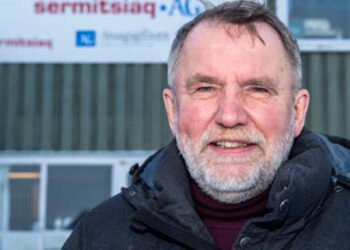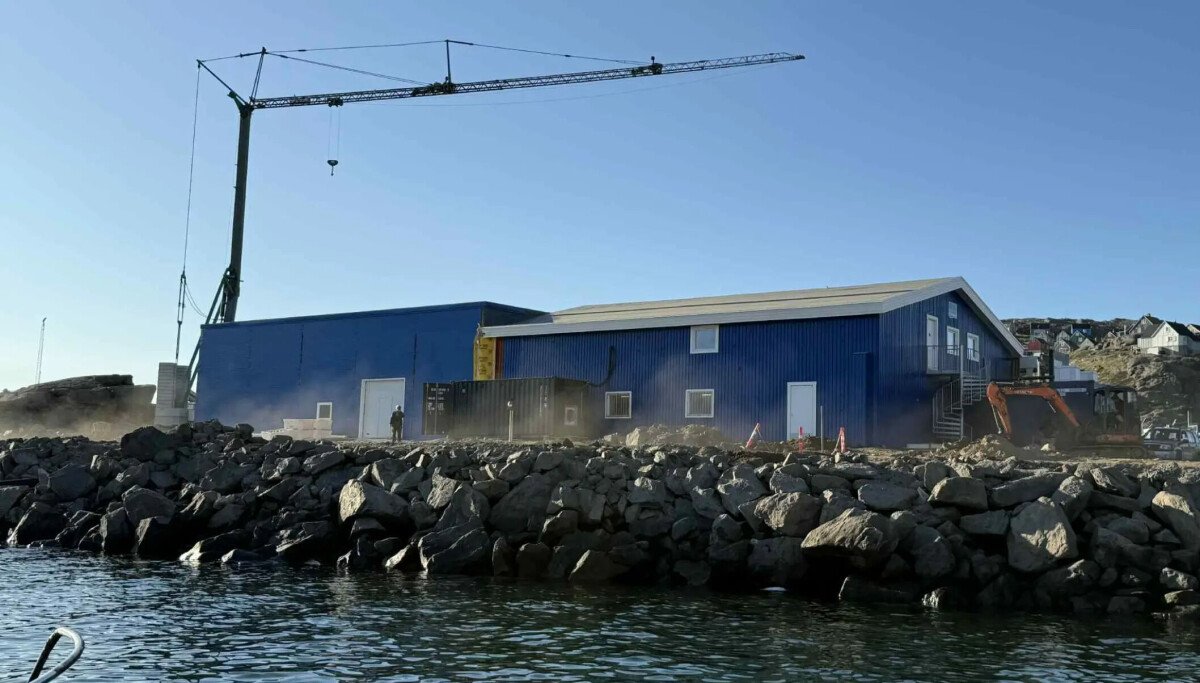
There have been some challenges at Royal Greenland A/S’s new fish factory in Tasiilaq, which was put into use in late summer 2025 – but the initiation of the fishing industry has had a beneficial effect on the local population, states the experienced politician, Justus Hansen, Demokraatit, who is a member of Inatsisartut and of the municipal council of Kommuneqarfik Sermersooq.
He comes from Tasiilaq himself, and via section 37 has put questions to Naalakkersuisut about the operational stability of the fish factory in Tasiilaq. Royal Greenland A/S informs in this connection that there have been two operational stoppages related to the fish factory’s CO2-based cooling and freezing system during the summer.
There have been some challenges at Royal Greenland A/S’s new fish factory in Tasiilaq, which was put into use in late summer 2025 – but the initiation of the fishing industry has had a beneficial effect on the local population, states the experienced politician, Justus Hansen, Demokraatit, who is a member of Inatsisartut and of the municipal council of Kommuneqarfik Sermersooq.
He comes from Tasiilaq himself, and via section 37 has put questions to Naalakkersuisut about the operational stability of the fish factory in Tasiilaq. Royal Greenland A/S informs in this connection that there have been two operational stoppages related to the fish factory’s CO2-based cooling and freezing system during the summer.
According to the company, this has, among other things, affected the plant’s capacity and thus the possibilities for freezing.
– When the freezing plant cannot run with the required capacity, it limits the fish factory’s ability to receive and freeze the required quantities of raw materials.
– The operational stoppages can therefore have a direct impact on the purchasing capacity in the affected periods, informs Royal Greenland, and at the same time states that they are continuously working to find faults and stabilize the plant.
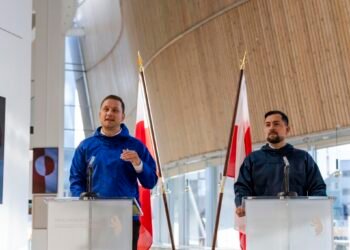
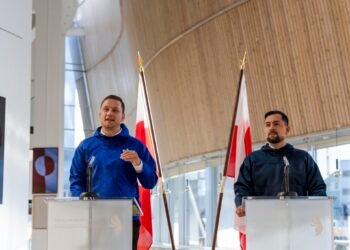
Justus Hansen also wants to know whether the current freezing plant is suitable for the local conditions in Tasiilaq, to which Peter Borg, Demokraatit, who is Naalakkersuisoq for Fisheries, Catching, Agriculture and Self-Sufficiency, refers to the response from Royal Greenland, which reads that CO2 was chosen based on an overall technical assessment when establishing the facility.
According to Royal Greenland, the CO2 solution has, among other things, a high cooling capacity and requires less ongoing manual handling than, for example, an ammonia plant. At the same time, CO2 according to Royal Greenland, not flammable and does not have the toxicity that ammonia has.
– The CO2 solution also makes it possible to integrate both fridge and freezer in the same facility with relatively limited space requirements, Royal Greenland informs.
According to Royal Greenland, the freezing plant is not controlled from Denmark. However, the facility can be accessed electronically from Denmark for the purpose of, among other things, troubleshooting and technical support, which makes it possible to quickly identify the need for specific spare parts.
At the same time, Royal Greenland informs that they have commonly used technical spare parts available at the fish factory in Tasiilaq, but states that it is neither practical nor economically possible to store all components locally in Tasiilaq, and that the more specialized spare parts must therefore be obtained as needed.
Better framework for fishing
Justus Hansen also wants to know if Naalakkersuisut intends to engage in dialogue with Royal Greenland, thus to ensure more stable operations and procurement in Tasiilaq.
But the responsibility for running procurement facilities and stable operations lies with the procurement sites themselves, says Peter Borg.
– Naalakkersuisut generally works to improve the framework for coastal fishing in East Greenland in accordance with the Development Plan for Fisheries in East Greenland, which applies in the period from 2024 to 2030.
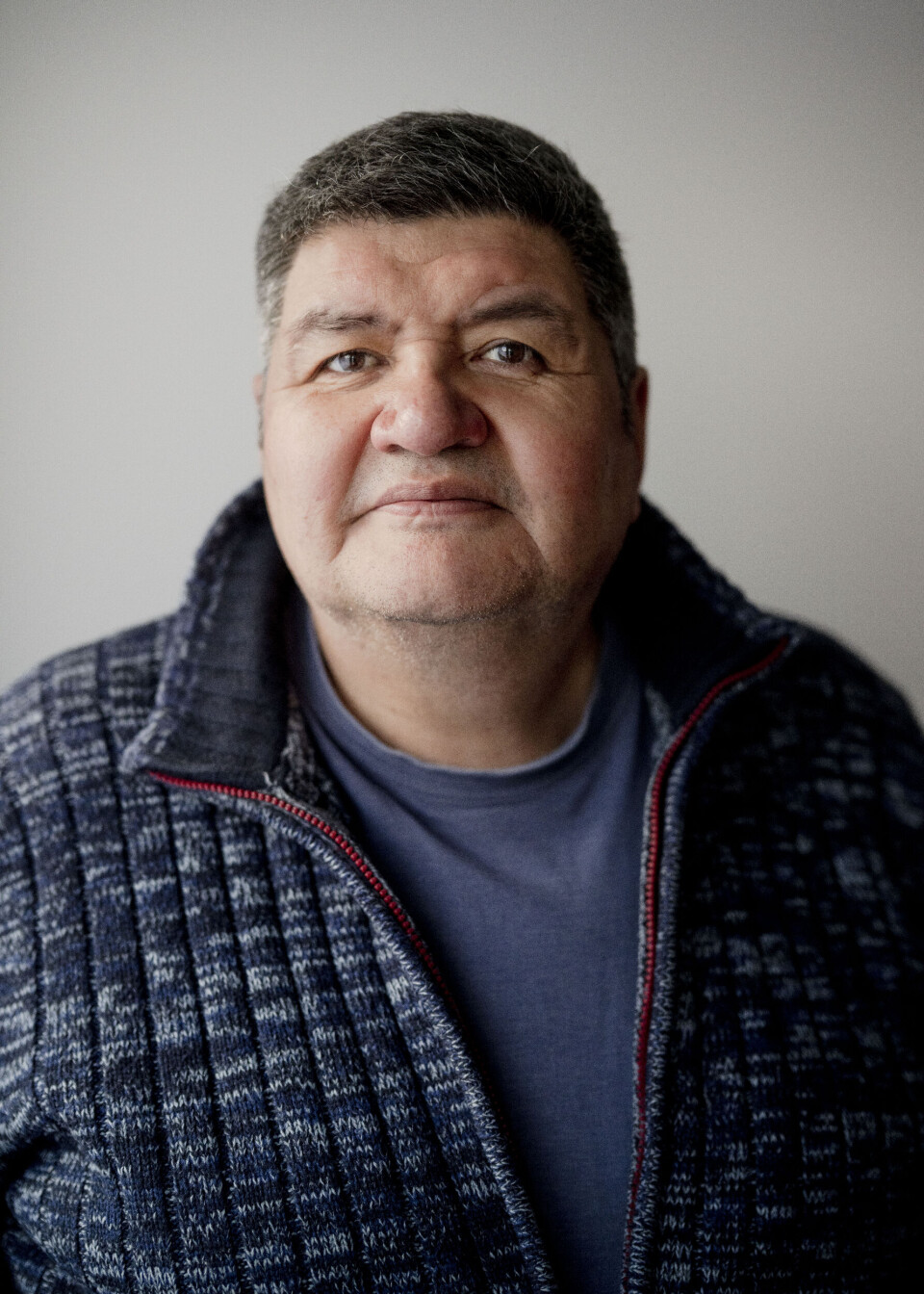
– Here, the latest reporting for 2025 shows that procurement volumes have increased by 82 percent since 2022 and thus already exceed the targets set in the Development Plan for 2030.
– The opening of the fish factory in Tasiilaq greatly contributes to achieving the Development Plan’s goals, as it increases the fishermen’s purchasing options, says Naalakkersuisoq for Fiskeri.
Peter Borg states that it is the fish factories themselves that must assess which freezing plant they think is best suited.
Satisfaction and pride
Although there have been some challenges at the fish factory in Tasiilaq, Justus Hansen is optimistic about the future of the fishing industry.
– We see that increasing numbers of dinghy fishermen – including the younger generation – have started over the past few years. We find that there has been a noticeable transition from the trapping industry to the fishing industry in Tasiilaq and the surrounding area.
– More money between hands means better living conditions and living standards. The economy has picked up in society, and there is greater purchasing power. In this way, you show the banks that you can lift the fishing industry in East Greenland, which gives pride to the fishermen.
– But since we have a lot of unemployment, I hope that even more young people will go into fishing in the coming time, he says.
Justus Hansen believes that there are real opportunities to further develop the fishing industry in East Greenland. Not only in relation to cod, but also in relation to other fish species such as redfish and halibut and more. He also feels satisfaction among the factory employees as they have something to do and there is continuous procurement for the plant.
Taking it with a smile
Justus Hansen, who has a hand in business development in East Greenland, by virtue of his work as an elected member of the municipal council in Kommuneqarfik Sermersooq and Inatsisartut, takes the development with a smile on his face.
– I stand with a quiet smile when I see the current development in Tasiilaq and the surrounding area.
– There is hope for the future, and it gives me pride of honor that you have been involved in making decisions in relation to starting the fishing industry and establishing the fish factory in Tasiilaq, he says.
The fish factory in Tasiilaq, which employs about eight people, has a production capacity of 10 tonnes per day and has a freezing capacity of 500 tonnes.