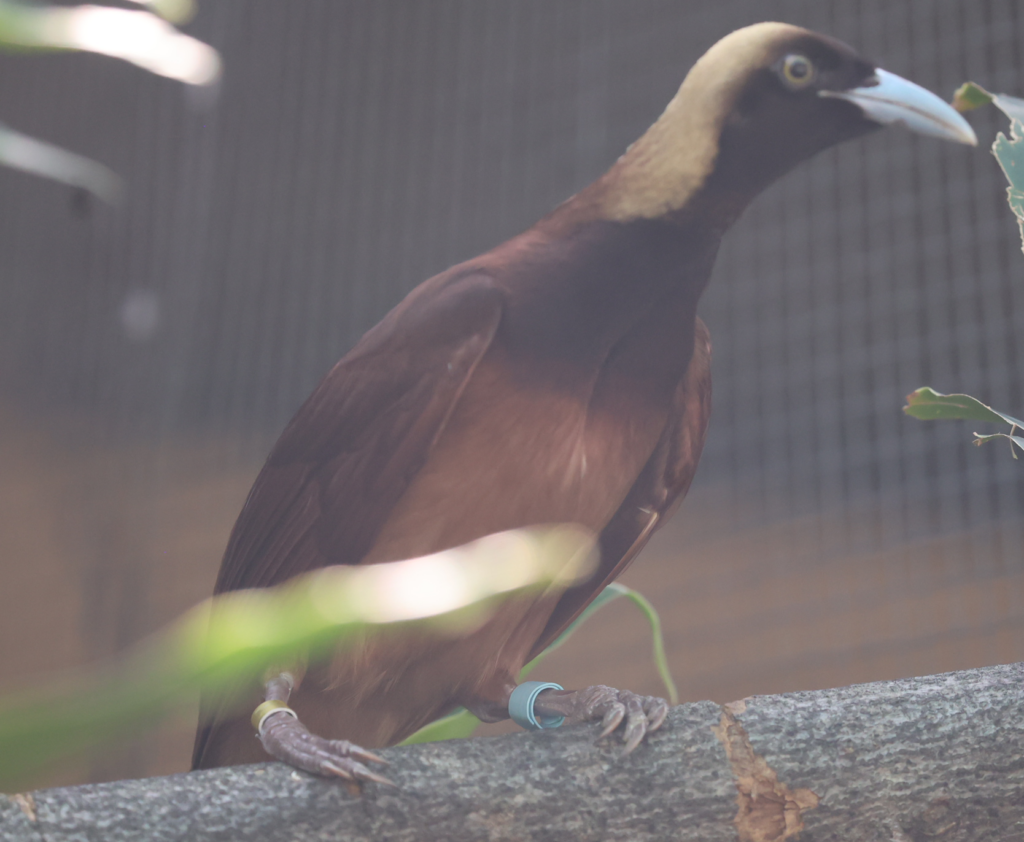
WHAT we today reveal in our exclusive coverage of the fate of our birds of paradise is as shocking as it is sad.
It seems from our cursory observation and from the conversations we have had or attempted to have with agencies mandated to the conservation of the environment, there seems little care or concern shown the unique aviary assets of this country.
Of 44 known species domicile in Australia, Indonesia and the island of New Guinea, 38 are found in New Guinea which includes Indonesian West Papua.
Of these, 12 are only to be found in PNG.
It is shocking in the extreme because a class of birds so exquisitely beautiful, so unique as to define and stand this country apart from every other country in the world, may now be endangered.
It is sad because their protection should be the first thought that comes to mind when this country speaks of the conservation of its unique flora and fauna – the protection of its botanical and biological wealth.

What could be more unique, so priceless as to transcend the rarest gems?
For these are not dead, cold stones; they are living, breathing and flying birds, glittering gems of every colour and description flitting through the tropical jungles of this country like ghostly protectors of the forest itself.
It is sad again because their endangerment should be so glaringly obvious – what with the monetary and cultural value placed on
their feathers; what with a growing population that demands their feathers to support a tourism industry spawned around cultural festivities that in all cases need birds of paradise feathers; and what with the advent of guns, with which the birds can be hunted to extinction in the space of a year.
Government organisations this newspaper has talked to do not have any idea of the current status or welfare of the birds in their natural habitat.
There are no major aviaries or parks dedicated to their preservation except for tourist-oriented sites such as the Variata Park outside Port Moresby.
The Government is clueless to the fate of the birds, one of which – Paradisaea Raggianna – adorns the flag of the country; is at once the emblem of state, and is the image that descends out of the sky onto foreign capitals on the aircrafts of Air Niugini, the national airline.
“ It is sad because their protection should be the first thought that comes to mind when this country speaks of the conservation of its unique flora and fauna – the protection of its botanical and biological wealth.”
The national rugby league team is named “Kumul” (or bird and popularly inferred as the bird of paradise).
All of the country’s extractive resources companies are banded under the Kumul Consolidated Holdings Ltd.
The bird protects our resources.
The national broadcaster is styled the “Krai bilong Kumul” – the voice of the bird of paradise.
The first ever engagement by the PNG Defence Force in an overseas conflict was in 1981 when the Kumul Force put down a rebellion on Espirito Santo island in Vanuatu, enabling that Melanesian neighbour to gain independence.
Again, a bird-of-paradise force delivered that successful mission.
The bird is minted on the currency in coins and emblazoned on the K50 note flying across the image of Parliament.
On the other side of the same note is the image of the first Prime Minister Sir Michael Thomas Somare.
Both the bird of paradise and Chief Somare are synonymous with Papua New Guinea.
If the man is remembered, it stands to reason that the bird must be too.
Every bird of paradise is a thing of worth in every traditional culture in PNG.
In every traditional singsing, every dance step, every flapping arm and every nodding head adorned with feathers from a wide variety of birds of paradise, is the perfect mimicking of the prideful amorous steps, the wide-flung magnificent feathers in all their resplendent glory, and the shrill cries that seek to surpass the competitor for the attention of the female.
The bird of paradise is the heart-beat of this country.
To ignore its fate is to ignore the fate of this country.

The fourth National Goal and Directive Principle provides for the protection and preservation of PNG’s natural environment.
The bird of paradise represents all of that; it represents all that is best in Papua New Guinea.
It behooves Parliament to pass a Birds of Paradise Protection Act at its next sitting and to draw up the supporting regulations, including setting up reserves for birds of paradise in every province and in every location where they are to be found in the natural habitat.
Hunting of them and commercial trading in feathers or of the birds themselves must be banned, with very heavy penalties for transgressions.
To protect the Birds of Paradise is to protect all that is beautiful and unique, and valuable in Papua New Guinea.
We pray we are not too late.