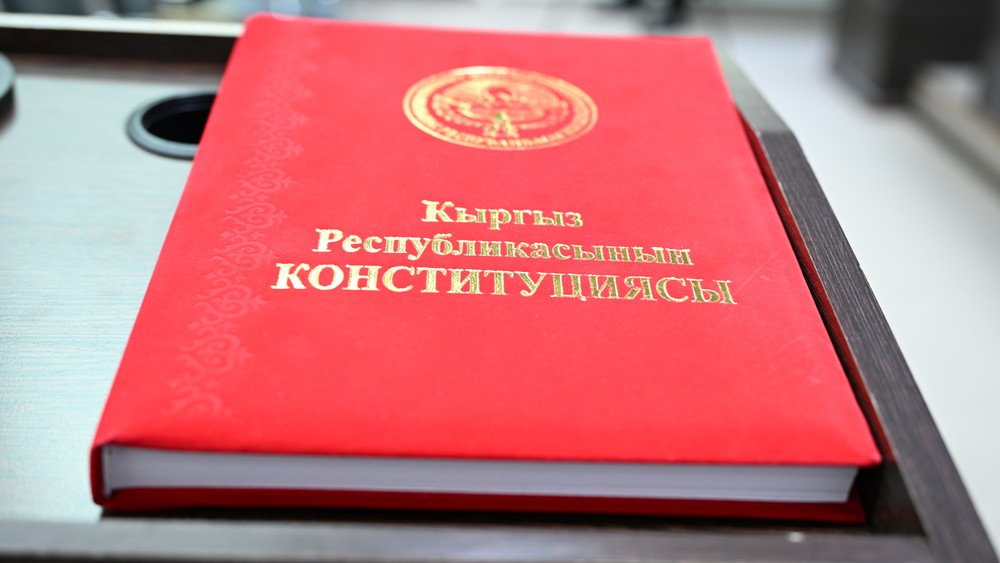
Bishkek (AKIpress) – The next presidential elections in Kyrgyzstan, according to the law, should be held on January 27, 2027 – on the fourth Wednesday of January of the year when the term of office of the current head of state expires.
To begin the election campaign, the Jogorku Kenesh must set a voting date – by law this must be done no later than 4 months before the elections. The issue is scheduled to be considered in parliament next week.
Against this background, AKIpress has collected the main legislative requirements (the Constitution of the Kyrgyz Republic and the constitutional law on the elections of the president and deputies of the Jogorku Kenesh) for future presidential candidates.
If the Jogorku Kenesh makes a decision on September 23-24 and it is officially published on the same day, the nomination of candidates will begin on September 24-25.
Further deadlines are already counting from the voting date – January 27, 2027:
- nominations close 75 days before the election—November 13, 2026;
- subscription sheets must be submitted no later than 50 days in advance – December 8;
- documents for registration – no later than 45 days – December 13;
- registration of candidates must be completed 35 days in advance – December 23;
- propaganda campaign – starts on December 23
- a candidate can refuse to participate no later than 10 days before the vote – January 17, 2027;
- day of silence – January 26
- Voting day is Wednesday, January 27, 2027.
That is, the difference between the decision of the Jogorku Kenesh on September 23 and 24 will mainly affect the start date of the nomination: September 24 or 25. Deadlines for signatures, registration and other steps will remain the same because they are tied to voting day.
At the same time, the law also provides for the situation if parliament does not call elections on time. In this case, they are considered to be assigned automatically the next day after the expiration of the established period. The Central Election Commission must then officially publish the voting date no later than two calendar days and begin organizing the elections.
Who can be elected president
The President is elected for a term of 5 years. The same person cannot be elected president for more than two terms.
According to Article 68 of the Constitution, the main requirements for a candidate are as follows:
- citizenship of Kyrgyzstan;
- lack of foreign citizenship;
- age of at least 35 years on voting day;
- proficiency in the state language at the “Above Intermediate” level in accordance with the assessment system approved by the Cabinet of Ministers;
- residence in the country for a total of at least 15 years.
No higher education required
Having a higher education diploma is not a prerequisite for a presidential candidate.
Article 3 of the constitutional law on elections establishes that citizens of Kyrgyzstan have the right to be elected regardless of education, origin, gender, ethnicity, disability, official and property status, religion, political and other beliefs.
How can you get ahead?
The number of candidates for the presidency is not limited.
A candidate can be nominated by a political party or through self-nomination.
How many signatures do you need to collect?
To register, a candidate must collect at least 30 thousand voter signatures.
At the same time, the law sets an upper limit: no more than 60 thousand signatures can be submitted to the CEC. One voter may sign in support of several different candidates, but only once for the same candidate.
Signature sheets must be submitted to the CEC no later than 50 calendar days before voting day. After this, the commission checks their accuracy.
Election fee
To register, the candidate must also make an election contribution from his election fund in the amount of 10 thousand calculated indicators – 1 million soms. These funds are not returned to candidates after the election.
The Constitution also requires the presentation of a national development program.
Who cannot become a candidate
The law establishes a number of direct prohibitions.
Citizens who:
- declared incompetent by the court;
- are held in places of deprivation of liberty by a court verdict that has entered into legal force;
- having a criminal record, including expunged or expunged;
- in respect of whom the criminal case was terminated on non-rehabilitative grounds, except for the exceptions provided by law;
- for religious figures – for five years after their suspension of religious activities.
What are the exceptions for terminated criminal cases?
The restriction does not apply if the criminal case has been terminated:
- for minor crimes;
- for less serious crimes committed through negligence;
- in connection with the refusal of the victim to support private-public accusations;
- upon reaching agreement between the accused and the victim in cases and in the manner provided for by criminal law.
What happens to the powers of the current president if he runs for election?
If the incumbent president decides to run again and has not exhausted the constitutional limit of two terms, he can be nominated as a candidate.
As a general rule, civil servants cease to exercise official powers after their nomination. However, Article 21 of the constitutional law makes a direct exception for the President of the Kyrgyz Republic and the deputy of the Jogorku Kenesh.
This means that the current head of state, who has registered as a candidate, continues to exercise the powers of the president and is not obliged to go on vacation or temporarily transfer his functions.
The Constitution also establishes that the powers of the President cease only upon the assumption of office by the newly elected head of state.
At the same time, the status of the current president does not exempt him from the general requirements of election legislation. He, like other candidates, is subject to restrictions related to the use of administrative resources, campaign financing and campaigning rules. The law provides for liability for abuse of administrative resources for election purposes.
Important: from the day the elections are called until the end of the registration period for candidates, you cannot distribute materials that are essentially campaigning and allow you to identify the candidate – for example, with his name, symbols, slogans and other recognizable attributes.
Crime and incidents on Instagram @svodka.akipress