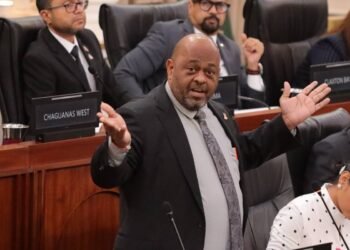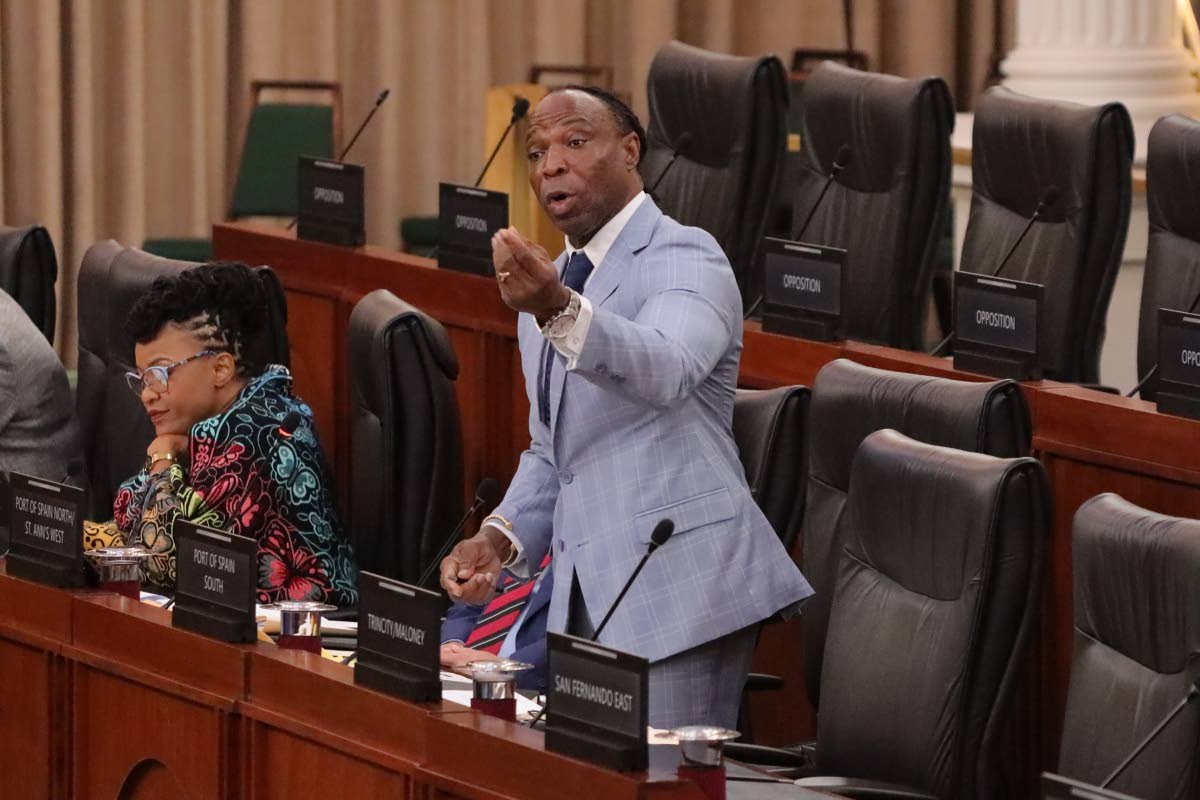

Port-of-Spain South MP Keith Scotland has branded the Government’s Special Operations Bill a “sprawling assault” on citizens’ constitutional rights, warning that it could transform Trinidad and Tobago into a “police state” and subject people living in crime-affected communities to a lesser standard of freedom.
Scotland made the remarks during debate on the Special Operations Bill, 2026, in the House of Representatives yesterday, accusing the Government of exploiting public fears about crime to justify weakening constitutional safeguards.
“This legislation is a sprawling assault on several rights of the citizens of Trinidad and Tobago,” Scotland said.
“What this executive has done is invoke fear to weaken constitutional safeguards.”
He argued that existing laws, including the Anti-Gang Act, Firearms Act and Offences Against the Person Act, already provide authorities with the tools needed to combat criminal activity.
While reiterating the Opposition’s support for intelligence-led policing, firearm interdiction and the dismantling of criminal organisations, Scotland said it could not support what he described as the gradual erosion of fundamental rights.
“We support the Police Service of Trinidad and Tobago. We support intelligence-led operations and the interdiction of firearms and the dismantling of criminal organisations,” he said.
“What we do not support, however, is the dismantling, piece by piece, of our fundamental rights and the way of life in Trinidad and Tobago.”
Scotland took particular issue with the bill’s provision creating seven policing districts across Trinidad and Tobago, each headed by a Head of Special Operations appointed by the Commissioner of Police.
“You are turning this country into a police state,” he charged.
He also issued a warning to citizens about the concentration of powers in the hands of senior police officers.
“Trinidad and Tobago, do not have any beef with any senior police officers, you know. Be careful,” Scotland said, questioning whether such extensive authority should be vested in police officers overseeing entire districts.
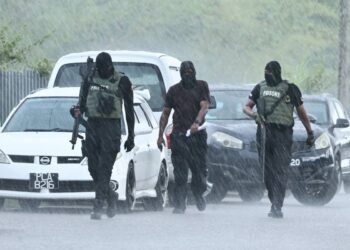
Under the proposed legislation, areas within those districts may be designated as closed areas, allowing for measures such as curfews, restrictions on movement, warrantless searches, seizure of property and detention.
Scotland argued that residents in those communities could effectively find themselves living under emergency-style restrictions without the constitutional safeguards normally associated with a state of emergency.
“It’s like you’re in jail, but you’re not in jail,” he said.
He further contended that the bill could create inequality based on where people live, noting that communities most likely to be designated closed areas are already densely populated and heavily policed.
“The Constitution protects and does not diminish because of a person’s geographical address,” he said.
Referencing communities such as Sea Lots and St James, Scotland said residents simply wanted the freedom to work and send their children to school without facing additional restrictions because of their address.
He was also sharply critical of the absence of social intervention measures that had formed part of the previous Zones of Special Operations (ZOSO) legislation.
“Where are the social interventions in this bill?” he asked.
“Lock them up, cordon them off, without any consideration for social ramifications.”
Scotland noted that closed areas would include homes, schools, grocery stores, pharmacies, businesses and places of worship. He warned that movement restrictions could result in workers losing wages, students missing examinations and patients being unable to access medical treatment.
The MP also challenged the Government’s claim that body-worn cameras would be mandatory during special operations.
The bill states that police officers and Defence Force personnel shall, “as far as is possible, having regard to the available resources,” use body-worn cameras during special operations conducted in closed areas.
Scotland argued that the qualifying language significantly undermined the requirement.
“Mandatory means it must be done,” he said.
“What does that do? It waters down mandatory.”
He maintained that officers could justify the absence of footage by claiming equipment or resources were unavailable.
“Body cameras ought to have been made mandatory. But it is certainly not in this bill,” Scotland said.
Scotland insisted that effective policing and the protection of constitutional rights should not be treated as competing objectives, arguing that fundamental freedoms become most important when governments face pressure to take extraordinary measures.
Closing his contribution, he declared that the Opposition would not support the legislation.
“We say no to tyranny. We say no to unconstitutionality. We say no to hubris,” Scotland said.
“And we say no to ZOSO.”