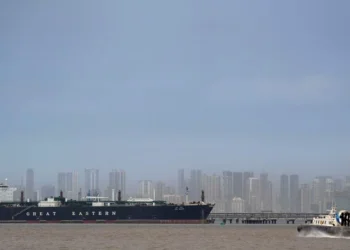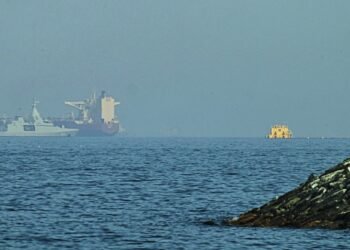
The European Union agreed to continue pushing for a global “price” on shipping’s CO2 emission in U.N. discussions next week. This could lead to another clash with the United States. The International Maritime Organization (IMO) decided to delay the climate plan for a year last year after the Trump Administration strongly opposed it and threatened to impose visa restrictions and sanctions on delegates that supported it.
According to the EU’s negotiating stance for the IMO talks next week, seen by.
The document stated that EU countries would “oppose any attempt” to prevent climate measures being discussed at the meeting.
The document stated that EU countries “will consider changes to their original carbon pricing plan” if it helps garner support. Some EU officials, however, said that they were “pessimistic” about any climate deal, due to the strong opposition of the U.S.
Andreas Bjelland Eriksen, the Norwegian environment minister, said that IMO had a chance of striking a historic agreement but needed to consider “different approaches” in order to avoid a repetition of last year’s failed deal.
He added to the journalists, “Also…whether we can do certain things already and possibly postpone some parts of regulation to a future stage.”
At the October meeting, 57 countries, including China and other major shipping states, such as Liberia, voted for a delay in the carbon price, while 49 others wanted to reach a deal.
Some of the supporters were European nations, Brazil, and small island countries that are vulnerable to climate changes.
The coalition, which includes the top three ship registries in the world, Liberia (the third largest),?Panama (the fourth largest) and the Marshall Islands (the fifth largest), as well as oil tanker companies such Saudi Arabia’s Bahri, urged IMO to look at alternatives to the carbon pricing plan during their meeting ‘next week’.
In a press release, they stated that “support for the framework has continued to erode since last year’s IMO meeting.”
The IMO decision of last year divided the EU as Greece and Cyprus – both home to major shipping industries – broke ranks with the bloc and abstained from voting, rather than supporting the EU’s climate proposal.
Officials said that Greece, Malta, and Italy refused to support the new EU position on negotiating, which had been passed by an increased majority of EU member states. (Reporting and editing by Kirby Donovan, Nerijus Adomiaitis in Oslo, Kate Abnett & Jonathan Saul; Additional reporting by Kate Abnett & Jonathan Saul)
(source: Reuters)