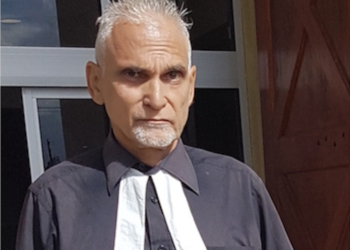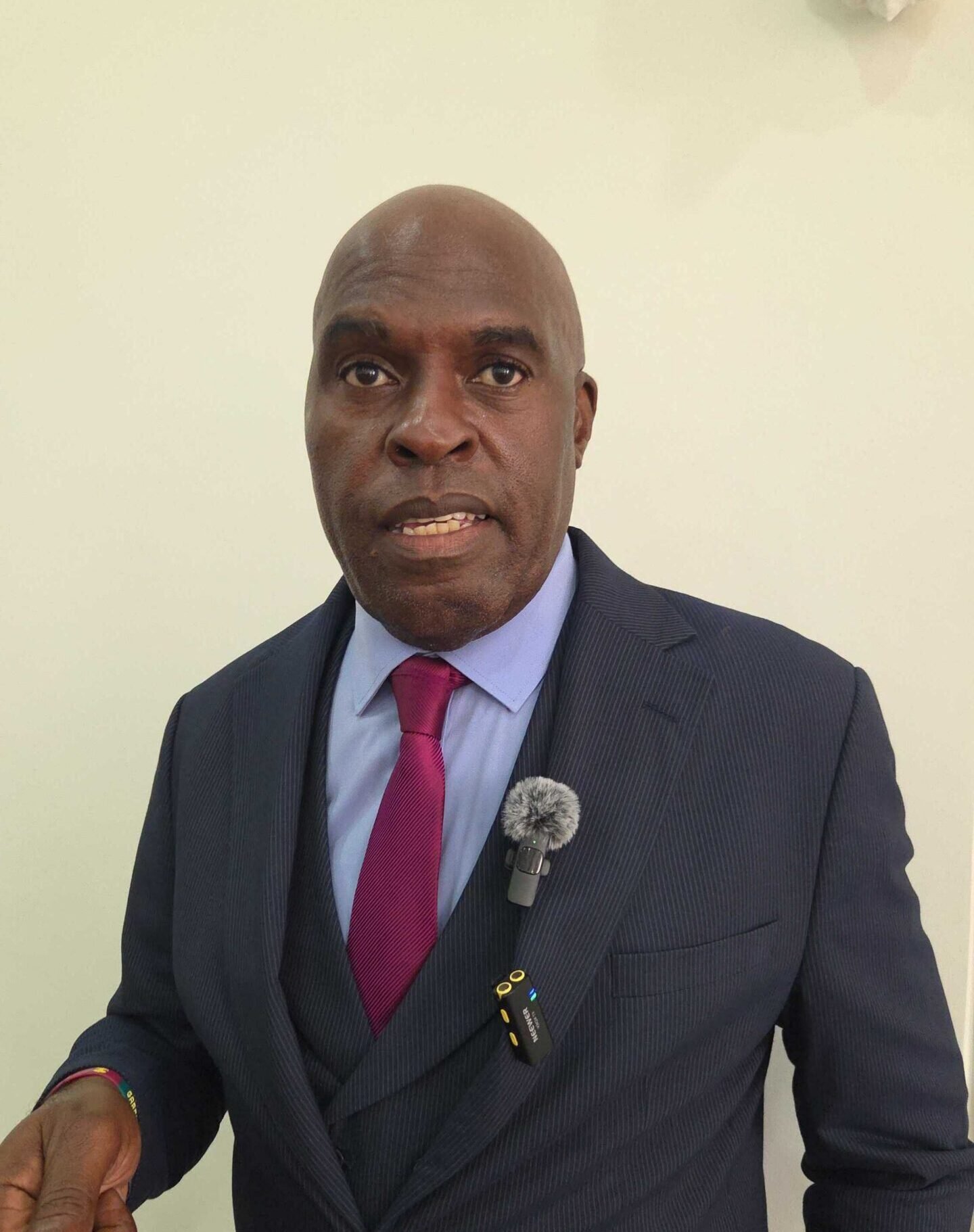
Minister of Legal Affairs and Criminal Justice Michael Lashley wants tougher sentencing guidelines for firearm and sexual offences, even as he maintained that judges must retain discretion when imposing penalties.
In Tuesday’s House of Assembly debate on the Penal System Reform (Amendment) Bill, which seeks to give judges greater flexibility to consider relevant previous convictions, Lashley said firearm offences, in particular, should attract custodial sentences in appropriate cases.
He said: “Although Section 35 of this legislation states that a custodial sentence is not warranted…a man who is found guilty of a firearm offence, possession of a firearm, and if the court has to take into account the seriousness of the offence, I always wondered why we arrived at a fine.
“That is a serious offence and a custodial sentence is warranted. But of course, we cannot threaten the discretion of a judge.”
Lashley said he believed new sentencing guidelines should be developed for both firearm and sexual offences.
“I certainly believe that we see new guidelines for firearm offences. That is my view, that’s my humble opinion. I also believe that we should see new guidelines for sexual offences too. That is my belief.”
But he said judges must retain their independence when determining sentences.
He also called for victims of crime and dependants of deceased victims to have a greater presence in the sentencing process.
“If it’s one aspect of the criminal justice system that I have a little difficulty with, it is the fact that when the sentencing process starts, there’s no obligation on the court…to ensure the victim is present, or the dependants of the deceased are present.
“If you’re speaking about penal reform, I will suggest that we make it a part of the sentencing process – that the victims of crimes were present during the sentencing process and, two, the dependants of the deceased.”
Lashley acknowledged that victim impact assessment reports can form part of the pre-sentence process but said victims and families should also be present when the sentence is handed down.
“When it comes down to the delivering of the sentence, when the judge is about to say, ‘I’m gonna give you ten years of this or five years of this or six years of this’.”
He also suggested greater public education on how sentencing works, noting that judges are required to follow established guidelines: “I’ve heard the public say, how come this body gets such a soft sentence? Maybe we have to, with this piece of legislation, do some public education out there to the public and explain the Penal System Reform Act, explain how a judge approaches matters with respect to serious offences.
“Because a judge must follow guidelines.”
The minister said penal reform must go beyond punishment and include measures to prevent crime, protect victims and rehabilitate offenders.
“When we speak about penal system reform, we must also include what we must do about preventing the next crime, and what we must do to protect the victims, and whether the person, on completion of the sentence, leaves that institution as a better person with the ability to reintegrate back into society.
“Rehabilitation reform, in my view, should start as you enter the prison gate, and should continue after you are outside the prison gate.”
Lashley said penal reform should not be confused with being soft on crime: “Sometimes we get mixed up by mixing imprisonment with justice. They’re two different things. When we speak about penal system reform, we are not saying that we are being soft on crime, and it does not mean that we are ignoring the victims too.”
Punishment should also require offenders to take responsibility for their actions and reduce the chances of them committing further offences, the minister said.
“What punishment is, is that we must ingrain in that punishment some sort of accountability.
“We must hold the offender accountable, repair the harm that the offender caused to society and reduce the likelihood of reoffending by that particular offender.”
(SB)