In formal steps that did not respond to the heart of the issue
archives
Kaitouni: France is wary of making concessions that would encourage other affected countries
The French authorities presented their account regarding the repeated demands of the Algerian authorities to assume their full responsibilities in addressing the issue of radioactive and chemical contamination, which was caused by French nuclear and chemical explosions in southern Algeria in the period between 1960 and 1966.
Catherine Vautran, the French Minister in charge of the Armed Forces and Veterans Affairs portfolio, presented the steps her country has taken in this regard, but she confirms that the French authorities are doing what they must do, based on their responsibility as a country involved in poisoning large areas of Algerian territory, due to those criminal bombings.
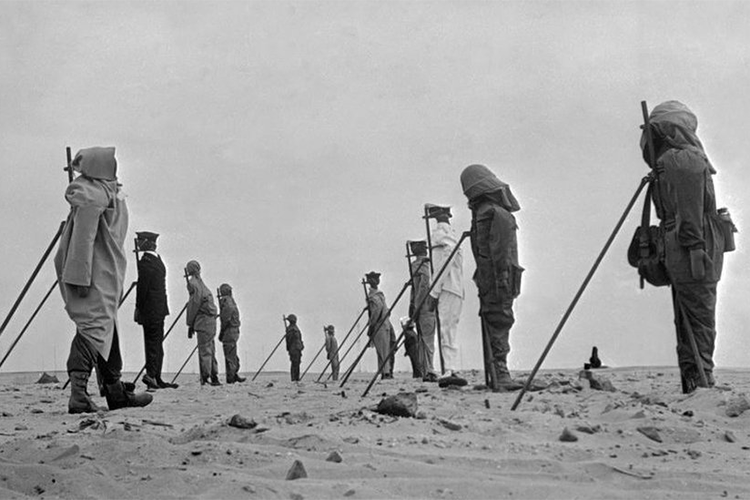
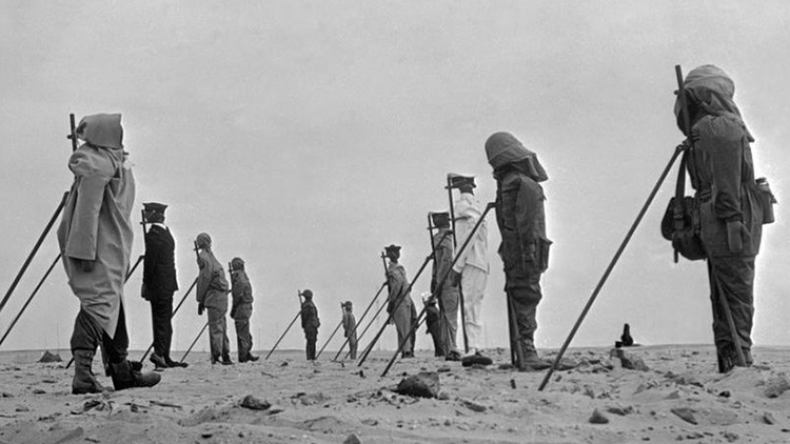
The French clarifications came in response to a written question by a representative in the French National Assembly (the lower chamber of Parliament), Sabrina Sabaihi, which was more than six months late. In her answer, Catherine Vautran enumerated a number of steps that she said her country had taken decades ago. She explained: “Between 1960 and 1966, France conducted 17 nuclear tests in Algeria, at the Reggane and Ain Iker sites, which included 4 aerial tests and 13 underground tests. The facilities were dismantled and the sites were returned to the Algerian authorities, in accordance with the Evian Agreements.”
She added: “In 1999, at the request of Algeria, the International Atomic Energy Agency sent a mission to assess the radiation situation of the former French nuclear test sites. In addition, France provided the IAEA with a summary of information related to the test site and the technologies used. It also provided a radiation assessment of the sites between 1966 and 1967, as well as an extrapolation of the situation until 1999.”
Based on the French Minister’s answer, the IAEA’s initial report was published in 2005 after amendments and with the approval of the Algerian authorities. She pointed out that in 2001, a report issued by the French Parliamentary Office for Scientific and Technological Assessment presented a study of the environmental and health impacts of nuclear tests conducted by France between 1960 and 1966, along with comparative data from experiments conducted by other nuclear countries.
In this context, Catherine Vautrin pointed out that in 2008, a French-Algerian working group on nuclear tests, composed of experts, was formed to study the rehabilitation of former nuclear test sites in the Sahara, giving the highest priority to the protection of the population and the environment. However, she did not refer to the outcomes of the work of this team, which has passed for 18 years without providing significant results.
The French Minister claimed that the French President, Emmanuel Macron, presented to his Algerian counterpart Abdelmadjid Tebboune, during his visit to Algeria from August 25 to 27, 2022, a file containing all the maps and information that France possesses regarding buried waste and radioactively designated areas, which is questionable, because Algeria is still demanding to this day that Paris hand over detailed maps regarding all explosions and waste burial areas.
This was confirmed by the representative who asked the question, who addressed the French authorities, saying: “The Algerian authorities are demanding detailed maps and plans related, first, to buried waste, and second, accurate data about radioactive areas. Accordingly, they are asking him to explain the reasons for France not sending this information, which is necessary to protect the population and rehabilitate the environment, and to indicate whether the government intends to inform the Algerian authorities of it,” which makes the French answer ready and packaged and not in line with the core of the old Algerian demands. And renewable.
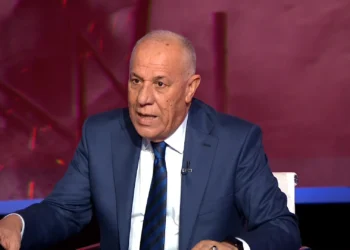
Commenting on what the French Minister said about this sensitive file, which is considered one of the reasons for the tension in relations between Algeria and Paris, Hosni Guitouni, a professor and researcher in colonial history, believes that the French authorities are not serious about closing this file despite its danger to people and the environment as well as to bilateral relations.
He said in Kaitouni that he contacted “Al-Shorouk” about the matter: “The problem is that France still refuses to hand over plans for nuclear and chemical experiments, waste burial sites, and the equipment that was used in that.” The specialized researcher attributed this to unconvincing French justifications, such as “military secret.”
Hosni Guitouni explained that the “military secret” that France invokes has hindered much of the research carried out by specialists into the crimes of genocide and crimes against humanity committed by France in Algeria over a period of 132 years. Among them, he mentioned the difficulties faced by one of the researchers who tried to dig up the nature of the gases that the French occupation army used to burn thousands of Algerians, especially the mujahideen in the caves during the liberation revolution and before it.
In the opinion of the researcher in colonial history, the problem at this level is “political, not technical.” It means that French officials of all kinds are trying to play on the secrecy of the military archive, which is just a justification, because the French authorities fear that the truth of their crimes will be revealed, and that any concession in favor of Algeria in this file that will result in compensation will push other countries affected by French colonialism to request compensation, which puts Paris in front of a dilemma that it will be difficult to get out of.