One of the highest-level officials of the Ministry of Health, responsible for managing the purchase and supply of medicines for the country’s hospitals, maintains a debt greater than S/1.3 million and faces serious questions for decisions made during his administration.
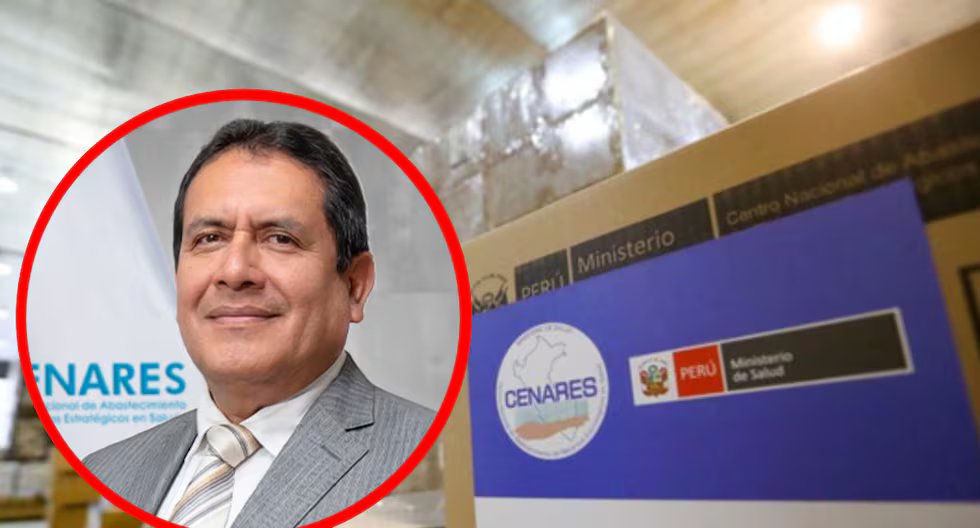
It is about Javier Iván Henostroza Cácerescurrent director of the National Center for the Supply of Strategic Health Resources (CENARES). According to official information, from June 2025 to January 2026 the trusted official has accumulated a total debt of S/ 1,304,979.56 soles distributed among at least three banksentities that have been charging you for more than four years.

The SBS report details important debts owed by the official since June 2025. (Photo: gob.pe)
According to SBS records, the debt was S/571,978.30 in June 2025 and increased to S/583,471.92 in September. However, in October there was a strong increase, reaching S/1,304,979.56more than double the amount recorded the previous month. In December it fell slightly to S/1,265,289.54but in January 2026 it rose again to S/1,304,979.56figure corresponding to the last available record.

The SBS has placed Javier Iván Henostroza Cáceres in “Loss” classification, this being the most critical category, also detailing that as of the publication of this report, it has 1,605 days late in debt payments (i.e. more than 4 years)as well as having a 100% risk level.

The National Center for the Supply of Strategic Health Resources (Cenares), of the Ministry of Health (Minsa), purchases, stores and distributes medical supplies that are then distributed to health establishments throughout the country. (Photo: Andina)
Although a bank debt does not prevent holding a public office, as it does not disqualify any applicant, the data is surprising as it concerns an official who is in charge of an entity that manages the purchase of medicines and supplies for the entire country: Henostroza is in charge of functions of utmost importance for the national health system, such as approving purchasing processes for strategic resources for the sector, storing products under strict quality control standards, dispatching and delivering medical supplies to hospitals, health centers and more than 200 executors both in Lima and in the regions. These supplies include medicines, vaccines, as well as medical devices.

Henostroza holds the position of general director of Cenares, the highest of said institution, a position that is trusted, that is, appointed by the minister of health. (Photo: Andina)
Other questions during his time at Cenares
In the midst of the appointment of Javier Iván Henostroza Cáceres As general director of CENARES, the institution has a series of questions about its management. A recent report from The Commerce revealed in August that more than seven million expired syringesin addition to expired medications intended for cancer treatments, HIV and other priority diseases. The transfer team also found that at least eight staff in key areas had renewed their CAS contracts until the end of this year.
Javier Iván Henostroza Cáceres He was also questioned for a controversial acquisition of sodium chloride from a company for S/31.2 million, in addition to an additional benefit of S/7.66 million. The purchase came under question after different health centers reported observations about the quality of the product. Digemid formally communicated these alerts to the Ministry of Health on July 22, 2026, although CENARES was already aware of the questions since June 15.
In detail
It all started when various health centers reported comments on the quality of this product. It was on July 22, 2026 when the General Directorate of Medicines, Supplies and Drugs (Digemid), through its general director, the Dr. Lida Esther Hildebrandt Pinedoinformed the then Vice Minister of Public Health, Henry Rebaza Iparraguirre, about said situation, also pointing out that Cenares had been aware of these questions since June 15 through Informative Note No. D000504-2026-CENARES-DAD-MINSA.
However, on July 1, CENARES approved through Resolution No. 161-2026-OA-CENARES-MINSA the additional benefit of S/7.66 million. Three weeks later, on July 24, the company requested to change the manufacturer of the product.
According to journalistic reports about the case, the CENARES Legal Advisory Headquarters recommended, through Report No. D000693-2026-CENARES-OAL-MINSA, that Henostroza not reconcile with the company in the arbitration process. The entity, in addition, would have refused to reconcile with a second company even though the agreement would have allowed the State to save S/1.7 million.
This medium tried to communicate with both the minister of health, Luis Dyerhis advisors, the press area of the Ministry of Health and with himself Javier Iván Henostroza Cáceres to obtain their defense in this regard, but we received no response.