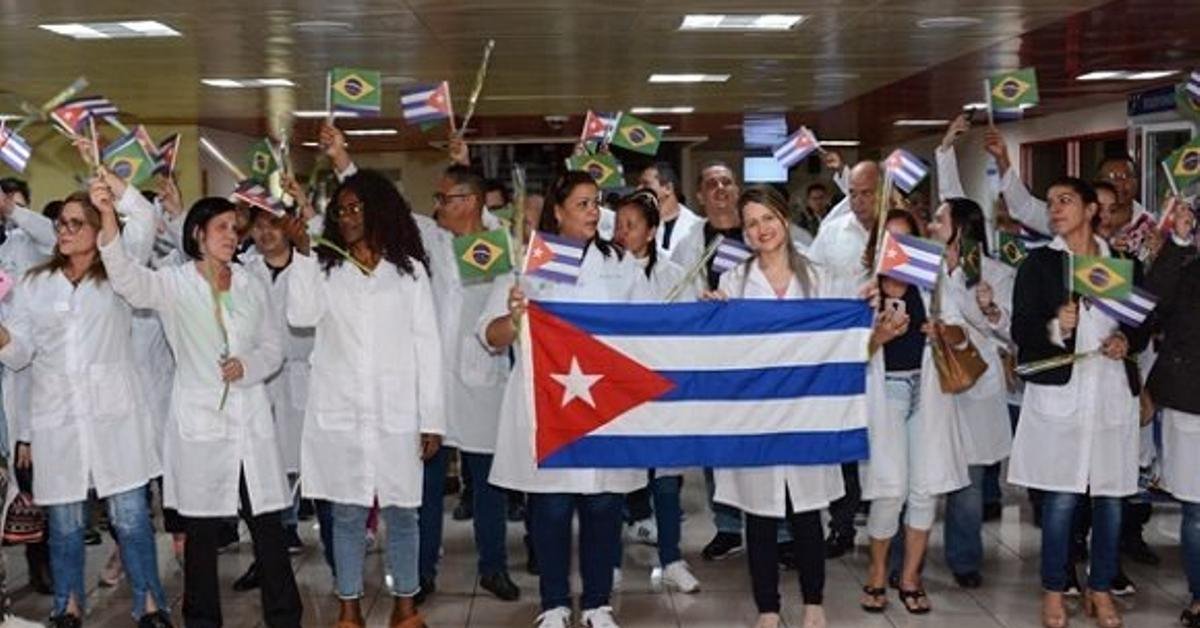
Havana/Miami/The Inter-American Commission on Human Rights (IACHR) denounced this Tuesday “violations” of a structural nature of “labor, union and human mobility rights” of the professionals who are members of Cuba’s medical missions abroad.
The report from this body of the Organization of American States (OAS) coincides with a pressure campaign by the United States on Cuba and, in particular, on its controversial medical missions and other sources of foreign currency.
The document, prepared jointly with the Office of the Special Rapporteur on Economic, Social, Cultural and Environmental Rights (Redesca) of the IACHR, refers to “the existence of structural challenges in terms of decent work in medical missions.”
It collects testimonies from participants in these missions who reported infractions related to “differential treatment and working conditions characterized by remuneration levels that could be insufficient.”
Doctors also face the “absence of a contract or ignorance of working conditions”
The text details that doctors also face the “absence of a contract or ignorance of working conditions, freedom of association, as well as working conditions that do not ensure the dignity of the worker.”
Professionals who are part of Cuban missions abroad have experienced “income withholding practices, long working hours, and the assignment of tasks unrelated to health work,” the report states.
However, the IACHR also recognizes the relevance of the work of the Cuban health personnel of these mechanisms “in the provision of essential services for populations in vulnerable situations.”
The study also states that the States receiving these brigades qualify them as a form of cooperation that “contributes to the strengthening of their public systems in contexts where medical care is limited or insufficient.”
Furthermore, the report says, despite questions about their working conditions, doctors obtain a salary in dollars better than what they would obtain in their country and the Cuban Government generates foreign currency (which it claims to use in its own health system).
Havana keeps an average of 85% of the payment from the host countries
However, according to Prisoners DefendersHavana keeps an average of 85% of the payment from the host countries, retains the passports of doctors abroad and penalizes those who leave the mission before the agreed time.
The State Department’s 2024 report on human trafficking places Cuba’s income from the export of professional services at between $6 billion and $8 billion.
According to the National Office of Statistics and Information (Onei) of Cuba, exports of professional services represented more than 40% of the island’s total sales abroad between 2018 and 2020.
The Cuban medical brigades – established more than six decades ago and with more than 600,000 professionals stationed in 165 countries, according to official data – have been one of the focuses of the policy towards Cuba of the Administration of US President Donald Trump, in his second term.
In recent months, and under pressure from Washington, Honduras, Guatemala, JamaicaAntigua and Barbuda, BahamasGrenada, Guyana, and Trinidad and Tobago have suspended their medical cooperation with Cuba or reformed its terms.
The Cuban Government has denied these criticisms of the Cuban medical missions and has described Washington’s pressure on the countries of Latin America and the Caribbean as “ferocious pressure” and “blackmail.”