Madrid/On September 10, the Congress of Deputies approved a law that recognizes the right to Spanish nationality for Saharawi people born before 1977 and their direct descendants, closing – at least partially – a historical debt that Spain had been carrying since its withdrawal from Western Sahara five decades ago. The text could benefit more than one hundred thousand people and comes at a time of diplomatic tension with Morocco.
Its approval has reactivated, thousands of kilometers away, a much older debate: whether Cuba and Puerto Rico deserve equivalent recognition for the massive denaturalization that their inhabitants suffered after the Treaty of Paris of 1898.
The comparison is not new. Since 2022, a Cuban-American citizen, Maikel Arista-Salado, has been litigating before the National Court in Madrid, demanding that the Spanish State recognize as null and void Article IX of that treaty – the clause that, according to him, “massively and forcibly” stripped Cubans and Puerto Ricans born on these islands of Spanish nationality – and that it implement a means of reparation for their descendants. His case, until now dismissed by the Ministry of Foreign Affairs and pending a final ruling, has found an unexpected argument in Sahrawi law: if Spain can repair a dispossession of citizenship that occurred fifty years ago, why not one from one hundred and twenty-eight years ago?
The two precedents – the Sephardic one of 2015 and the Sahrawi one of 2026 – are not supported by the same legal foundation that the Cuban movement demands.
The short answer, according to consulted jurists and the documentation of the case itself, is that the two precedents – the Sephardic one of 2015 and the Sahrawi one of 2026 – are not supported by the same legal foundation that the Cuban movement claims, although they share with it a similar moral intuition.
The Sahrawi law does not repair a “loss of nationality” in the strict sense: it is based on the fact that Western Sahara continues to appear before the United Nations as a territory pending decolonization, because Spain, as an administering power, never completed the self-determination process required by Resolution 1514 of the General Assembly. It is a foundation of contemporary international law, nonexistent as a legal category in 1898.
The Sephardic law of 2015, for its part, was not based on any declaration of illegality: it was a grant of nationality due to historical-cultural ties to descendants of the Jewish community expelled in 1492, without the mediation of any international treaty that Spain had to challenge.
The Cuban case, on the other hand, does not fit into either mold. Ironically, the petition itself presented by Arista-Salado before the Council of Ministers in 2022 explicitly rejects the analogy with the Sahara, calling it a “historical and legal error” to speak of decolonization in the Cuban case. His argument is different: he maintains that Cuba and Puerto Rico were full Spanish territories for four centuries – with parliamentary representation and, since 1897, their own autonomy – and that the Spanish State “lacked then, as it lacks today, the legal capacity” to negotiate the nationality of its subjects with a foreign power.

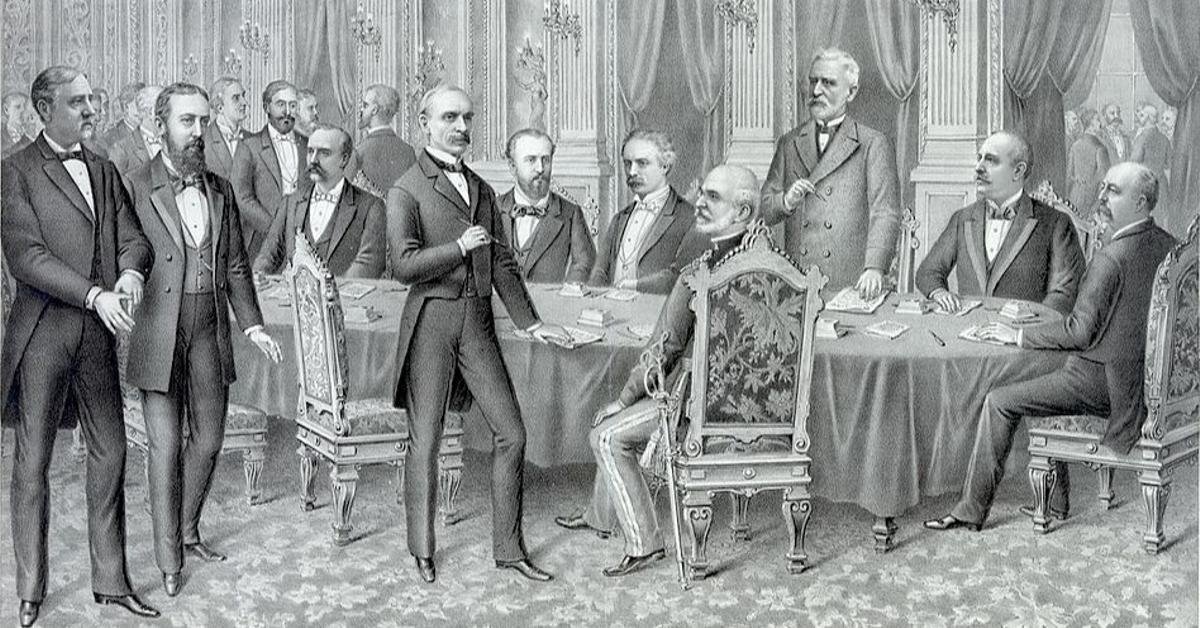
/ José Álvaro/Wikimedia Commons
That argument, examined in detail, reveals a legitimate fissure. The Constitution in force in 1898 established in its first article a closed list of only two causes for losing the “quality of Spanish”: naturalizing abroad or accepting employment from a foreign government without a royal license. The transfer of territory was not among them. The mechanism of Article IX of the Treaty of Paris – which required peninsular residents in the ceded territories to declare their intention to retain their nationality within one year, under penalty of automatically losing it – introduced, de facto, a third way of denaturalization that the fundamental Spanish norm did not contemplate.
Even more striking: the text of the treaty itself does not even explicitly mention Cubans born on the island in relation to this option mechanism. He speaks of “Spanish subjects, natives of the Peninsula.” The loss of nationality of the Creoles – descendants of Spaniards born in Cuba, including those who never took up arms against Spain – was an administrative inference, reflected in the royal decrees of 1901, rather than an express mandate of the international instrument itself.
This controversy, moreover, is not a modern rereading. Already in 1901, the Marquis of Cervera – the last mayor of the Spanish Marianao, whose real name was Manuel de Ciria y Vinent – submitted a Manifesto to the queen regent and the Cortes demanding the recognition of the citizenship of the “faithful Cubans” who had served Spain without taking up arms. The matter was raised, according to historical archives, before the Ministry of Finance itself. The legal tension that Arista-Salado revives today has, therefore, a centuries-old genealogy.
While the Sahrawi law benefits a maximum of 120,000 people, the application of a similar criterion to “all Cubans” would potentially affect more than eleven million people.
On the other hand, converting this constitutional fissure into an argument equivalent to that of the Sahrawi requires a leap that no Spanish court or government has been willing to take. In 2023, the then Foreign Minister, José Manuel Albares, formally rejected Arista-Salado’s request, confirming the validity of Article IX. The legal claim currently being heard in the National Court states, in a more limited way, that it was the minister himself – and not the Council of Ministers, the only body with jurisdiction to negotiate the denunciation of a treaty or file an appeal for unconstitutionality – who lacked the authority to resolve the petition. It is, paradoxically, the strongest procedural argument in the case, more manageable than the underlying claim to declare an 1898 international treaty recognized by the United States null and void.
The scale of the claim is not minor either. While the Sahrawi law benefits a maximum of 120,000 people, the application of a similar criterion to “all Cubans” – as the Arista-Salado movement literally claims – would potentially affect more than eleven million people, an order of magnitude that no Spanish government has shown a willingness to assume, regardless of the legal solidity of the underlying constitutional argument.
Arista-Salado’s lawsuit remains pending ruling since April 2024, and no Spanish party has shown willingness to legislate on the matter
Between the mass naturalization that the litigation demands and the institutional silence that has prevailed until now, there is a middle ground that the Sephardic and Sahrawi experience itself suggests: not a declaration of nullity of the Treaty of Paris, but a permanent reduction of the period of legal residence for naturalization – today set at two years for Ibero-Americans – applied specifically to Cubans, Puerto Ricans and Filipinos, perhaps accompanied by a symbolic recognition by Congress of the irregularity of the 1901 mechanism. It would be a formula that recognizes the historical debt without forcing Spain to litigate the validity of a centuries-old international treaty or to assume the demographic impact of a general naturalization.
For now, that scenario remains hypothetical. Arista-Salado’s lawsuit remains pending ruling since April 2024, and no Spanish party has shown a willingness to legislate on the matter. But the Sahrawi law, regardless of its legal differences with the Cuban case, has done something that no court had achieved until now: install in the Spanish public debate the question of whether or not the historical reparation of citizenship has a geographical limit.