
A few weeks before going to vote next Sunday, October 4, Lima is at a decisive crossroads for its future. The capital, afflicted by structural deficiencies in citizen security, transportation and urban planning, demands from its citizens an act of superior responsibility when casting their vote.
That is why electoral debates are presented as the only indispensable filter to compare diagnoses, measure technical capabilities and evaluate the ethical solvency of those who aspire to govern the already more than thirteen million people of Lima.
The development of the debates between the candidates for the Metropolitan Mayor of Lima should not be understood as a mere formalism of the electoral calendar, but as a necessary and indispensable democratic tool.
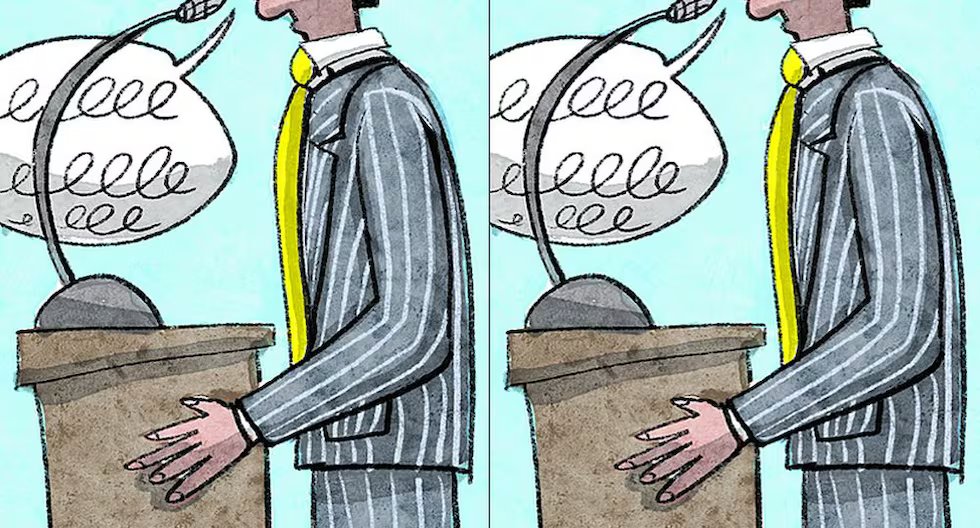
It is the space where campaign promises must be sustained in the face of confrontation of ideas and technical scrutiny. Through debate, the electorate can directly compare profiles: identify who has a viable and technical plan, and who resorts to demagogic improvisation.
Lima does not need, once again, a mayor whose vision is exhausted in cement, mega-projects empty of purpose or infrastructure disconnected from social well-being. Nor does it require authorities to use Nicolás de Piérola’s chair as a platform to satisfy personal political aspirations in the future.
What our city urgently demands is a profile focused strictly on public management designed for the citizen; an administration focused on quality of life, on the recovery of public space, on the promotion of sports and health, on safety and on the efficiency of essential services. The debates are the ideal way to reveal if behind each candidate there is a human vision of the city or if there is only a project of individual ambition hidden.
This same democratic demand must be transferred to the local level. In San Isidro, the Neighborhood Councils are called to exercise their historic role by calling for the traditional debate between district candidates, a citizen exercise that every four years has allowed them to closely monitor those who intend to lead the municipality.
The Sanisidrino neighbor lives with day-to-day problems and knows in detail the needs of his environment; Therefore, the respectful confrontation of proposals in the square or in the local auditorium is an unavoidable duty.
The candidates owe themselves entirely to the neighbor and their demands. In that sense, participation in district debates is not an optional concession or a negotiable strategy: it is a minimum commitment to respect for the community. That candidate who decides to evade the call, hide behind silence or avoid the direct exchange of ideas, must assume the cost of his decision and receive the consequences that a rudeness of such magnitude deserves.
Absenteeism in a neighborhood debate is not neutrality; It is an unequivocal display of contempt for public scrutiny and inability to be held accountable.
Next October 4th the decision will be in our hands. Getting informed, following metropolitan debates and demanding the presence of applicants in district forums are not only rights, but the tools with which we protect governance and the future of our communities. Voting with knowledge is the only guarantee to build, once and for all, the city we deserve.