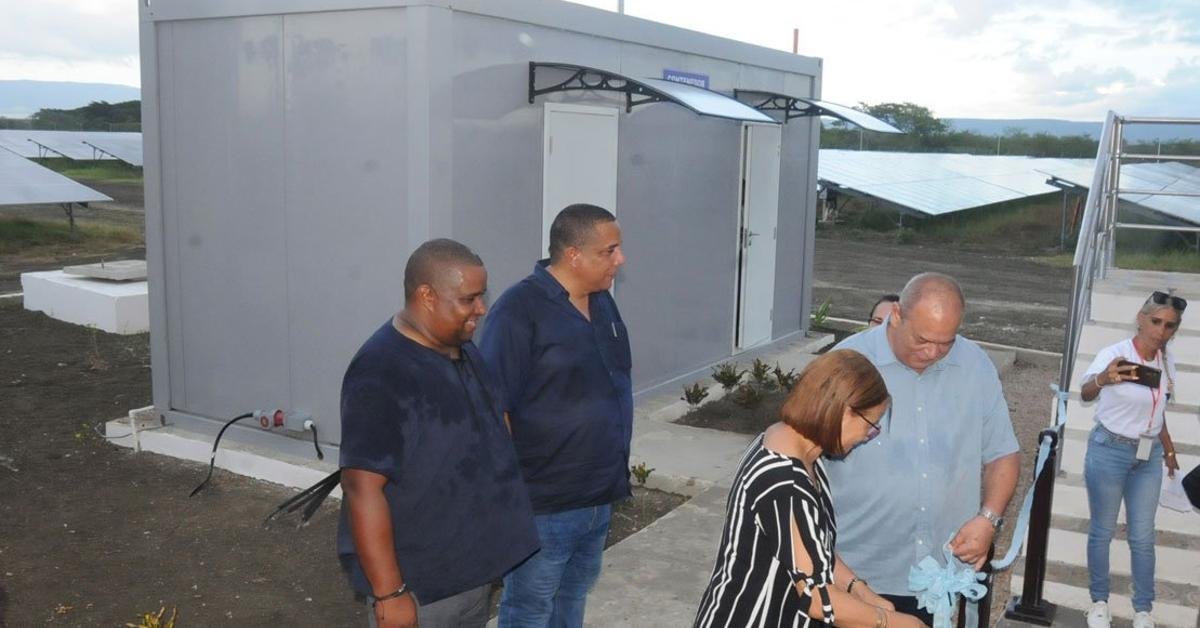
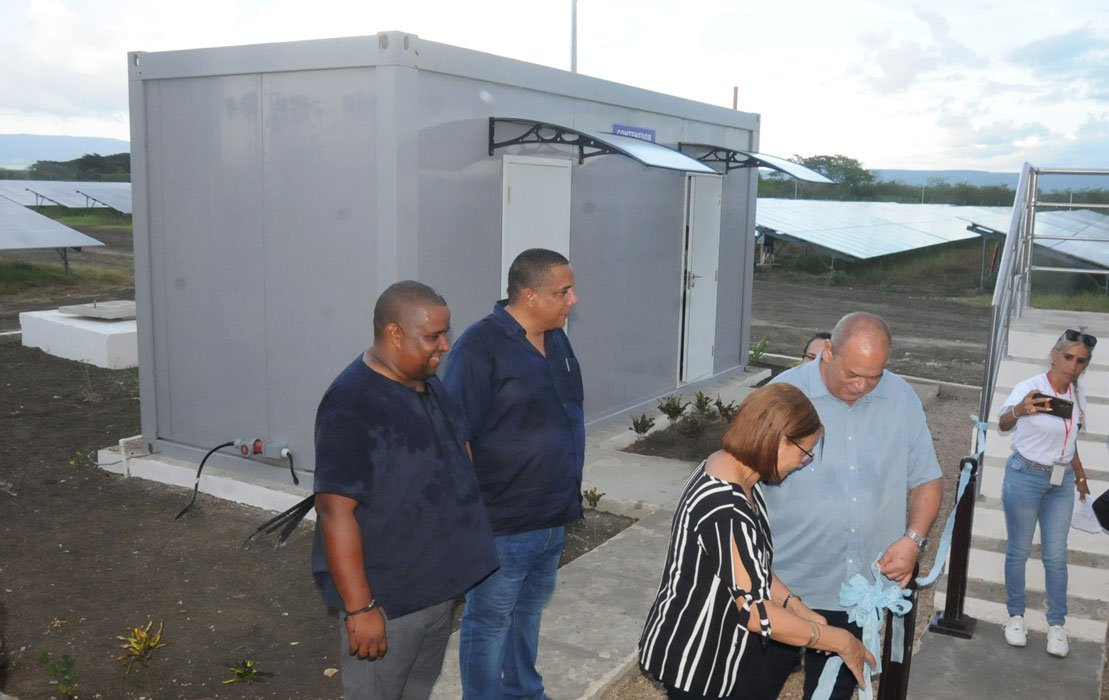
Madrid/The El Algarrobo solar park, in Guantánamo, launched last Augustis receiving unusual attention for being one of the more than 50 facilities of its type that already exist on the Island. This Tuesday, the state press announced its opening by none other than the Minister of Energy and Mines himself, Vicente de la O Levy.
On both occasions, the ruling party insisted on the fact that it is the first photovoltaic plant “whose start-up and synchronization was assumed solely by national specialists.” That is to say, the Chinese hand had not participated, as had been the case until now in all cases. Behind the heroic prose, they dropped a disturbing reason: “The circumstance occurred after the unforeseen departure of the Chinese technicians who were assisting the project.”
Both last August, when the synchronization of the park to the national energy system (SEN) was announced, and at this inauguration, the official notes indicated that “the reasons for this departure have not been specified,” and that “the Cuban specialists then had to assume the programming and adjustment of the Chinese technology equipment installed in the park.” The park had begun construction in February 2025.
They did say that after the untimely departure of the Chinese, “the process required about a month of work to get the first investor synchronized.” In total, they explain, they have seven investors
They did say that after the untimely departure of the Chinese, “the process required about a month of work to get the first investor synchronized.” In total, they explain, they have seven investors.
El Algarrobo, in any case, and according to the official media report, is part of the cooperation program with China to incorporate a total of 92 photovoltaic parks until 2028, which would mean a generation capacity of 2,000 megawatts (MW). According to official data, as of March, 52 solar installations had been completed on the Island, which together provide more than 1,000 MW, up to 38% of the electricity “consumed during daylight hours at times of greatest solar contribution,” according to the authorities.
Like most of its type on the Island, El Algarrobo does not have a storage system, so it only delivers its production – 21.8 MW – during daylight hours and as long as there are no clouds.
The announcement with great fanfare of the inauguration of the plant in Guantánamo coincides with the accusations of the chancellor, Bruno Rodríguez, against the United States for extending the energy blockade to photovoltaic parks. “Now shipping companies are threatened so that they do not bring solar panels and batteries for the new photovoltaic parks that we have learned to install in 45 days,” said the Minister of Foreign Affairs. through your X account last Monday.
In the same text, Rodríguez – who that same day had presented before the related press a report “about the blockade” in which he estimated the value of the damages from the US sanctions from March 2025 to February 2026 at more than 8 billion dollars – alluded to the rest of the US pressures arising from the executive order of the US president, Donald Trump, of January 29, 2026, after the intervention in Venezuela that resulted in the capture of Nicolás Maduro. “If fuel and diesel could be imported for the distributed generation generating sets, the blackout could be reduced to a minimum, but the fuel blockade prevents their import,” the chancellor wrote.
“If fuel and diesel could be imported for the distributed generation generating sets, the blackout could be reduced to a minimum, but the fuel blockade prevents their import,” the chancellor wrote.
The minister did not say a word about China or its departure, but it is a fact that, at least until the beginning of last month, both countries showed the usual cordiality. On August 7, for example, the Asian giant delivered the first batch of materials corresponding to another 5,000 photovoltaic systems for isolated homes. The ceremony featured Hua Xin and the Deputy Prime Minister and Head of Foreign Trade, Óscar Pérez-Oliva Fraga. The Chinese Embassy presented the operation as a new example of the speed of its cooperation with Cuba.
The delivery occurred after new US sanctions announced this year and July measures against Cuban entities related to foreign trade and ports. Until now, Havana has not publicly identified a specific shipping company that has refused to transport solar panels nor has it detailed what shipment would have been detained as a direct consequence of these pressures.
What is documented is that the problems with the photovoltaic program begin in the ports. In January 2025 the difficulties were known during the construction of Ciego Norte, one of the first large parks in the Chinese program. The Cuban workers then recognized that they were barely able to complete two structures a day and that the assembly required much more precision than expected.
China had to send operators after some of its machines began to break, subjected by the Cuban side to stresses greater than those for which they had been designed. The Asian specialists also imposed a work pace that the official report itself described as much higher than that usual among local brigades.
The lack of materials was also not attributable then to a US ban against the panels. Some 200 containers with inverters, transformers and other components had not arrived on time, while workers complained that they could have started months earlier if they had had the resources “on site.”