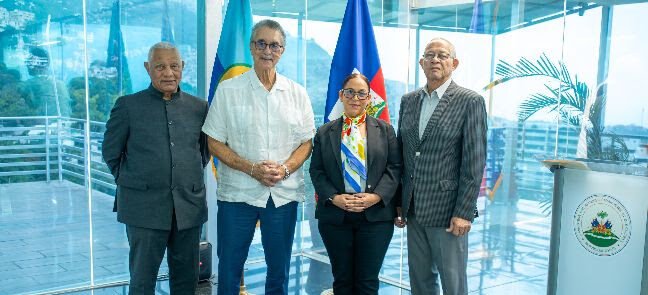

The Caribbean Community (CARICOM) is stepping up its engagement with Haiti as the country moves closer to elections, with the Community’s Eminent Persons Group (EPG) currently in the country for discussions with a range of Haitian stakeholders.
In a September 3, 2026 statement and address to the Organization of American States (OAS) Permanent Council, CARICOM Secretary-General Dr. Carla Barnett said the EPG is meeting with political actors, including new parties and coalitions, as well as other stakeholders involved in the electoral process.
The engagement comes as Haiti prepares for elections scheduled for December 13, 2026, according to the electoral calendar referenced in a separate CARICOM Eminent Persons Group statement.
The EPG’s visit is part of CARICOM’s broader effort to facilitate dialogue among Haiti’s political and civil society stakeholders and support a Haitian-led response to the country’s governance crisis.

Barnett, in her September 3 address, also called for stronger coordination among the regional and international partners providing assistance to Haiti.
She highlighted the OAS initiative, “Towards a Haitian-Led Roadmap for Stability and Peace with Regional and International Support,” as well as the high-level inter-American and international delegation that visited Haiti from August 16 to 19. CARICOM participated in that mission at the invitation of OAS Secretary-General Albert Ramdin.
According to Barnett’s statement, the August visit helped international actors share experiences and lessons while improving coordination and identifying areas requiring urgent attention.
She said it also demonstrated to Haitians that they had not been abandoned by regional and international partners despite the country’s prolonged crisis.
Security remains a significant part of the regional discussion. Barnett said CARICOM and the OAS both support renewal of the mandate of the Gang Suppression Force (GSF).
She noted that commitments by Haiti’s international partners to provide personnel, funding, equipment and logistical assistance had not yet been sufficiently fulfilled. Barnett said strengthening those efforts would be important in addressing insecurity and creating conditions conducive to the elections.
As the electoral process advances, she said election observation would also become increasingly important in supporting Haiti’s return to constitutional and democratic governance, noting that CARICOM and the OAS have worked together in this area before.
Barnett said CARICOM would continue working with the OAS and other international partners to support Haiti while encouraging longer-term investment, job creation and improved access to essential services.
She also drew attention to the impact of crime and violence on Haitians’ ability to work, educate their children, access medical care and move freely.
Read full statement :
INTERVENTION BY DR. CARLA BARNETT, SECRETARY-GENERAL OF THE CARIBBEAN COMMUNITY (CARICOM) AT THE REGULAR MEETING OF THE PERMANENT COUNCIL OF THE ORGANIZATION OF AMERICAN STATES
3 September 2026
Your Excellency Steve Ferrol, Chair of the Permanent Council of the Organization of American States and Permanent Representative of Dominica;
Your Excellency Raina Forbin, Minister of Foreign Affairs and Religious Affairs of the Republic of Haiti;
Your Excellency Albert Ramdin, Secretary General of the Organization of American States;
Other Ministers Present
Other Permanent Representatives;
Senior Officials.
Good afternoon.
I will begin by extending appreciation to His Excellency Secretary-General Albert Ramdin for the invitation to address the Permanent Council of a sister regional-hemispheric organisation.
I stand to be corrected, but I believe that my presence in this Meeting as Secretary-General of the Caribbean Community and addressing you is unprecedented. Whatever is the case, this occasion is a clear illustration of the coordination set in train by the OAS-initiated project “Towards a Haitian-Led Roadmap for Stability and Peace with Regional and International Support”.
The importance of this approach was highlighted during the recent visit of the High-Level Inter-American and International Delegation to Haiti from 16-19 August, in which, at the invitation of the OAS Secretary General, CARICOM was a participant. My team and I were very pleased to be a part of this undertaking, which was important, not only as a demonstration of meaningful support for Haitian-led solutions, but also as an occasion for strengthening the coordination of that support.
In view of the wide spectrum of regional and international actors providing assistance to Haiti in a variety of areas, coordination has become a critical enabling factor in avoiding duplication and ensuring that the pressing and vital needs of the people of Haiti are addressed through well coordinated implementation.
The visit of the High-Level institutional delegation was therefore important in several ways. It helped to strengthen coordination and build synergies by facilitating contact and exchanges of individual experiences and lessons learned among an array of international actors. It also sent the message to the people of Haiti, that despite the challenges and perils of the present situation, they have not been abandoned by the international and regional communities, and that the collective commitment to support Haiti was still alive, despite the long duration of the multifaceted crisis. The visit also facilitated a keener sense of the situation on the ground, and of the needs and challenges arising that require most urgent attention.
As it concerns the issue of security, it is clear both our Organisations hold firmly to the view that the mandate of the Gang Suppression Force (GSF) needs to be renewed. The commitments made by Haiti’s international partners to provide the necessary personnel, funding, equipment and logistical support for the GSF have not so far been sufficiently fulfilled and need to be concretised as early as possible to strengthen the efforts to address insecurity. Progress in that area would not only help release the chokehold of the armed gangs on the people of the country, but would also be essential to creating an enabling environment for the coming elections.
With the unfolding of the electoral process gathering pace, the issue of election observation will take on greater importance in supporting this key and politically sensitive imperative, which underpins the return to constitutional and democratic governance. It is an area where the OAS and CARICOM have worked together in the past and can do so again in the coming months.
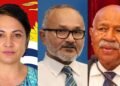
As a grouping of small states with limited human and financial resources, the Caribbean Community is assisting Haiti through the provision of good offices and the facilitation of dialogue among political and civil society stakeholders, and between these stakeholders and the executive in their search for a Haitian-led consensual approach that addresses the political dimension of the multifaceted crisis. To this end, the CARICOM Eminent Persons Group comprising three former Prime Ministers, which was established in 2023, has maintained contact with diverse political and civil society stakeholders, governmental actors and representatives of the international community, through ongoing virtual engagements and in-person visits to Haiti.
The CARICOM Eminent Persons Group is presently visiting Haiti to engage with political actors, including, of course, the new parties and coalitions which are emerging, to facilitate dialogue among the various stakeholders and interests involved in the electoral process.
The CARICOM Secretariat looks forward to continuing to work in close coordination with the OAS, and with other international partners, in helping Haiti to redress the present situation, and in encouraging planning for and investment in future economic and social development which can lead to real improvements in the lives of the Haitian people.
We must never forget the Haitian people who continue to face social and economic instability resulting from the crime and violence which affects their ability to earn a living, educate their children, seek medical services, and move freely about their communities and their country.
Our objective must continue to be to support the Haitian people as they seek to find solutions to the present crises of insecurity and governance, so that the Haitian people can focus on long-term planning for investment, job creation and access to essential social services.
Thank you very much, Mr Secretary General, Ladies and Gentlemen.