Iran restored military control over the Strait of Hormuz on Saturday, reversing a brief reopening and asserting control over the traffic as tensions resulting from the illegal US-Israeli aggression intensify.
Tehran announced the move hours after confirming limited passage for commercial vessels, citing what it called continued US “piracy” through a naval blockade of Iranian ports.
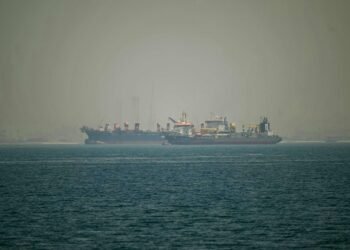
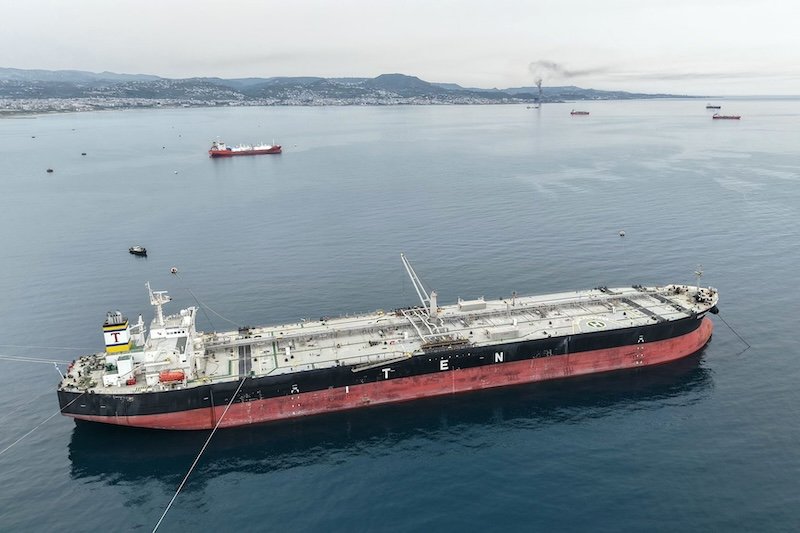
Shipping data and maritime agencies reported confusion across the waterway, with vessels turning back and others attempting passage under Iranian oversight.
The United Kingdom Maritime Trade Operations centre said at least one tanker reported being fired upon by “two gunboats linked” to Iran’s Revolutionary Guard.
The incident took place about 20 nautical miles northeast of Oman, with the vessel and crew reported safe. Separate reports indicated a container ship sustained damage from a projectile in nearby waters, according to UKMTO.
Iran’s military command said the strait had “returned to its previous state” and would remain under strict control until the United States lifted its blockade. The Islamic Revolutionary Guard Corps stated that all transit now requires authorisation and adherence to designated routes.
The rollback was a direct result of President Donald Trump stating that the blockade would “remain in full force” until the “transaction” with Tehran is complete. He also warned that military action could resume if talks fail.
Iranian parliamentary speaker Mohammad Bagher Ghalibaf accused President Donald Trump of making “seven claims in one hour,” all of them false, in response to Trump’s remarks about the Strait of Hormuz and alleged new agreements with Iran. Iranian officials and several international outlets reported that Ghalibaf dismissed Trump’s narrative as misleading, arguing that the claims did not reflect the actual position or commitments of Tehran and using the “seven lies in one hour” framing to underscore what they described as a pattern of exaggeration and inaccuracy in Trump’s statements on Iran and the status of the Strait of Hormuz.
The conflicting positions have left thousands of vessels stranded or rerouted. Marine tracking services showed ships reversing course, while only a small number continued through Iranian-controlled lanes.
The United States said its forces had turned back at least 23 vessels attempting to reach Iranian ports since the blockade began on April 13. Tehran argues the blockade violates ceasefire terms and defends its restrictions on the strait as a retaliatory measure to the US-Israeli aggression.
Market reactions shifted throughout the day. Oil prices had fallen earlier after Iran signalled the strait would reopen, dropping below $90 per barrel. Analysts warned that volatility will persist as long as access to the route remains uncertain.
The strait carries about one-fifth of global oil supply. Data from Kpler suggested the whole conflict has already removed up to 500 million barrels from the market.
Diplomatic efforts continue. Pakistan, Egypt, and other regional states are pushing for a settlement, with Islamabad expected to host further talks. Pakistani Foreign Minister Ishaq Dar said negotiators were “very close” to a deal, though Iranian officials denied progress on key issues, including nuclear material.
Iran’s Deputy Foreign Minister Saeed Khatibzadeh said no new talks would take place without agreement on a framework. He rejected US claims that Tehran would transfer enriched uranium abroad.
At the same time, Iran’s supreme leader Mojtaba Khamenei issued a statement praising the country’s armed forces and warning that its navy stood ready to deliver “new defeats” to its enemies.
Violence also continued in Lebanon despite a ceasefire between Israel and Hezbollah. French President Emmanuel Macron confirmed that a French soldier serving with the United Nations peacekeeping mission was killed and three others wounded in an attack in southern Lebanon.
Israel said it carried out strikes in southern Lebanon after identifying fighters approaching its positions. The military referred to a “yellow line” separating its forces from areas held by Hezbollah.
Since the 10-day ceasefire took effect, Israeli forces have continued military activity in southern Lebanon. The Lebanese army has reported multiple violations, including intermittent shelling of towns and villages and a large detonation in Khiam hours after the truce began, according to the National News Agency.
Israeli officials stated troops would keep illegally occupying dozens of locations in the south, maintaining what they describe as a “security zone” extending several kilometres inside Lebanese territory.
Hezbollah official Mahmoud Qammati warned that the group would respond to further Israeli action, telling Al-Jadeed TV that it would not repeat what he described as a policy of restraint.
The ceasefire has allowed displaced civilians to return to parts of southern Lebanon. More than one million people were forced from their homes during the conflict, with over 2,300 reported killed by Israeli strikes.
Airspace in Iran has partially reopened after weeks of closure, and six airports resumed operations. Authorities said domestic and international flights would restart in stages.
HT