Citing volatile fuel prices, the company decided to not issue an earnings forecast for the remainder of the year.

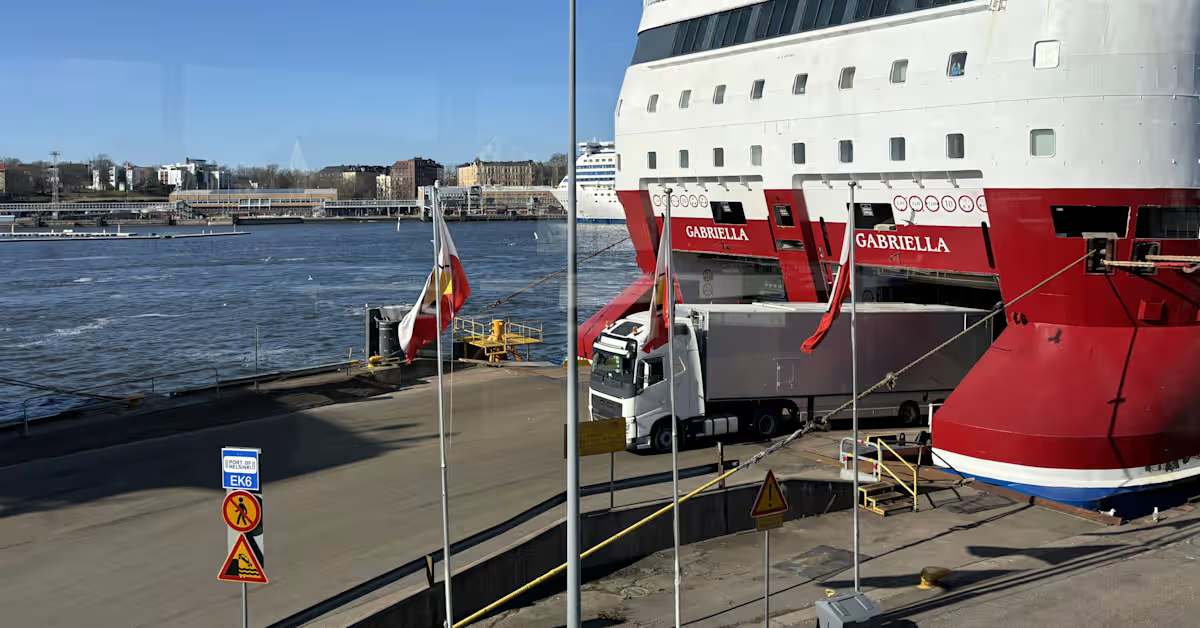
Baltic ferry firm Viking Line reported improved results in the first quarter, a period that saw rising geopolitical tensions and rising fuel prices.
Viking Line said its board had previously thought that its profit before tax for this year “would be in line with or slightly better than in 2025”.
But that is no longer the case, and the company has decided to not offer a forecast for the remainder of the year, according to its Q1 business review.
“In light of the increased volatility in energy prices and related costs, the board considers that these outlooks are no longer applicable. The heightened uncertainty regarding cost levels and the market environment means that the Board is currently not providing any forecast for the full-year result for 2026,” the review read.
The company reported operating losses of 18.8 million euros, and it saw turnover of 84.6 million euros, reflecting a drop of 3.1 percent, compared with Q1 the previous year.
The ferry firm carried just over 763,000 passengers during the first three months of the year, roughly the same as in Q1 of last year.
‘Subdued demand’
According to Viking Line’s CEO, Marcus Risberg, there was subdued demand during the first quarter.
“Market developments were influenced by the macroeconomic situation, cautious consumer behaviour, and ongoing pressure on household purchasing power. Passenger volumes were maintained at last year’s levels, while the cargo segment performed somewhat weaker,” Risberg said in the business review.
“Recent developments underscore how quickly conditions in our world can change, with geopolitical tensions such as the war in Ukraine and increased unrest in the Middle East. Combined with rising fuel prices, more restrained demand, and an economic climate that continues to impact purchasing power, this creates a challenging operating environment,” he continued.
“Against this backdrop, operational flexibility and financial discipline become even more important. We assume that a more dynamic global situation will persist,” Risberg explained in the review.
Based in Mariehamn, Åland, Viking Line has been one of Finland’s biggest recipients of state subsidies.
Viking Line’s chief competitor, Silja Line — owned by Estonian firm Tallink Grupp — is due to publish its Q1 earnings report on Thursday.