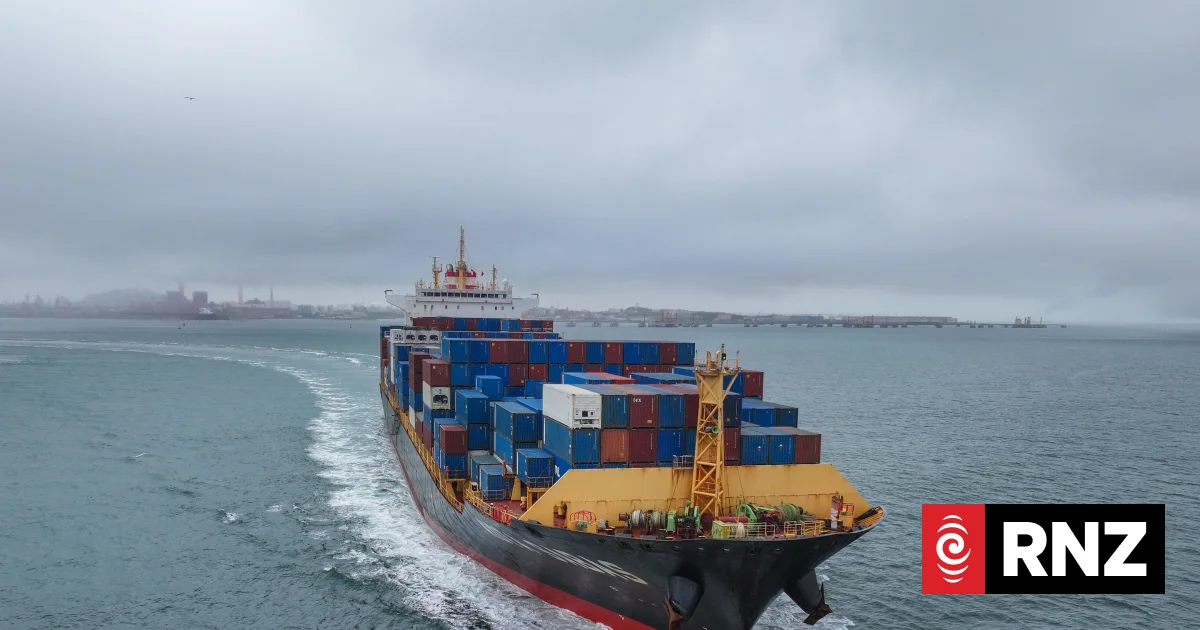
A Pacific maritime research and policy centre is raising concerns about a Japanese government proposal to the United Nations agency responsible for regulating international shipping.
The Micronesian Center for Sustainable Transport (MCST) in Majuro, the Marshall Islands, released a statement on Japan’s revised proposal submitted to the International Maritime Orgainsation (IMO) regarding the decarbonisaiton of the global shipping industry.
The centre said that Japan’s submission ahead of the 85th session of the IMO’s Marine Environment Protection Committee (MEPC85) meeting in November proposes “unambitious greenhouse-gas fuel-intensity reduction targets”.
It said the proposal also “moves away from a central global carbon fund towards more flexible offsetting, which would also see profit-oriented shipping companies decide which projects globally to invest in”.
The MCST said that decision should be made by IMO member states.
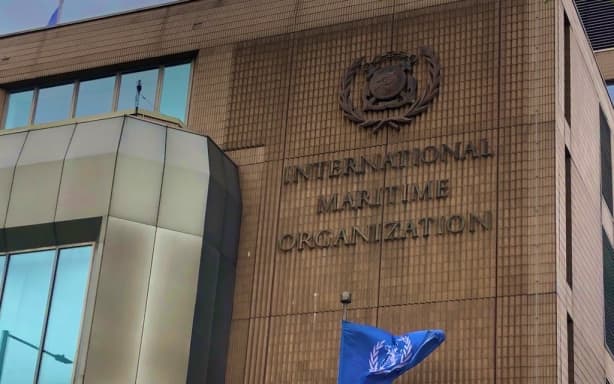
IMO Headquarters, London.
RNZ Pacific / Kelvin Anthony
The international shipping industry accounts for about 2 to 3 percent of global carbon emissions, with an estimated 911 million tonnes of greenhouse gases emitted in 2023.
Pacific Island countries are among the most shipping-dependent in the world, relying on maritime transport for the vast majority of their food, fuel and essential supplies.
But Pacific economies also face some of the highest shipping costs and most severe impacts of climate change, the centre said.
Its co-director Maria Sahib said the proposed changes would weaken the ambition of the IMO’s Net-Zero Framework (NZF) and create significant challenges for Pacific Small Island Developing States (SIDS).
Sahib said the centre was also concerned that moving away from a centrally managed fund and mandatory contribution system for emissions could make support for vulnerable states less predictable.
She said finance was fundamental for the Pacific to achieve a just and equitable maritime transition.
“We need predictable and accessible resources to ensure our countries can decarbonise their maritime sectors while strengthening resilience,” she said.
Japan is one of the world’s largest ship-owning nations by tonnage. Japanese officials noted in their submission that the revised draft amendments “do not represent the preferences of Japan”, according to the maritime platform ENGINE.
The officials said the amendments were intended only as a basis for discussion aimed at reaching a compromise acceptable to all IMO member states.
Sahib said, as the MEPC85 approaches, the Pacific would continue working collectively, through the 6PAC+ group, to ensure that the voices and priorities of SIDS remained central to the IMO’s climate negotiations.
The 6PAC+ alliance has maintained this position through successive IMO negotiations, including MEPC82 and MEPC83, where Pacific leaders and delegations pressed for a strong global emissions-pricing mechanism and a transition consistent with the 1.5 degrees Celsius temperature goal.
“The 6PAC+ has demonstrated what Pacific unity can achieve at the IMO,” she said.
“We will continue to work together for a framework that delivers ambition, integrity and equity.
“The Pacific cannot support a transition that shifts the costs to those least responsible and least able to absorb them.”
Sahib added the Pacific was not new to these negotiations and the Pacific countries have continued to consistently advocate for an ambitious phase-out of fossil fuels from international shipping, strong emissions-reduction measures and a transition which contributes ultimately to a just and equitable transition.