Electricity consumers face higher bills to help pay for multimillion-dollar upgrades to Barbados’ power grid, but the size of any increase will not be known until a future rate review.
The Fair Trading Commission (FTC) has pre-approved investment in three synchronous condensers (SCOs) for the Barbados Light & Power Company (BLPC), ruling that the associated costs should ultimately be recovered through base electricity rates.
BLPC had sought approval to invest $78.72 million in four new 20 megavolt ampere (MVar) SCOs through the Clean Energy Transition Rider (CETR), but the regulator gave pre-approval for three.
“Costs associated with the investment in three SCOs shall be ultimately recovered through base rates, pursuant to the next review of electricity rates,” the commission ruled.
“If there is no rate hearing by the time the three SCOs have been procured/commissioned, then the related SCO costs should be recovered through the CETR. At such time, further analysis of the CETR rate would be appropriate,” it added.
SCOs help maintain stability on the electricity grid and allow it to adjust to changing network conditions.
The FTC also gave BLPC the option of investing in a fourth SCO at its own risk. However, the company would have to demonstrate that the investment was necessary and useful at a future rate hearing before being allowed to recover the associated costs.
The commission also imposed several conditions before BLPC proceeds with procurement.
The utility must submit an updated and complete application, including responses to its updated request for proposals, for any potential cost recovery through the CETR.
BLPC must also provide its SCO project plan and schedule before the project begins, inform the commission of any changes to the project’s scope, risks or schedule, and provide quarterly updates on its progress.
“BLPC shall include in its quarterly regulatory reporting its progress against project milestones according to the project schedule,” the regulator ordered.
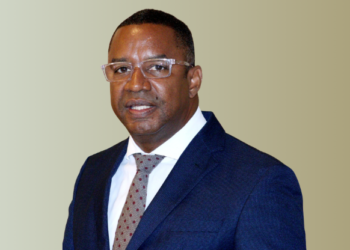
Intervenor and renewable energy advisor Aidan Rogers sought to bring greater clarity to the FTC’s decision, particularly as it impacts consumers.
Asked whether the FTC’s decision means consumers will have to pay more, Rogers told Barbados TODAY on Monday: “Not immediately. You have to pay eventually, once the application for a rate hearing comes up, that would include those costs. So, it’s almost like a prospective approval, but is deferred until the FTC approves the costs in a subsequent rate hearing.
“So, the decision has no immediate implications for electricity consumers right now. That would only come up before another rate hearing.”
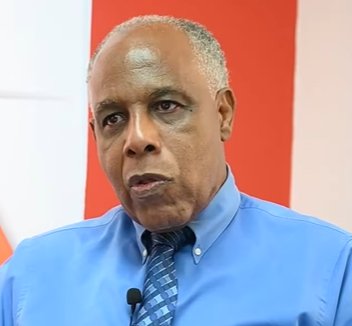
Intervenor Ricky Went supports the acquisition of four SCOs but has raised concerns about the increased costs and the amount consumers could ultimately be required to pay.
Went suggested that the commission consider reducing the revenue requirement from $8.9 million to about $6 million, given that the capital cost of the SCOs had increased from $50.2 million to $77.5 million.
He also strongly objected to customers being required to shoulder approximately $99.4 million in cost increases associated with capital expenditure of $149.6 million, and called for BLPC to provide more realistic growth rates and recalculate CETR rates for customer classes based on forecasts for 2026 to 2028.
“Yet, we could not determine whether BLPC suffered at all. Indeed, you will note that in BLPC’s latest application for ‘a total estimated capital expenditure (“CAPEX”) of $78,715,491’, the associated ‘revenue requirement assumed annual expenses of $1,534,717 and a requested annual authorised return (ROR) of $2,936,979’,” Went said.
“As you can see, the customer impact is massive, so not surprisingly, BLPC did not provide FTC with ‘a revised analysis of the potential rate impact on customers’,” he added.
“How on earth can a utility refuse to provide the information that a regulator requires to assess its application and still was not expressly penalised?” the intervenor asked.
Intervenor Stephen Worme also supported pre-approval, but only for three machines through the CETR. He warned that failing to make the investment could result in more unplanned outages and potentially higher SCO costs in the future.
The Office of Public Counsel supported BLPC’s request for pre-approval of four condensers but raised concerns about the company’s position on the relative cost of procuring three rather than four and sought clarification.
Another intervenor, Tricia Watson, pointed to unclear or conflicting information between BLPC’s application and its responses to questions, including whether flywheels were required in the SCO design.
The commission said BLPC should clarify the issue before any approval or cost recovery where there were cost implications.
Watson generally argued that smaller SCO units would provide a better technical solution than four larger units.
The Barbados Consumer Empowerment Network (BCEN) said consumer interests should remain central as the country transitions towards greater renewable energy use and called for any approval to be accompanied by appropriate terms and conditions.
(EJ)