About 250 miles above the Earth, a NASA satellite is in trouble.
First, it shouldn’t be that low. Wisps of wind at the boundary between Earth’s atmosphere and space have buffeted the Neil Gehrels Swift Observatory, slowing it down and decaying its orbit. Second, stronger-than-expected solar activity accelerated the sink rate, setting up a fatal and fiery plunge later this year.
NASA put out an emergency call for help. A Colorado-based space startup answered, and that eventually sent a University of Virginia economics graduate to the remote Marshall Islands.
Katalyst Space won a contract to build a robot spacecraft that would fly to the ailing observatory, grab it, and boost it into a higher orbit. It’s something that has never been done before.
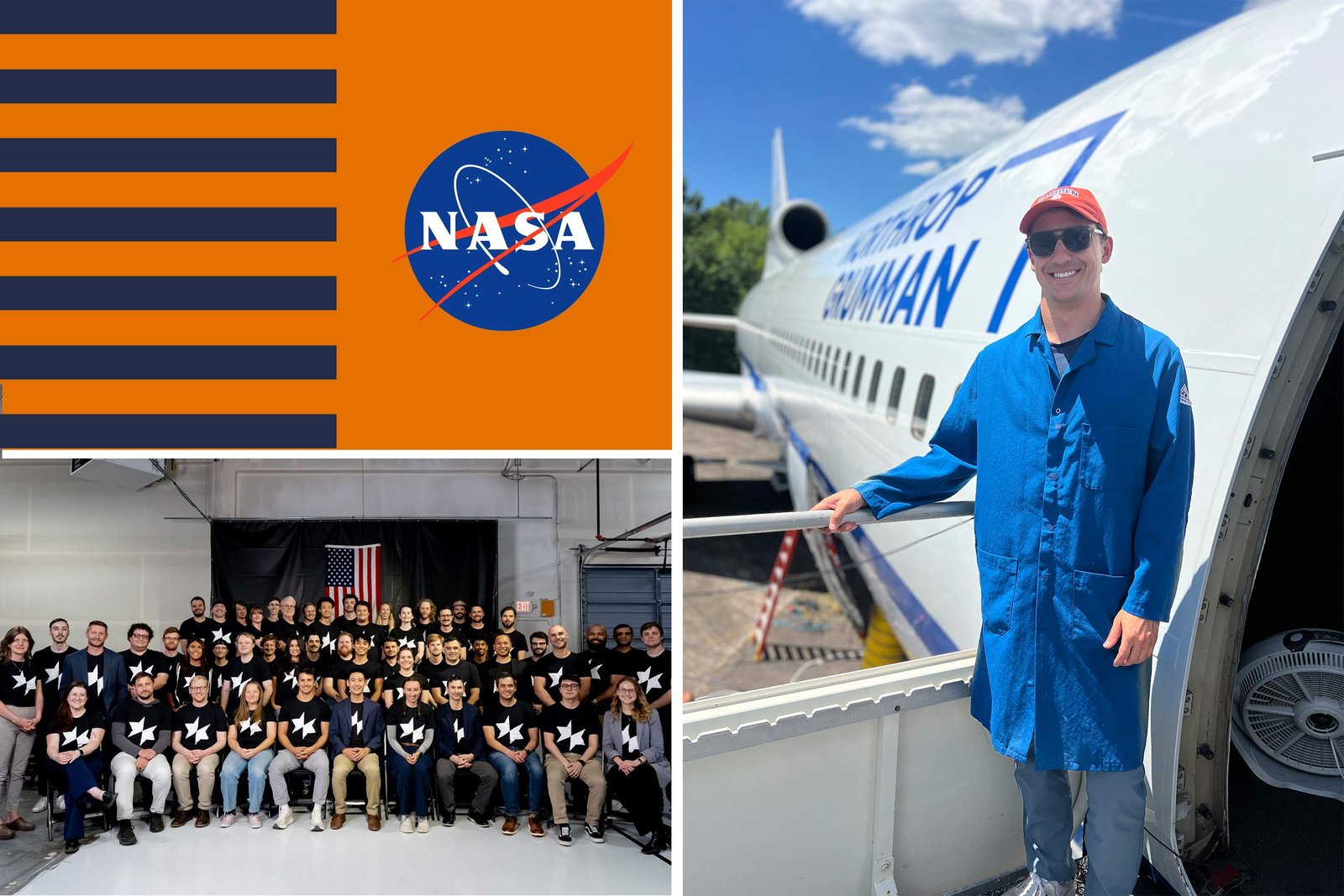
“The team worked around the clock to design, build, test, break, redesign, retest, integrate and launch the LINK spacecraft in nine months,” said Nicolaas Drapanas, a 2018 graduate of the College of Arts & Sciences and a systems test engineer on the project. A normal timeline, he said, is measured in years.
“The gravity of the mission, rescuing one of NASA’s flagship telescopes, was our guiding light,” he said. “The urgent timeline motivated the team to sustain that pace.”
The rescue rocket’s trajectory from the Marshall Islands into orbit was relatively straightforward. But Drapanas’ career trajectory has been anything but.
The How Things Work course
While Drapanas studied economics at UVA, he also had a budding interest in science.
“As an undergrad, I took the famous How Things Work course, physics for the masses, and fell in love with natural science,” Drapanas said.
Still, he stuck with his economics major and, after graduation, worked as an investment consultant. But he couldn’t shake the science bug.
“After a long career transition, I landed on hardware test teams at a couple of electric vehicle startups in San Francisco – air taxis and autonomous tractors,” Drapanas said. “I moved to Boulder, Colorado, with my girlfriend, where I joined Katalyst’s test department last year.”
About that same time, NASA tapped Katalyst Space, a small but rapidly growing commercial space company, to rescue the imperiled Swift observatory.
A setback, but lessons learned
To meet the impossibly short deadline, Katalyst bought the last available Northrop Grumman Pegasus rocket and attached its new LINK space robot to the nose. On July 3, a modified commercial airliner lifted off from the Marshall Islands with the rocket strapped to its belly. At high altitude, the crew launched the rocket to track down the satellite orbiting at 17,000 mph.
Last week, however, the rescue came up a bit short. The Katalyst spacecraft experienced control trouble in orbit. Days of troubleshooting failed to fix the problem. Katalyst and NASA concluded the LINK spacecraft should not try to grab and boost the satellite, but should continue with other parts of the mission to test its capabilities. What they learn will help save other satellites and even enable missions where, one day, robots will perform routine repairs in orbit.