
Listen to this article
Estimated 5 minutes
The audio version of this article is generated by AI-based technology. Mispronunciations can occur. We are working with our partners to continually review and improve the results.
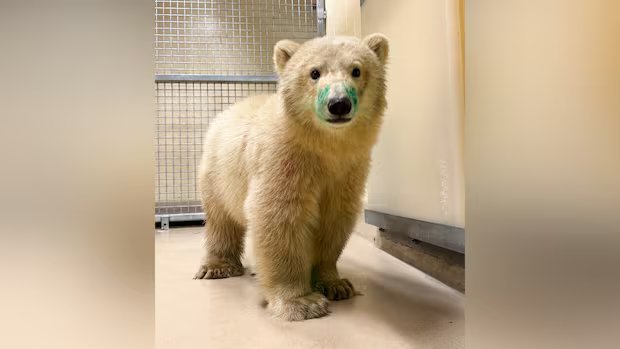
An orphaned polar bear cub from the Churchill, Man., area has arrived in Winnipeg, the Assiniboine Park Zoo says.
Conservation officers identified the northern Manitoba cub as a candidate for transfer to the zoo’s Leatherdale International Polar Bear Conservation Centre under the Polar Bear Protection Act after its mother was found dead, the zoo said in a Friday news release.
The conservation centre facility was established with provincial support to provide refuge to select polar bears, the release said.
Chris Enright, senior director of zoological operations at the zoo, said the cub “unfortunately had no chance of survival in the wild on its own.”
“It hadn’t learned the hunting skills it needs to survive yet,” Enright told CBC Manitoba’s Up to Speed host Marjorie Dowhos on Friday.
“Fortunately, this isn’t something that happens every day. We absolutely recognize that polar bears in the wild are valuable and should stay wild when they’re out there. We’re here to provide support in instances when an animal doesn’t have a chance of survival in the wild.”
He said the province is still investigating how the cub’s mother died.
In consultation with the province, members of the Assiniboine Park Conservancy’s polar bear rescue and care team sent equipment and resources to support the cub’s initial care needs in Churchill, the zoo’s news release said.
Veterinary staff then went north to assess the cub and oversee its transfer to Winnipeg. It arrived safely late Thursday evening, the news release said.
Cub ‘stands a very good chance’ of thriving at zoo
The bear will now get specialized care from veterinary professionals, animal care experts and conservation scientists, the zoo said.
It will undergo a quarantine period and stay behind the scenes, while veterinary and animal care teams assess its health and care needs.
Enright said the acclimation process is done “incrementally, and at the speed that the cub is ready for.”
The zoo’s experience with the past 10 bears it’s taken in suggests it could take about two weeks for the cub to thrive in the new environment — so, those two weeks are planned carefully, getting the bear used to food, people and other things.
“We give the bear opportunities to exercise its faculties as a bear, to wrestle with things, to play, to explore, to do all of those things that a young bear should be doing. And in time, we start working in more and more of the human elements in order to give that bear really a comfort and familiarity with life in human care,” Enright said.
“We absolutely realize that, one week ago, this bear was walking on the tundra with mom. His life has had a great upheaval in that time, and it’s normal for him to be stressed out by this.”
In the meantime, the cub won’t be visible to zoo visitors. Enright said experience suggests the new cub might be comfortable meeting people in the next month or two, but things will move at the bear’s speed.
The zoo is home to six other rescued polar bears: Storm, Nanuq, York, Kaska, Willow and Star.
Every rescued cub adapts to a zoo environment at its own pace, and the transition process is carefully managed to support animal comfort and welfare, the release said.
Enright said he thinks it will work in the new cub’s favour that he spent the first nine months of his life with his mom, meaning he “knows he’s a bear” and has the social signals and physical language the animals use to interact.
“He stands a very good chance of being able to thrive with other bears, who can really take some of that void left by mom passing and offer this cub the opportunity to socialize and spend time with other bears.”
The last polar bear cubs transferred to the zoo arrived in 2017.
Enright said bringing polar bears to the zoo for people to see also plays another role.
“They connect our public, thousands of people a day, hundreds of thousands of people a year, with that animal in front of them in order to promote behaviour change, to protect animals in general,” he said.
“We’re relying on these bears to start that connection, so that people can take changes in our own lives, regardless of where we live in the world, that can help polar bears in the wild.”
The zoo said it will continue to share updates as the latest cub transitions to its new home.