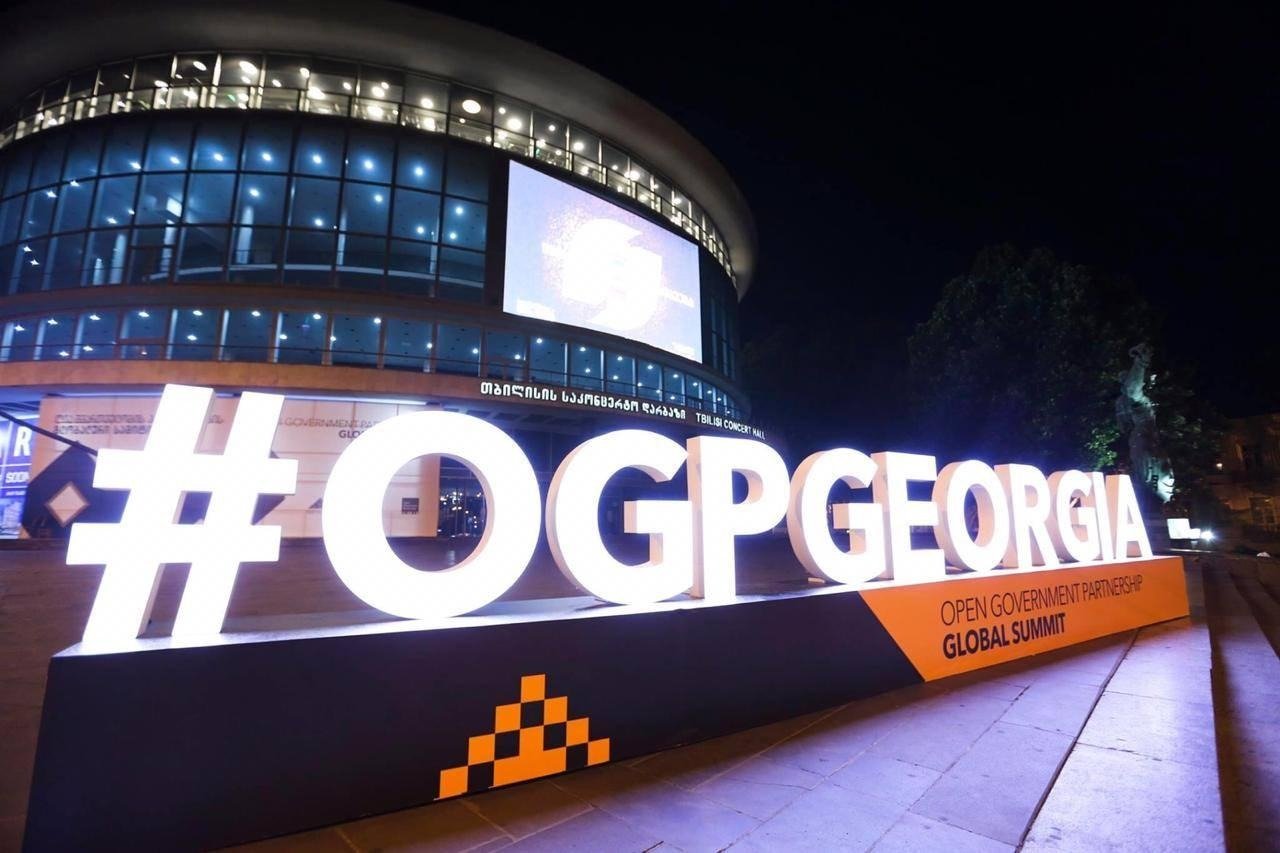
Georgia has been “permanently suspended” from Open Government Partnership (OGP), an international platform focused on transparency, accountability, and participation, over concerns that the conditions for membership – including an “enabling environment” for government and civil society to work together – no longer exist.
The decision, announced on April 22, follows Georgia’s temporary suspension in 2024 over backsliding on commitments. It also follows a series of restrictive measures adopted by Georgia’s ruling party to crack down on civil society, media, and protests.
“This decision follows a review process that began in October 2024, when the Steering Committee temporarily suspended Georgia’s participation and called on the government to take corrective measures to address concerns related to civic space, freedom of expression, and freedom of assembly,” OGP said in a statement. “As of March 2026, no plan or formal communication outlining steps toward addressing these concerns has been received.”
According to the statement, the OGP Steering Committee had to rely on independent third-party evaluations “that point to continued legislative and institutional restrictions on the operating environment for civil society and media, alongside ongoing concerns regarding the protection of fundamental freedoms.”
The Committee “concluded that the conditions necessary for participation in OGP, including an enabling environment for government and civil society collaboration, are no longer present,” OGP said, noting that “the decision formalizes Georgia’s permanent suspension in OGP and closes the Response Policy case.”
Founded in 2011, the Open Government Partnership unites governments and civil society groups from more than 70 countries, working to implement open government commitments to promote greater transparency, accountability, participation, and fight against corruption. Every two years, member states submit to the OGP an action plan, developed in collaboration with the civil sector, outlining specific government commitments.
Georgia has been an OGP member since 2011, and was once considered one of the pioneering and innovative frontrunners of the process, before concerns emerged over backsliding on commitments. In 2016, Georgia became the OGP co-chair, and in 2017, it took over the chairmanship for a year.
“The Open Government Partnership is rooted in the principle that governments and civil society must be able to work together in an environment that protects fundamental freedoms. After a comprehensive and fair review process, the conclusion was that these conditions are not currently met in Georgia,” OGP cited its CEO, Aidan Eyakuze, in the statement. Eyakuze recognized “the important role of civil society organizations, journalists, and reformers in Georgia in advancing openness and accountability, often in challenging circumstances.”
“We are hopeful that Georgia will rejoin the Open Government Partnership at the right moment, when conditions improve, bringing energy and commitment back to the crucial endeavor of making government work better for people better through domestic and global collaboration,” Eyakuze added.
According to OGP, a country that has been withdrawn from the platform may seek to rejoin “provided it meets OGP’s Eligibility Criteria, including demonstrating adherence to the Open Government Declaration and passing the required Values Check.”
CSOs React
In a statement reacting to Georgia’s permanent suspension, five Georgian civil society organizations – including Transparency International Georgia, Institute for Development of Freedom of Information (IDFI), Green Alternative, Georgian Young Lawyers Association, and Civil Society Institute said that the decision “is a confirmation that Georgia has moved away from the democratic standards it pledged to uphold.”
“The country has lost international trust and opportunities for democratic development,” CSOs said, noting that OGP’s decision “demonstrates that democratic institutions in the country are no longer functioning and that citizens’ voices are no longer being heard.”
“Instead of implementing the recommendations, the Georgian government worsened the situation: democratic backsliding continued, fundamental human rights were restricted, and even more laws were passed against civil society and the media,” the statement reads. “Ultimately, civil society organizations participating in the OGP process refused to cooperate with the Georgian Dream government in protest.”
Also Read: