When we speak of “governance”, attention naturally centres on the governing party, which holds the reins of power and makes decisions that affect the populace. Yet, the Opposition has an equally important role: holding the government accountable, safeguarding checks and balances, preventing the abuse of power, and presenting a credible alternative. A strong Opposition is therefore essential to good governance.
As a Jamaican, I am deeply concerned and perplexed by the conduct of the People’s National Party (PNP). Almost a year after losing the last general election, the party appears even more disorganised than before, seemingly unwilling or unable to learn from its mistakes. Recent events have only intensified my bewilderment and deepened my concern.
On July 20, Nationwide Radio shared leaked voice notes allegedly involving two members of the PNP’s National Executive Council (NEC) discussing the National Reconstruction and Resilience Authority (NaRRA), a proposed dedicated mechanism for managing post-disaster reconstruction following Hurricane Melissa. At the very least, the conversation appeared to indicate a willingness to undermine the initiative and, if possible, smear the reputation of its CEO, Major General Antony Anderson. The episode was deeply damaging to the PNP’s image. Yet, for six days, there was no comment on the issue or condemnation from the party leadership. When leader Mark Golding eventually addressed the matter at an NEC meeting, he acknowledged that the individuals were “within the party” but said they were not “officers” and that their comments did not represent party policy. However, he neither denied their membership in the NEC nor condemned the substance of the conversation.
The matter was poorly handled. An important principle in crisis management is that such controversies demand a prompt and unequivocal response. Otherwise, others shape the narrative, public confidence erodes, and the party appears indifferent to the conduct in question. More importantly, the absence of condemnation offered little reassurance that the PNP rejects underhanded tactics to undermine a programme intended to benefit Jamaicans for political purposes. One would think that, after such an episode, members of the party would be circumspect regarding their public utterances.
Then came the Coopers Pen incident in which the homes of squatters in that community in Trelawny were demolished in the early hours of August 11. The issue is complex. Squatting is illegal, and the occupants had reportedly known for more than a decade that they were required to vacate the land. Nevertheless, the manner in which the demolitions were carried out, leaving people homeless, was understandably traumatic and smacks of inhumanity. Both political parties have since sought to blame the other for the situation.
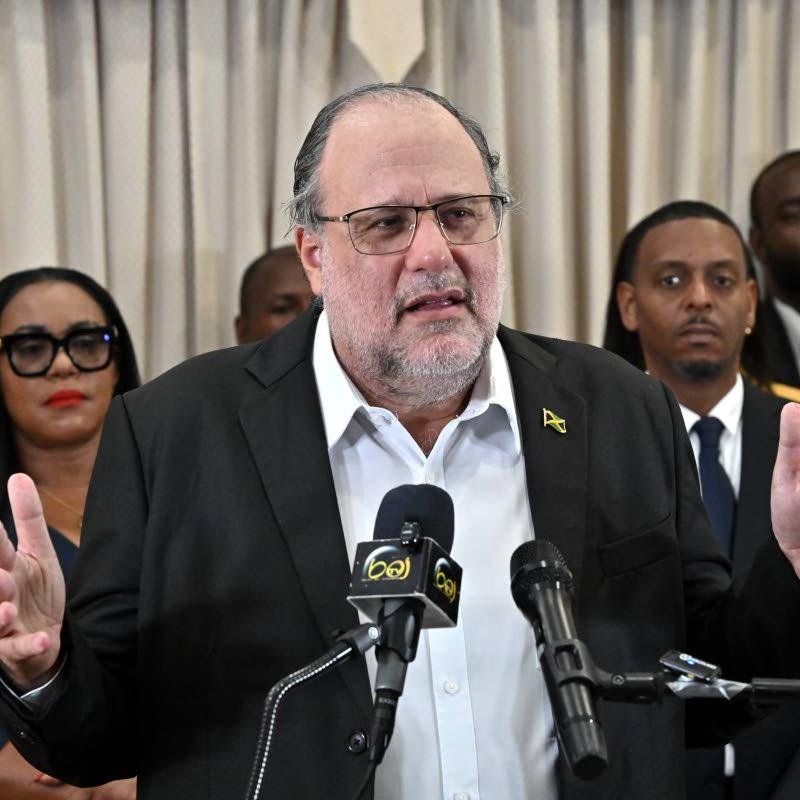
Meanwhile, Opposition Member of Parliament (MP), Human Rights Spokesperson and attorney-at-law Isat Buchanan raised legitimate concerns about the matter. However, in a TikTok video, he also encouraged unaffected residents to present broken pieces of furniture to authorities and falsely claim they had been victims of the demolition to obtain compensation, instructing them to “chop di line”, a term used to describe scamming. PNP leader Mark Golding subsequently visited the community with Buchanan and PNP caretaker for North Trelawny Dennis Meadows, who had previously stated at a 2024 political meeting that he had no problem with people who “chop”. Golding called on the Government to resettle residents displaced by the demolition.
The PNP’s handling of the situation is difficult to reconcile with the standards it claims to uphold. It is almost unbelievable that members of the party can act the way they did in response to the incident and expect to be respected and taken seriously by the Jamaican people. Coming on the heels of the leaked voice-note controversy, Buchanan’s remarks reinforce the perception that elements within the party are willing to countenance unethical tactics when politically expedient. On a personal level, Buchanan has had two criminal convictions, and the Jamaica Labour Party (JLP) has repeatedly weaponised that aspect of his history to question his legitimacy. Bearing that in mind, his encouragement of unethical behaviour also helps to strengthen the narrative that he is unfit for public office.
Golding’s own response is also concerning. Golding, also an attorney-at-law, has been criticised for failing to rebuke the would-be saboteurs exposed in the leaked voice notes. He has neither rebuked Buchanan nor distanced himself from his “chopping” comments, and his visit to Coopers Pen, flanked by two party members who have endorsed fraudulent behaviour, raises serious questions about his own judgement, integrity and tolerance for unethical conduct.
Also, in 2001, Golding, acting as chairman of the Mona Rehabilitation Foundation, swore an affidavit supporting a legal injunction to block a government plan to relocate Mona Commons squatters to land in the vicinity of the Sir John Golding Rehabilitation Centre, an institution founded by his late father. Golding had also participated in a protest the previous year to object to the proposed relocation. Now demanding that the Government resettle Coopers Pen residents, without addressing the apparent contradiction, risks appearing hypocritical and disingenuous.
These episodes suggest a PNP that is struggling not only with political strategy and coherent communication but also with ethical judgement and public perception. The party appears increasingly insulated within an echo chamber, seemingly oblivious to how the wider Jamaican public is receiving its conduct and image. This is particularly damaging because the PNP’s last election campaign placed considerable emphasis on integrity and corruption. Yet, its recent actions and utterances have undermined its credibility on precisely those issues. The party has failed to convince much of the electorate that it represents a meaningful ethical alternative to its political opponents.
A functional democracy requires an Opposition that is credible, principled and capable of holding government to account. The Jamaican people deserve better than political opportunism, questionable judgement, and silence when misconduct occurs.
Michael Abrahams is an obstetrician and gynaecologist, social commentator and human-rights advocate. Send feedback to columns@gleanerjm.com and michabe_1999@hotmail.com, or follow him on X @mikeyabrahams.