China’s recent test of a nuclear-capable ballistic missile into the Pacific has laid bare deepening splits among island nations over the militarisation of a region long promoted as an “Ocean of Peace,” according to reporting by Modern Diplomacy.
The July launch marked China’s first known ballistic-missile test into the Pacific since September 2024. It occurred just hours after Fiji and Australia signed a major defence treaty, Fiji’s first formal alliance of this kind. The coincidence underscored the intensifying competition for influence involving China, the United States and their partners.
More than a month later, Pacific Islands foreign ministers still could not agree on a joint statement criticising the test, even though individual leaders voiced unease about the expanding military footprint in the region.
Papua New Guinea’s Foreign Minister Justin Tkatchenko called the launch “totally inappropriate.” He noted that China remains a close friend and ally of his country and that Beijing had given advance notice of the test, though without specifying where the missile would land. China itself described the exercise as safe and cautioned against over-interpreting it.
Rising military activity across the region
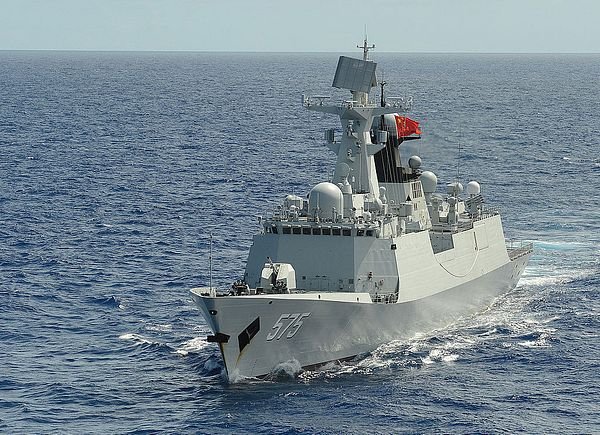
As detailed by Modern Diplomacy, the test followed a year of heightened military activity throughout the Pacific, which has become a central arena of strategic rivalry between Washington and Beijing. Chinese naval deployments and live-fire drills in the Tasman Sea have overlapped with U.S.-allied exercises around Guam and Hawaii. Warship visits and new security partnerships have multiplied.
The United States maintains a significant military presence in Hawaii, Guam and the Marshall Islands. For Pacific governments, these developments create a difficult choice. Security partnerships can deliver useful capabilities in surveillance, disaster response, policing and training. At the same time, they raise the risk that Pacific territory and waters become drawn into broader great-power competition.
Tuvalu’s permanent foreign secretary Pasuna Tuaga has voiced concern about the wider militarisation of the region, including arrangements such as the AUKUS partnership linking Australia, Britain and the United States.
Principle versus practice
In September 2025, Pacific leaders endorsed the Ocean of Peace Declaration, committing to protect the region and strengthen international peace and security. The initiative reflected a long-held desire to ensure that Pacific security priorities are not set by external powers. The Australia-Fiji defence agreement, known as the Ocean of Peace Alliance, grew out of this framework.
Yet the proliferation of security partnerships has produced a clear contradiction. Governments seek stronger capabilities while opposing the militarisation of their region. Australia and other partners argue that defence cooperation builds resilience. Critics worry that expanding bilateral deals could eventually reduce Pacific nations’ say over how their territory, waters and infrastructure are used.
Solomon Islands Foreign Minister Rick Houenipwela has insisted that the regional agenda must remain “conceived by the Pacific, shaped by the Pacific and only by the Pacific.” The inability to issue a unified response to China’s missile test showed how hard that principle is to uphold in practice.
Divergent interests
The lack of consensus reflects differing political and economic ties. Kiribati and Nauru, which switched diplomatic recognition from Taiwan to Beijing, reportedly opposed the proposed language of a joint statement. New Zealand Foreign Minister Winston Peters attributed the failure to reach agreement to foreign influence, without naming any country.
Pacific nations do not hold a single view of China. Some governments regard Beijing as a vital economic and diplomatic partner. Others are increasingly wary of its military activities and the strategic consequences of its growing presence. Many remain determined to avoid close alignment with either China or Western powers.
The core dilemma
At the heart of the issue lies a tension between security needs and strategic autonomy. Pacific states require surveillance tools, training, disaster-response capacity and other resources that defence partnerships can supply. Greater dependence on external powers, however, can make it harder to protect an independent regional agenda.
Fiji Foreign Minister Sakiasi Ditoka has acknowledged this balancing act, noting that countries want to stay free of “war-making paraphernalia” while recognising that certain security capabilities help keep them safe. Fiji’s first participation in the U.S.-led RIMPAC exercises further illustrates the tightrope: the country promotes an Ocean of Peace while deepening involvement in established regional security structures.
A strategic battleground
China’s missile test matters less for the launch itself than for what it reveals. A gap has opened between the Pacific’s aspiration to remain an Ocean of Peace and the strategic pressures closing in around it. Competing security partnerships, frequent military exercises and the expanding presence of major powers are reshaping the region. China is more active militarily; the United States, Australia and their partners are reinforcing their own defence ties.
For island states, the challenge is not simply whether to criticise China’s actions. It is how to respond without allowing great-power rivalry to dictate the Pacific’s security agenda. Regional unity has long been one of the Pacific’s strongest instruments for preserving diplomatic autonomy. When governments cannot agree on how to address a major security development, external powers gain greater room to shape outcomes.
Rejecting security partnerships entirely would leave many states without capabilities they now regard as necessary. The result is a persistent balancing act: accepting enough external assistance to meet genuine needs while preventing those partnerships from turning the region into a military theatre.
China’s test therefore highlights a deeper dilemma. The more Pacific states seek security through external alliances, the greater the risk of militarisation. The more they resist those partnerships, the harder it becomes to navigate an increasingly competitive environment.
The coming Pacific Islands Forum leaders’ meeting in Palau is expected to place these questions at the centre of regional diplomacy. The test will be whether Pacific nations can craft a collective security approach that safeguards their interests without letting strategic competition between China and Western powers define the region’s future. and data sharing practices with its parent company, Meta.