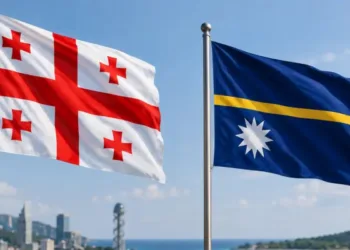
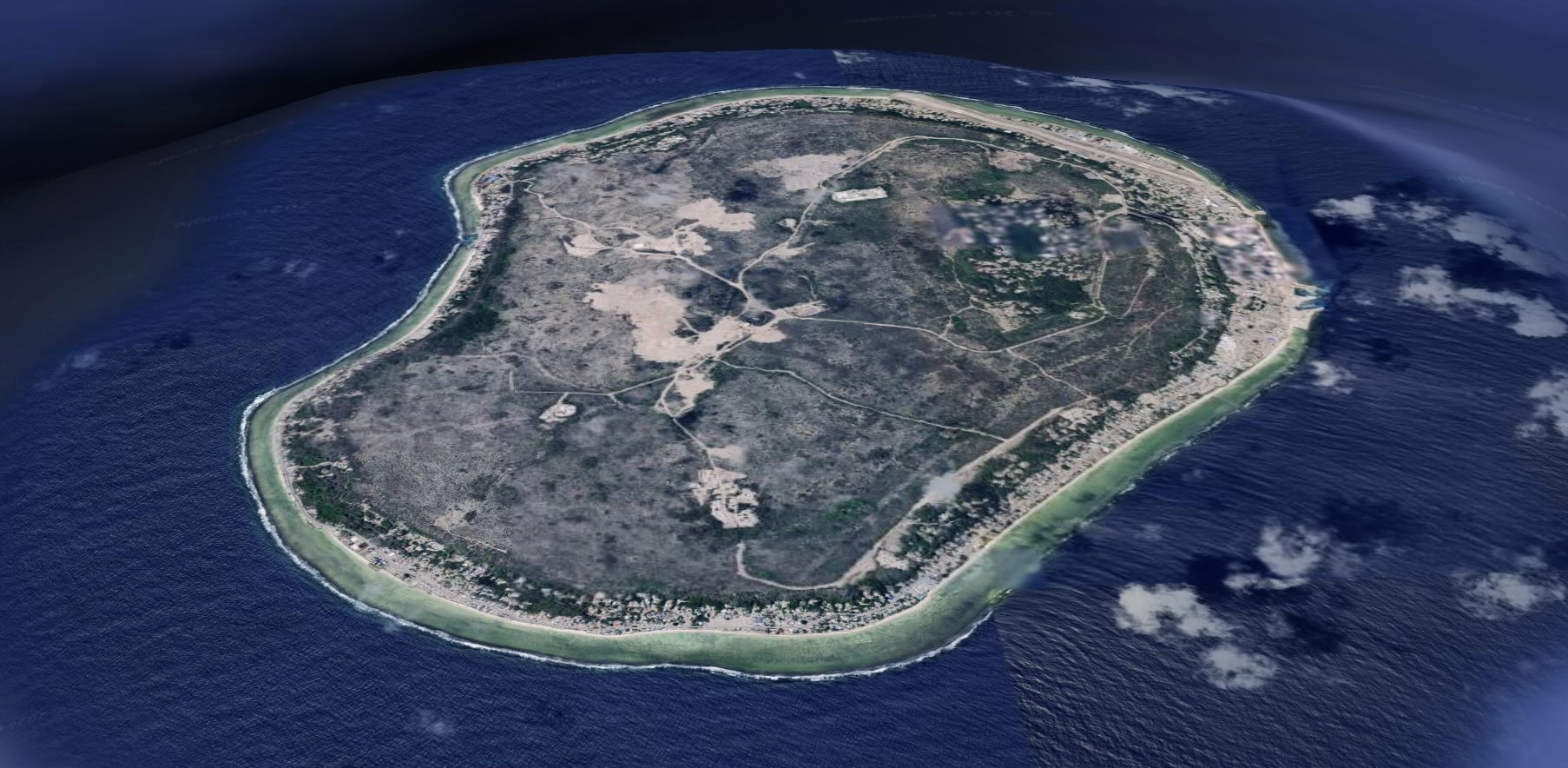
One of the world’s smallest and most isolated countries has reclaimed its traditional name. Nauru is now officially the Republic of Naoero, a change intended to reflect the language, heritage, and identity of its people rather than a colonial-era name adopted for foreign convenience.
The Pacific island nation long known internationally as Nauru has officially changed its name to the Republic of Naoero.
The abbreviated name of the country is now Naoero, pronounced roughly “now-ero,” rather than the familiar “now-roo.” Its international country code will transition from NRU to NRO, while citizens will be referred to as dei-Naoero instead of Nauruans. Nauru International Airport has become Naoero International Airport, though the codes remains INU. Nauru Airlines, the flag carrier, has not changed names (yet).
Naoero is the country’s traditional Indigenous name, already spoken locally and displayed on its national coat of arms. The government says the spelling “Nauru” took hold because foreign visitors struggled to pronounce Naoero, with convenience eventually displacing the country’s own name abroad.
The history of Naoero is fascinating: Nauru was annexed as a colony by the German Empire in the late 19th century but fell into Australian hands during World War I. The country gained independence from Australia in 1968.
Why Nauru Changed Its Name To Naoero
Parliament unanimously approved a constitutional amendment authorizing the change in May 2026. Although the government initially expected the matter to go before voters in a referendum, President David Adeang later concluded that one was unnecessary.
His reasoning was that Naoero was not an unfamiliar name requiring public acceptance. It was already the identity of the people, recognized by the constitution, spoken throughout the community, and present on the country’s coat of arms.
The name change legally took effect on June 26, 2026, although the government publicly announced the broader transition at the end of July. The United Nations and several foreign governments have already begun using Republic of Naoero. Adeang framed the decision as an attempt to preserve the country’s heritage and strengthen national pride, which seems entirely reasonable to me.
Names matter, particularly when an outside power has effectively substituted an easier version because the authentic one was considered inconvenient to pronounce.
We learned to say Eswatini instead of Swaziland and Türkiye instead of Turkey (well, some of us did…I still use the old names). We can learn Naoero as well, I guess?
One Of The World’s Smallest And Most Remote Countries
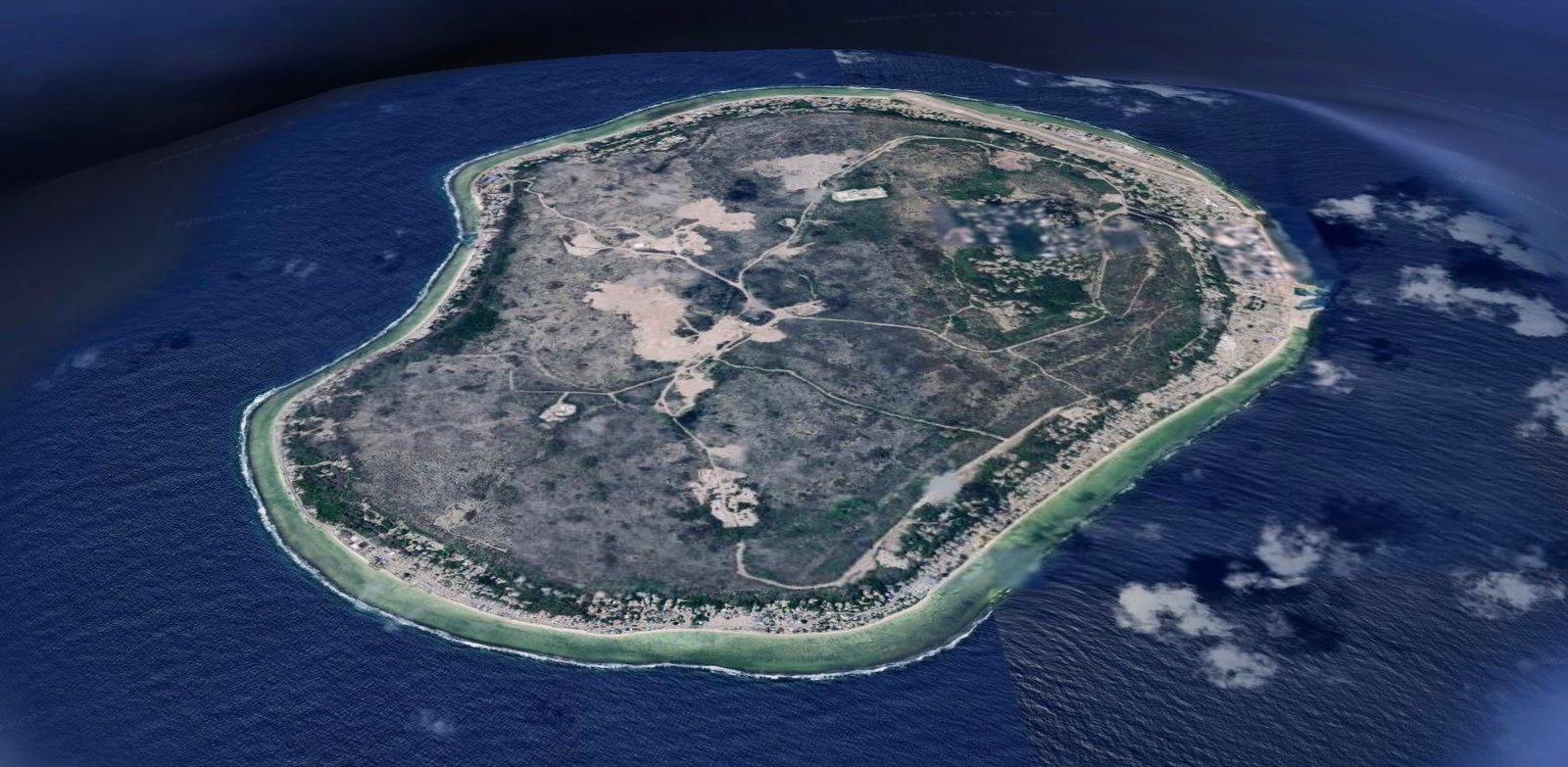
Naoero is an extraordinarily small place.
The single-island republic covers only about eight square miles and has a population of roughly 12,000. By both land area and population, it ranks among the three smallest sovereign countries in the world (The Holy See/Vatican and Monaco being #1 and #2 smallest).
It is also incredibly remote, sitting in Micronesia in the central Pacific Ocean, northeast of Australia.
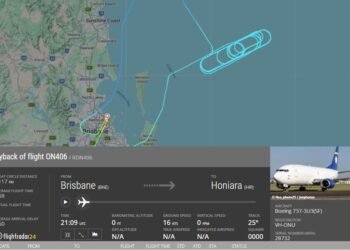
Reaching Naoero is not an easy undertaking. Nauru Airlines provides essential air links to Australia and other Pacific island nations and is also an airline I want to review. I hope to visit Naoero and all of these remote Pacific island nations one day. The question for me is not whether I will go, but when and how to structure the journey most effectively…another post for another day.
Travel in this part of the world requires extreme patience. Flights may operate only a few times per week, schedules can change, and stitching together several countries can become an elaborate puzzle involving Australia, Fiji, Guam, Honolulu, and a collection of small regional airlines. It gets very expensive too.
I would love to visit Naoero, Kiribati, Tuvalu, Tonga, Samoa, and the other island nations scattered across the Pacific. Ideally, I would spend time in each place to see how life functions in such isolated communities instead of just collect passport stamps, but that makes things even more complicated. (Unfortunately, in visiting the Marshall Islands, the Federated States of Micronesia, and Palau already, I just flew right through after setting my feet on the ground).
That journey will happen. I simply have not yet determined the best way to do it.
CONCLUSION
The Republic of Naoero has restored its traditional name, replacing a foreign adaptation that endured for more than a century. Naoero may be one of the smallest and most remote nations on earth, but that only makes me more curious to see it. I look forward to visiting one day.
image: Google Earth // hat tip: The Gate With Brian Cohen