
Switzerland has committed to halving its greenhouse gas emissions by 2030, before achieving carbon neutrality by 2050.
Keystone-SDA
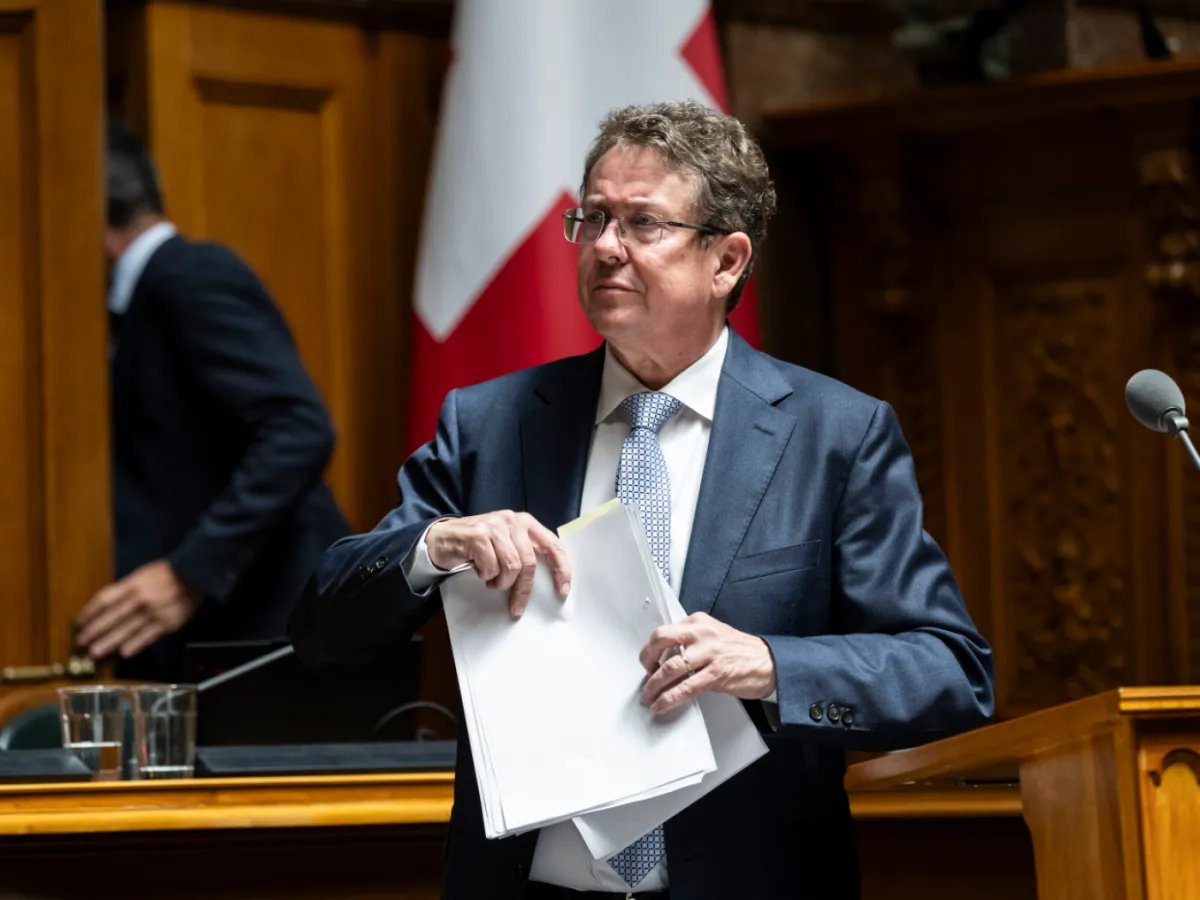
Switzerland will find it difficult to meet its 2030 climate target, Environment Minister Albert Rösti said on Thursday. He pointed to budgetary restrictions imposed by the government.
As a significant proportion of Switzerland’s CO₂ reductions is achieved through the purchase of emissions credits from abroad, “in the current budgetary context, I cannot see how the federal government could find the additional CHF300 to 400 million required [$370-490 million],” Rösti said in an interview published on Thursday by newspaper Le Temps.
Switzerland has committed to halving its greenhouse gas emissions by 2030, before achieving carbon neutrality by 2050.
More
More
Emission reductions: the countries doing the ‘dirty work’ for Switzerland
“If we miss the 2030 target, we will have to step up measures over the following decade,” the minister said. “One option is to extend the emissions trading scheme to buildings and transport in order to generate more revenue.”
New law in the pipeline
Despite the risk of failure and a summer of extreme heat and drought, Rösti does not intend, for the time being, to take any measures other than those already adopted. Switzerland is “already doing a great deal”, he said. But “it is clear that we will need to go further after 2030”.
With this in mind, the right-wing Swiss People’s Party politician is preparing a new CO₂ Act for the period 2030–2040. “It will be put out for consultation shortly,” he told the paper. The Federal Office for the Environment’s CHF30-million fund to support certain adaptation projects is expected to increase under the new legislation, he said: “We must […] increase the resources allocated to adaptation, without reducing those earmarked for emissions reduction.”
More

More
Switzerland is water-rich. So why are 151 towns rationing it?
The environment minister also announced a new national strategy for water supply, which is due to be submitted to the Federal Council shortly. “It will aim, in particular, to improve inter-cantonal coordination and […] to set priorities” in the event of water shortages, he said.
Translated from German/reviewed by an English Department journalist