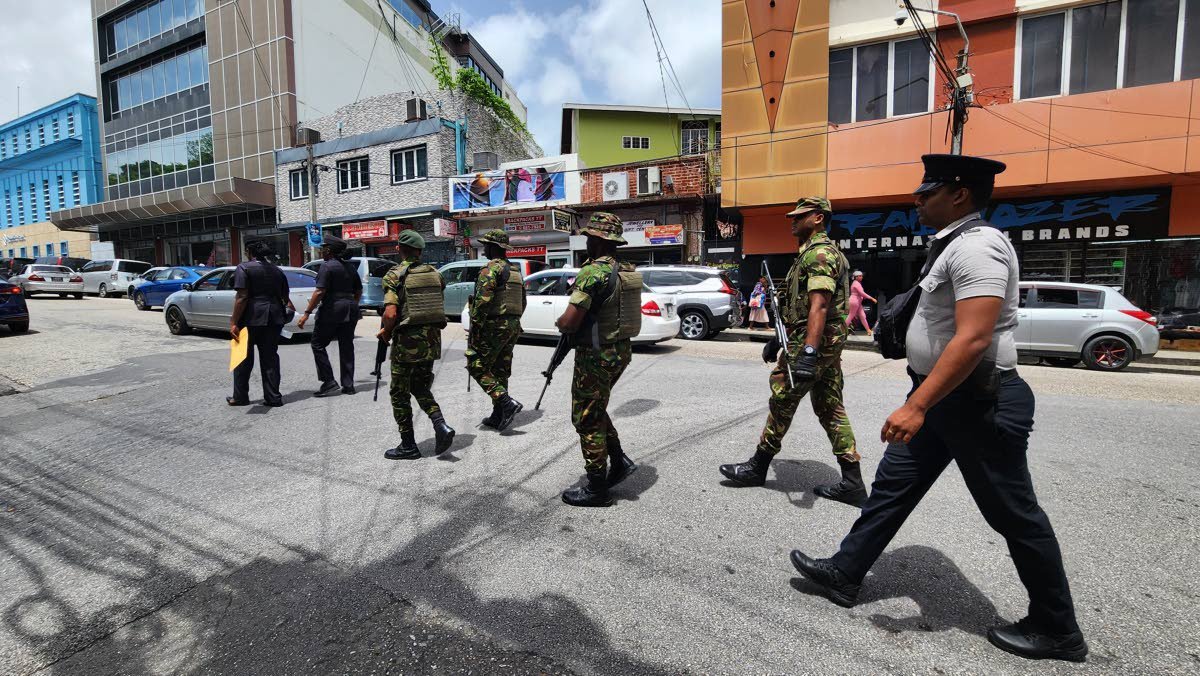
Opposition Leader Pennelope Beckles has accused Prime Minister Kamla Persad-Bissessar of using a recently announced joint police and military security initiative as a means of reintroducing a previously proposed security model, while raising concerns about funding, implementation and the role of the military.
In a Facebook post, Beckles described the Government’s plan to establish joint police and Trinidad and Tobago Defence Force posts as a “knee-jerk reaction” to growing public concern over crime.
She claimed the initiative was an attempt to “quietly reintroduce” the Zone of Special Operations (ZOSO) concept, which had been proposed by the United National Congress during its previous term in office but was never implemented.
Beckles also questioned the timing of the announcement, saying it came only days after Persad-Bissessar stated that crime had declined significantly.
“It comes just days after her false boast that crime was down considerably, while home invasions and murders continue across the country,” Beckles wrote.
She argued that if crime were under control, there would be no need for what she described as a “haphazard four-month plan.”
The Opposition Leader also questioned how the Government selected the locations for the initial security posts.
According to Beckles, the Prime Minister had previously suggested that crime was concentrated in People’s National Movement communities, yet she claimed that about 90 per cent of the proposed locations were in areas represented by the United National Congress.
Beckles also sought clarification on the legal authority of Defence Force personnel assigned to the initiative, asking whether members of the TTDF would be granted police powers.
She further questioned whether the Government intended to introduce a ZOSO-style security arrangement without broader public discussion.
The Opposition Leader also raised concerns over financing, noting that no funding had been identified for the initiative. She questioned how the Government intended to staff and equip the additional posts, citing what she described as existing challenges in providing resources for soldiers.
Beckles concluded that establishing 30 new joint security posts would not make up for what she characterised as the Government’s lack of a comprehensive crime plan.